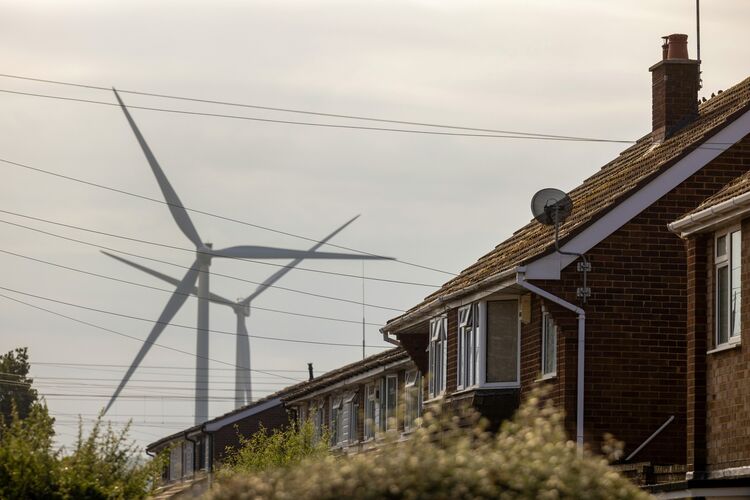
Record wind generation slashed Britain’s use of natural gas fired power last month, but wasn’t enough to shield the country from surging prices triggered by the war in Iran.
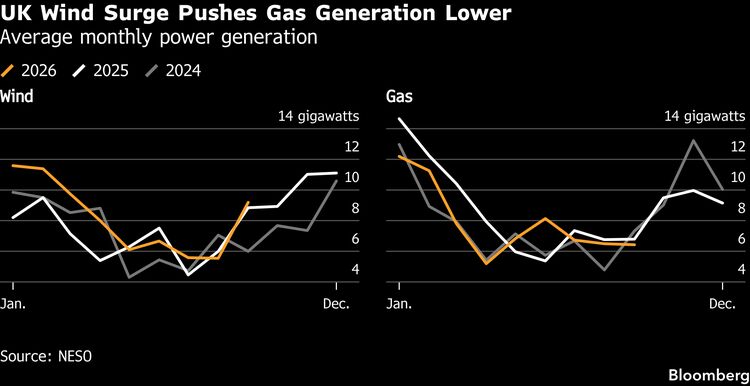
Wind turbines generated 6.62 terawatt-hours of electricity in September, a record for the month and 4% more than a year earlier, helping push gas-fired generation to its lowest level on record for a September. Yet, day-ahead power rates still doubled from a year earlier.
The surge in wind generation marks progress toward the government’s goal of a largely clean power system by 2030, but high prices underscore the market’s continued exposure to natural gas. Even as the fuel generates less electricity, it continues to set the price during crucial periods of the day.
That’s because the nation operates a marginal pricing system, where the cost of the most expensive generator needed to meet demand determines the price for that time period.
Gas futures have surged as the Iran conflict disrupts supplies from the Persian Gulf, including Qatari cargoes affected by the closure of the Strait of Hormuz. Europe is also struggling to rebuild storage amid intensifying competition for supplies.
In September, day-ahead power prices averaged £135.39 per megawatt-hour on the Epex Spot SE exchange. During the 10% of hours with the highest gas generation, rates averaged about £184 per megawatt-hour, roughly 42% more than during the rest of the month, according to Bloomberg calculations.
The government is closely watching wholesale energy costs as it seeks to ease pressure on household finances. UK energy bills are forecast to jump by about 25% in January as disruptions to gas supplies continue, according to a Bloomberg Economics analysis published in September.
The September wind record is part of a broader increase in renewable generation this year. Wind output in the first nine months was 14% above the previous record for the period, while overall renewable generation was about 15% above its previous high, according to NESO data.