Hurricane Isaias is gathering strength Thursday morning despite persistent crosswinds, raising the threat of damaging winds and flooding across a wide stretch of the US Gulf Coast.
Isaias is forecast to approach major hurricane strength within the next 24 hours before weakening somewhat on its final approach to land. As of 11 a.m. New York time, its winds had reached 85 miles (137 kilometers) per hour, the US National Hurricane Center said in an advisory .
The storm is expected to make landfall along the northern Gulf Coast late Friday or early Saturday, with Alabama, Mississippi and the Florida Panhandle at risk. Its current track runs just east of a large concentration of offshore oil rigs, which may limit any further impacts to production, said Tyler Roys, a senior meteorologist at AccuWeather.
But the storm has already prompted offshore producers to shut in 25% of crude output at a time when oil markets are under pressure from the war in Iran. US crude prices rose as much as 5.6% Thursday under strain from the storm and continued tensions in the Middle East.
Also See: Hurricane Isaias Puts 20% of Gulf Oil, Gas Output at Risk: BNEF
Workers at eight platforms have been evacuated and one dynamically positioned rig has been moved out of the storm’s path as a precaution, according to the US Marine Minerals Administration. The production disruptions are likely to be short-lived barring major equipment failures, said risk modeler Chuck Watson of Enki Research.
As the storm churns inland later this week, damaging wind gusts are expected to splatter eastward toward Birmingham, Alabama, and the Atlanta metro area. “This could lead to long-lasting power outages over a week in some places,” Roys said, with longer restoration times for rural communities that are harder to reach.
Read More: Tracking Isaias’ Latest Path
Duke Energy’s Florida utility said in a statement Thursday that workers were gearing up to respond to outages triggered by strong winds and heavy rain. The company warned that workers would not be able to reconnect power to flooded homes and businesses until licensed electricians perform inspections.
“Our crews are prepared to restore power as soon as conditions allow,” said Todd Fountain, Duke Energy Florida’s storm director.
As Isaias continued to grow Thursday morning, federal hurricane hunter aircraft were collecting data from the storm to help inform upcoming forecasts. AI models and more traditional, physics-based forecast tools have disagreed on exactly where the storm will land.
Predicting the storm’s eventual strength has also become “somewhat challenging,” forecaster Richard Pasch wrote in an update Thursday.
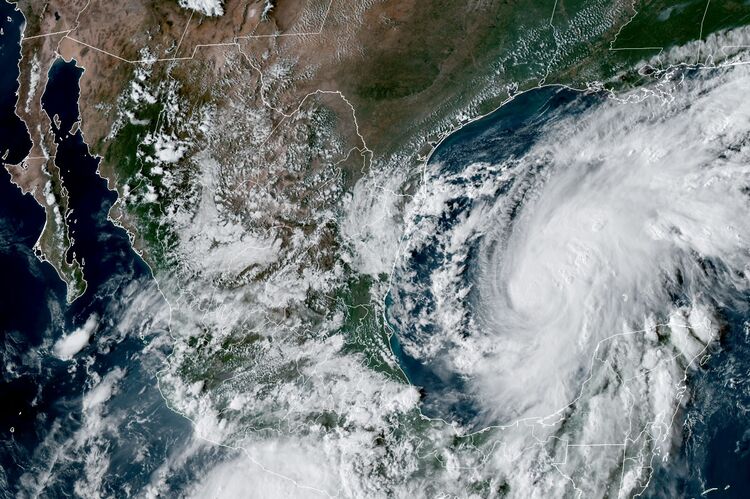
Isaias has continued strengthening despite moderate vertical wind shear, powerful crosswinds that can disrupt a hurricane’s circulation. Those winds will only ramp up as the storm makes its final approach to land Friday. But the storm has begun showing signs that it may rapidly intensify, with winds increasing by at least 35 mph within the next day.
“Some decrease in intensity is indicated as Isaias approaches the coast,” Pasch wrote. “Regardless, Isaias is expected to remain a dangerous hurricane through landfall.”
Communities along the Gulf Coast have ramped up preparations for strong winds and as much as 7 feet (2.1 meters) of storm surge. Emergencies have been declared in more than 70 counties near the storm’s expected path in Alabama, Florida and Mississippi.
Florida Governor Ron DeSantis warned in an X post Wednesday that the eastern flank, considered the “most dangerous side” of the storm, was due to hit the Florida Panhandle.
Read More: Hurricane Melissa’s Powerful ‘Dirty Side’ Threatens Kingston
Isaias is expected to bring heavy rain across the Southeast through the weekend. Localized totals of up to 5 inches are possible as far north as the Tennessee Valley and the Carolinas, raising the risk of flash, urban and isolated river flooding.
The storm may fling up to 15 inches of rain in pockets across Florida’s Big Bend region and panhandle. Alabama, Georgia and northern Florida may also see isolated tornadoes Friday night into Saturday.