
Telecom tycoon Patrick Drahi has nudged creditors at his US cable empire into a corner and they’re pushing back with a jumbo 165-page lawsuit. It’s a desperate fight over a melting ice cube. But the tale should be required reading for credit investors given how neatly it illustrates the risks of lending to a smart controlling shareholder.
Optimum Communications Inc. operates in the viciously competitive US broadband industry. It has $25 billion of net debt versus an enterprise value of perhaps only around $16 billion (based on the valuation multiples of its peers). On that basis, the equity is worthless and a restructuring that slashes borrowings will be needed one day. What little value remains in the New York-listed stock merely reflects how ordinary shareholders sometimes receive a few paltry goodies when such situations get resolved.
Drahi controls Optimum through super-voting stock. He’s proven himself a master at salvaging something from negative equity in the past, and he’s been at it again here.
The critical turn came last November when Optimum refinanced a loan with covenants preventing it from raising new debt against collateral pledged to existing borrowings. With that constraint removed, Drahi created a new silo, Optimum East, to house operations serving areas such as Long Island and Connecticut.
The original business, now dubbed Optimum West, was left with only $1 billion of earnings before interest, tax, depreciation and amortization to support its colossal $22 billion of net debt. Of those borrowings, more than $6 billion falls due in 2027. The assets assumed by the newly established Optimum East generate around $2 billion of Ebitda. But it has modest debt (taken on to refinance the restrictive loan) and plenty of spare borrowing capacity.
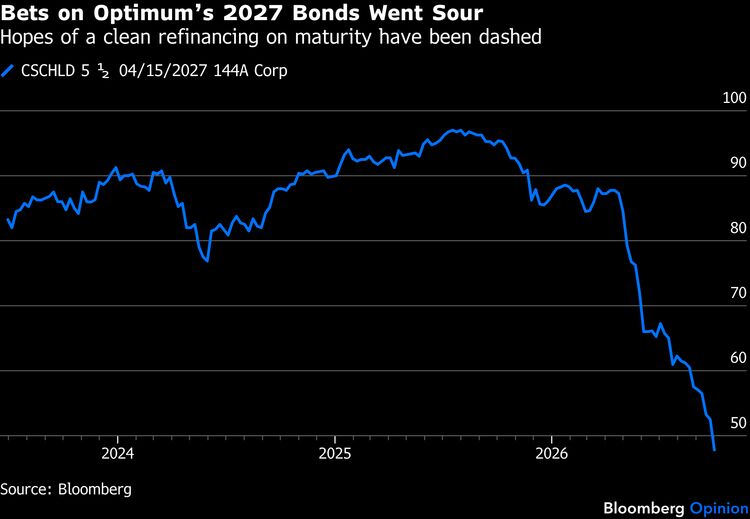
Despite this savage deterioration in Optimum West’s credit metrics, its bonds maturing in 2027 were trading at only around 10% to 15% below par from December to April. The market view appeared to be that Drahi would likely raise further cash at Optimum East to settle the bonds and avoid a crunch next year. Here, it seemed, was the chance for a quick buck.
How wrong that was. The price of the 2027 debt slid in June as Optimum moved to accelerate restructuring talks. Worse, Optimum issued around $500 million of preferred securities to Drahi and other investors that could be redeemed for $1.3 billion in a bankruptcy. One comfort for Optimum West’s beleaguered creditors had been their entitlement to Optimum East’s equity if the company collapsed. The preferred securities would take a bite out of this too. What cheek.
Optimum says the transactions fully complied with the debt agreements and the law. But you can’t blame the creditors for alleging they’re “fraudulent transfers” and a breach of fiduciary duty. And it’s hard to disagree with their characterization of it as “brazen.”
All the same, it’s far from clear anything illegal has taken place.
For starters, Drahi did not use the East-West split to take out a massive dividend for himself. He just replaced old debt with new and rearranged the deck chairs. Nor is it obvious that this asset-shifting was forbidden under the terms creditors signed up for.
Indeed, some market participants saw the iceberg coming. Research provider CreditSights was warning clients of the risks last year. Credit fund CrossingBridge Advisors LLC has blogged about how it chose to invest in the new debt at Optimum East rather than the higher-yielding debt at Optimum West because “return of capital is more important than return on capital.”
The preferred securities more clearly stand to enrich Drahi at creditors’ expense. That said, external investors also participated, providing Optimum with the potential defense that the generous payback terms were set by the market.
Both sides here are highly sophisticated. The bondholders, including Apollo Global Management Inc. and Ares Management Corp., will have understood the small print. The case more likely turns on why the transactions happened rather than what the credit documents allowed, as Bloomberg Intelligence points out. Motives matter. The creditors need to prove there was a clear intention to deprive them of value. That depends on what they unearth if they’re granted discovery of Optimum’s inboxes.
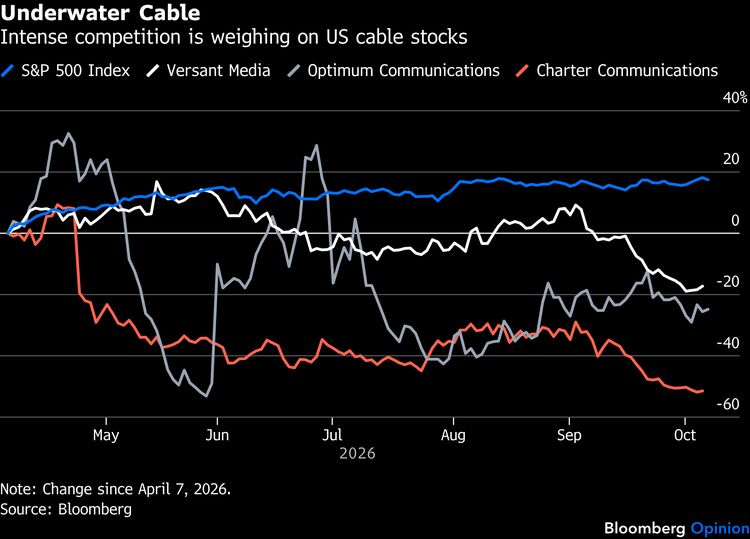
Some distressed-debt situations can be highly lucrative. This one is just a mess. Even with a lot of pain now priced into the bonds, it’s hard to see a winning trading opportunity. Suppose there’s ultimately a debt-for-equity swap. How will those shares ever be profitably monetized? The readouts from Optimum’s broadband peers are grim. Charter Communications Inc. is, in theory, a potential buyer, but it has enough on its plate.
Of course, this lawsuit has nuisance value. That strengthens creditors’ hand in any negotiations on a future restructuring — but what a lot of fees and hassle. As BI says, it’s a big game of chicken.
Controlling shareholders like Drahi will pull every lever to protect their equity. Investors who were mindful of that and avoided Optimum won’t have any regrets at all. Sometimes the cleverest distressed trade is to pass.
More from Bloomberg Opinion:
- A $23 Billion Franco-US AI Bet Is Seriously Aggressive: Chris Hughes
- The End of Private Equity’s Leveraged Buyout Era Is Nigh : Paul J. Davies
- What Is Going to Break in the Bondpocalypse?: John Authers
Want more Bloomberg Opinion?
OPIN
<GO>. Or subscribe to
our daily newsletter
.