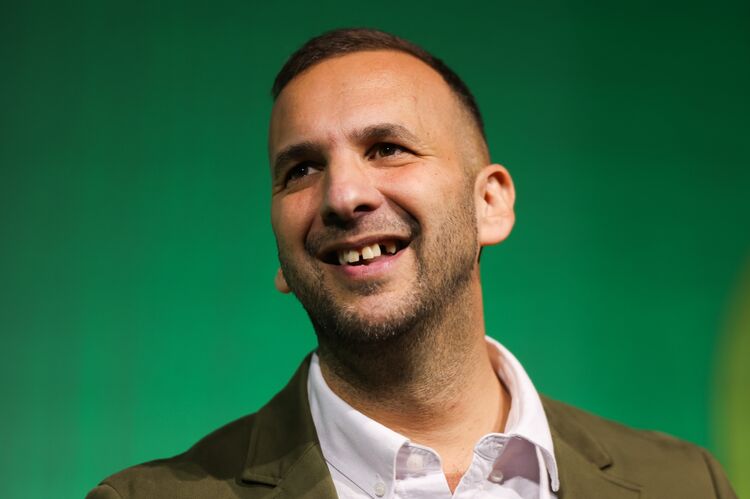
Green Party Leader Zack Polanski faces an uphill battle in his attempt to win a north London seat in the UK’s House of Commons on Thursday, as new Prime Minister Andy Burnham breathes fresh life into the governing Labour Party.
The left-wing populist is standing in the North London seat of Holborn and St Pancras, vacated by former premier Keir Starmer last month. Favorite to win is Labour’s Sagal Abdi-Wali, who came to the UK as a refugee from Somalia in the 1990s, and serves as leader of the local council.
The by-election looks set to expose the change in fortunes for the two left-wing parties amid a bounce for Labour that followed Burnham’s ascent to power in July. The Greens, meanwhile, have seen support tail off as the new premier steers Labour leftward onto political terrain they had sought to occupy.
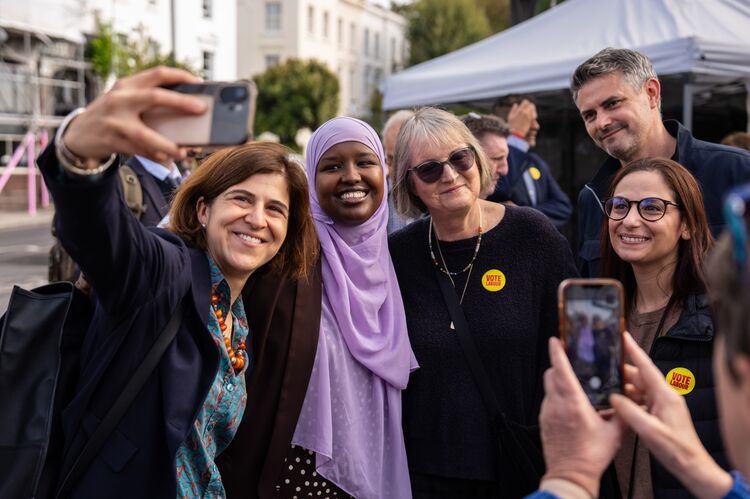
Burnham “has really closed down the space that the Greens have been operating in for much of the past two years,” said Rob Ford, professor of political science at the University of Manchester.
At Labour’s annual conference last month, Burnham pitched to win back voters who’d strayed to the Greens with vows to explore rejoining the EU, look at reforming the electoral system, trim guarantees on rising pensions to help fund social care, and take more public control of utilities.
At the Greens’ own conference, Polanski said Labour’s shift was due to pressure from his party. That sentiment is reflected in the Greens’ messaging in Holborn and St Pancras that left-wing voters there would be better represented by Polanski, a party leader who would be able to push Burnham further left, than by yet another Labour back-bencher.
Nevertheless, Bloomberg’s composite poll shows that since Burnham came to power, Labour has risen 5.4 percentage points, with the Greens dipping 3.6 points.
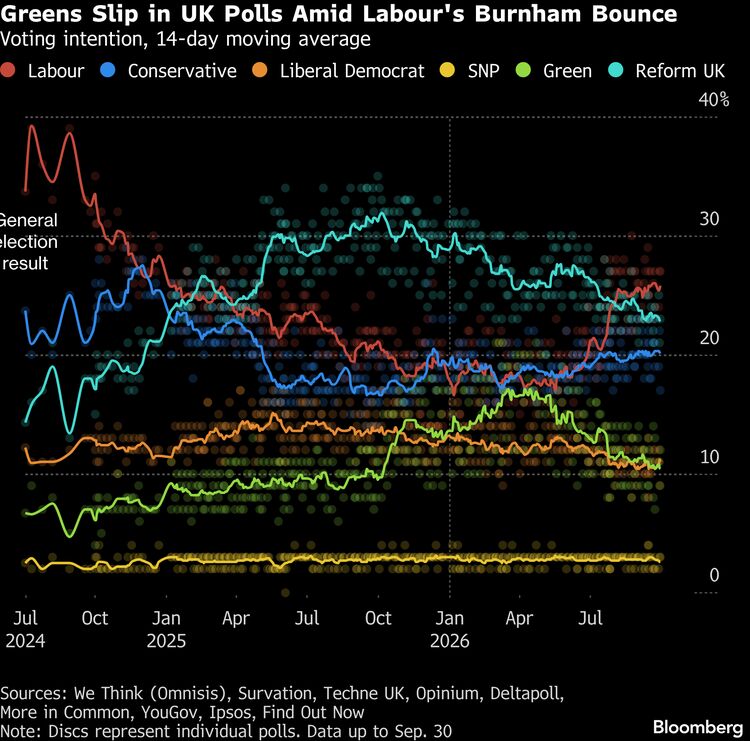
Earlier in the year, the Greens were flying high, registering record poll ratings after a near-tripling of its membership to more than 200,000 people under Polanski’s leadership. The Greens won their first ever parliamentary by-election in February and made sizeable advances in local elections in May.
But in recent months, they stumbled. Polanski was forced to apologize after it emerged he’d failed to pay council tax while living on a houseboat, and has also faced scrutiny over claims he made more than a decade ago that he could use hypnotherapy to enlarge a woman’s breasts.
Added to that is an escalating row within the party over its stance on Zionism. One Green official said they were worried a controversial motion pushed at the party’s conference last week by pro-Palestine members to class Zionism as racism would put off center-left voters.
The motion passed, making it official Green policy, but has been condemned by many British Jews as well as Ellie Chowns, the party’s parliamentary leader. Sandy Ruthven, chair of the Amnesty International UK Charitable Trust and a former mayoral candidate, quit the party, saying on LinkedIn that “in seeking to court the hard-left vote, we have failed to confront prejudice when it appears on our own side.”
Israel barred Polanski, who is himself Jewish, from its territory. He didn’t take part in the vote but had called for an amendment to protect Jewish members. He later issued a statement that “no one will be made unwelcome because of their background, their faith, or where they worship” after Jewish members of the party expressed worries that many UK synagogues support a version of Zionism.
It’s unclear what bearing the row will have over the by-election. According to the UK’s 2021 census, just 2.2% of people in the Holborn and St Pancras constituency identified as Jewish, with some 21.7% identifying as Muslim.
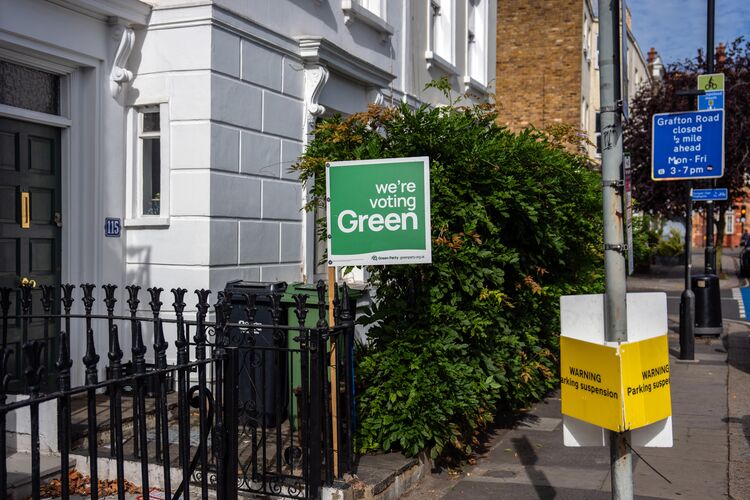
But even though the Greens have thrown their biggest name at the contest, the electoral math already looked unfavorable in Holborn and St Pancras, a seat Labour has held since its creation in 1983.
Starmer took almost 49% of the vote there in 2024, beating an independent who’s not running this time on 19% and the Greens on 10%. Political consultancy Electoral Calculus gives Labour an 84% chance of winning again, while political data website PollCheck’s modeling has Labour winning in 75% of more than 10,000 simulations.
Moreover, Polanski’s own popularity is on the wane. Half of Britons think of him unfavorably, according to pollster YouGov, up from 34% in April and 20% just after he was appointed in September 2025.
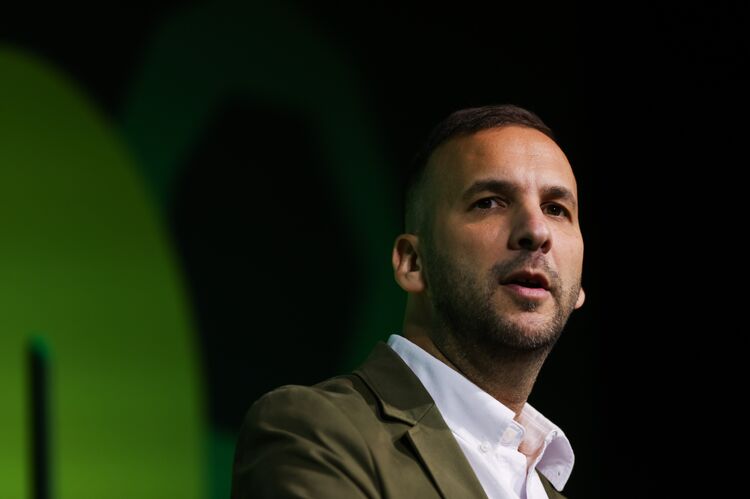
At the end of September, people around the Green leader were guiding the race in north London was closer than many had assumed. They said Polanski and Abdi-Wali had roughly an equal number of committed supporters, but wavering voters who’d backed Labour in 2024 had since become disillusioned and were beginning to fall behind the Greens.
But now, party officials are preparing the ground for Polanski’s failure, pointing out by way of mitigation that Nigel Farage — leader of the right-wing Reform UK — stood in seven Parliamentary elections before winning a seat.
Ford said Polanski would be well-advised to encourage patience in his supporters, as Burnham’s popularity may well fade if he fails to turn around the UK economy.