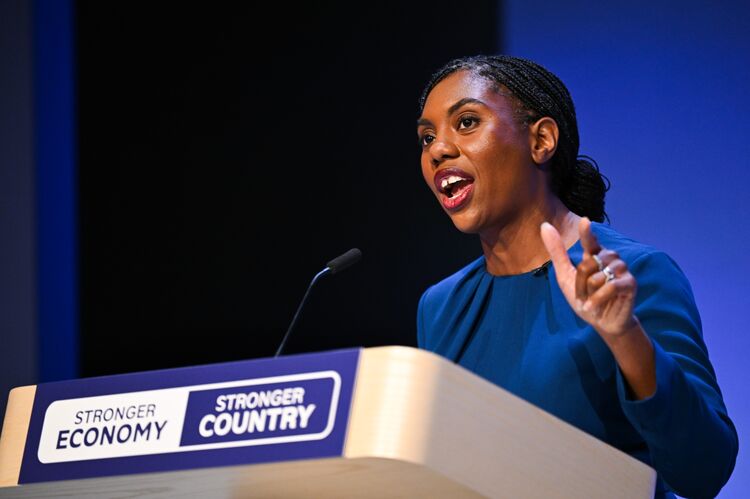
Ahead of laying out a platform of tax cuts aimed at affluent Britons at her party’s annual convention, opposition leader Kemi Badenoch told journalists: “We are going back to the authentic Conservative Party that people knew and loved.”
Just a week before, Prime Minister Andy Burnham had used a similarly buoyant Labour Party gathering to set out an unapologetically left-wing agenda. And so, at a time when the insurgency posed by fringe parties is losing ground, Badenoch could be forgiven for dreaming that British politics is settling back along a left-right divide.
The country is moving on from the “managerial politics” defined by Keir Starmer and Rishi Sunak, according to polling expert John Curtice, who was speaking at a fringe event at the Tories’ Birmingham conference. Those former prime ministers sought — and ultimately failed — to appeal to voters on the basis of competent government.
Curtice said that disenchantment with the technocratic Sunak and Starmer had allowed smaller, ideologically driven parties like Nigel Farage’s Reform and the Greens under Zack Polanski to peel off voters. Now, while Reform suffers scrutiny over its financing and the Greens grapple with a damaging anti-Zionist row, a more confidently left-wing leader has settled in No. 10 Downing Street, and Badenoch is steering the debate onto the more familiar territory of fiscal prudence.
Tory MPs and officials who spoke to Bloomberg on the sidelines of the Birmingham conference said that the party had an opportunity to use the next election to portray Burnham as offering a risky approach to public finances, and pitch themselves as the sane and stable alternative.
That’s nostalgic terrain for the Conservatives, who held power for 14 years after successfully seeding the idea that Labour were responsible for the way the late 2000s global financial crisis played out in the UK. But since Liz Truss’s notorious budget sent bond markets haywire in 2022, their credibility on the economy has tattered .
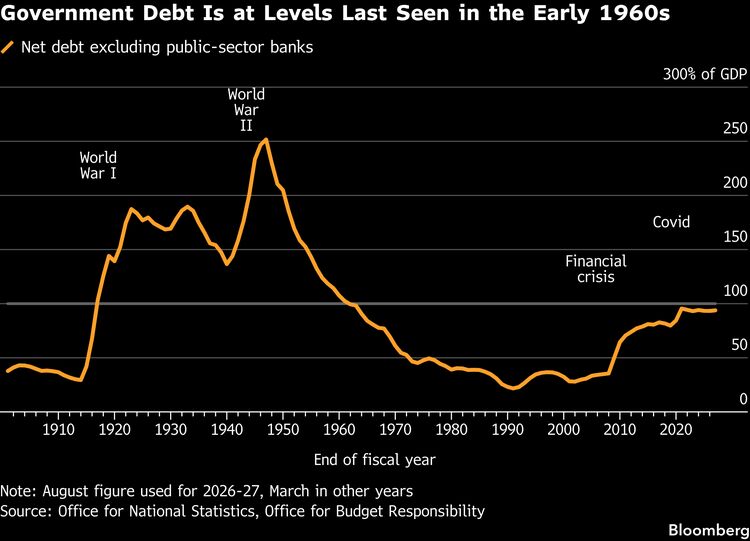
The national debt rose dramatically under the Tories, who presided over Covid-era handouts, and has got marginally smaller, as a percentage of GDP, under Labour. But the government has increased taxes to their highest levels in decades, which is where the Tories have focused attacks.
At Labour’s annual conference in Liverpool Burnham secured a poll bounce by vowing to exert some agency over Britain’s most controversial policy dilemmas, from a ballooning pensions bill to the Brexit vote he said he might reverse. But his radical plan to introduce socialized care for the elderly is partly unfunded, and faces possible delays, Bloomberg has reported .
In Badenoch’s conference speech the economy was again the primary focus, after a stretch trying to compete on Reform’s populist turf. “The political situation has changed,” said Conservative Party spokesman Dylan Sharpe. “We have a prime minister who last week basically did old-school tax-and-spend socialist policies. We are saying there is now a clear choice, and Kemi spelled out that choice”.
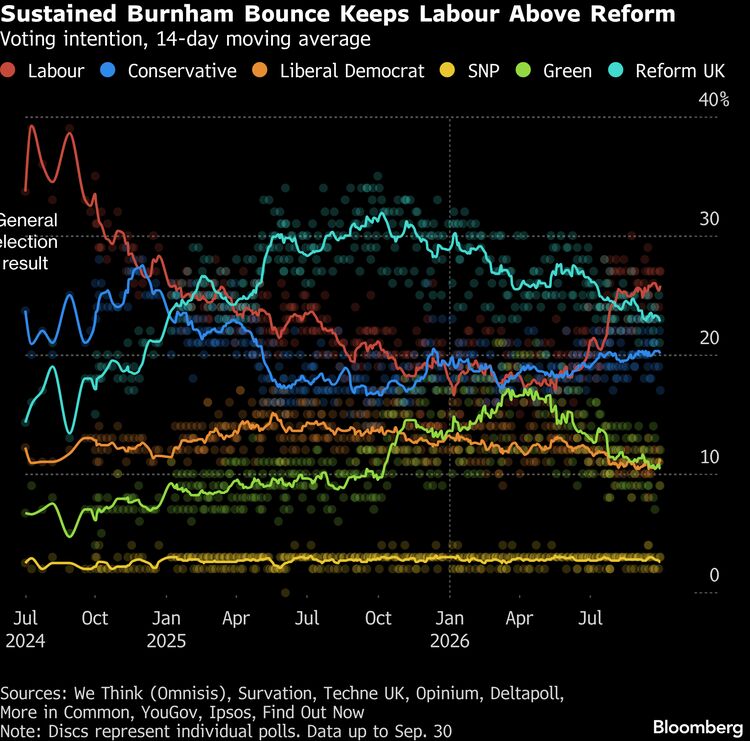
According to the national polling, the party has a way to go to recover its dominance. The Conservatives still trail behind Labour and Reform, albeit in a much closer third place than this time last year, when Farage’s party was 14 points ahead of the traditional party of the right. Polling suggests that if an election was held now, the result would be a hung parliament.
Tory insiders concede there is still a huge amount of work to do before it can convince voters they can be trusted, and while Badenoch’s popularity rating has improved, Burnham is the only party leader with positive ratings . According to YouGov, 46% of voters say Badenoch’s leadership has changed the party very little or not at all, compared to 30% who say she has been successful in attempts at reform.
Tory figures are concerned the party is far from ready if Labour were to call an early election. They said the party needed to further professionalize its policy and strategy, asking for anonymity to speak candidly. And there is mounting pressure on Badenoch to promote the next generation of Tories into senior roles.
One of the more vulnerable is Shadow Chancellor Andrew Griffith whose keynote address in Birmingham was widely panned. One member of the shadow cabinet expressing disbelief that they were expected to praise the speech in public, and questioning why Griffith was promoted to the role just months earlier. The speech only encouraged voices around Badenoch calling for him to be replaced with Business Secretary Claire Coutinho before the next election.
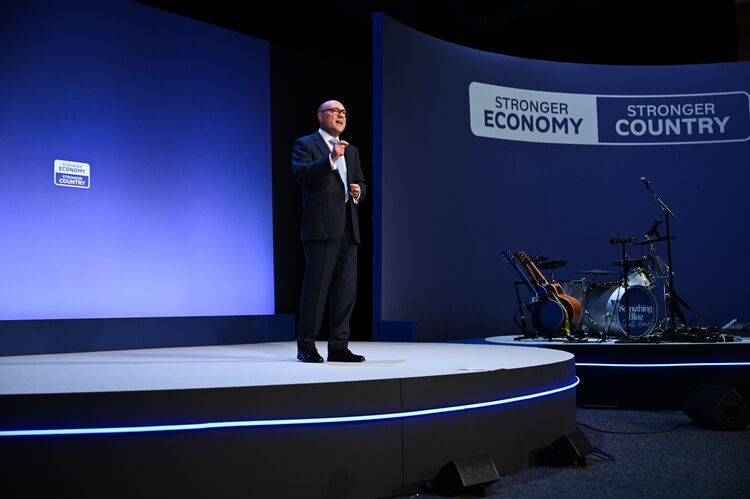
Badenoch has sought to draw a line under what she described as her party’s habit of making knee-jerk policy decisions that are not properly thought through. However, several of her announcements in Birmingham were unready for prime-time.
Her commitment to differentiate herself from Burnham by keeping the triple lock that boosts rises in the state pension beyond the next election has drawn a lukewarm response from some in her shadow cabinet, with one declining to back the party’s policy in private.
And a key announcement proposing the introduction of an air-defense system over the UK fell apart almost instantly when Badenoch had to play down her party’s initial claims it would amount to a British “iron dome,” after it was clear the £10 billion ($13.2 billion) earmarked for it put it in a very different league to its Israeli namesake.
Meanwhile her pledge to exempt “family homes” from inheritance tax, as well as increasing the tax-free threshold, has drawn criticism for mainly helping wealthy people. Tax expert Dan Neidle calculated that 90% of those who would benefit are in the richest 20% of the population; more than two-thirds live in London or surrounding parts of the south east.
But Shadow Chief Secretary to the Treasury Richard Fuller told Times Radio on Thursday that passing on a home to your children is “something that people quite naturally, wherever they are in this country, whatever their income level has been, want to have the opportunity” to do. He added that the policies are “designed to show the Conservative Parties will support you if you do the right thing, work hard, and want to get along.”
Patrick English, head of elections at YouGov, told an Institute for Government event on Tuesday that the Conservative Party’s brand and reputation remain “very damaged” from its time in office. Still, Tory peer and polling expert Robert Hayward said optimism was rising, with the party beginning to hope the threat from Farage was diminishing.
“The mood at this conference is better than last year because the decline of Reform has meant the Conservative Party are now only a few points behind,” he told Bloomberg. Badenoch’s improved popularity “has definitely given the party a boost.”