The listing of Firmus Grid Ltd. was poised to be the next beat of Oliver Curtis’s comeback story after serving time in prison on insider trading charges. It would also have cemented his position among the artificial intelligence boom’s ultra-wealthy.
But on Friday, the entrepreneur was facing another — if smaller — reversal of fortune as his data center company pulled its initial public offering after investors grew wary of its targeted valuation.
The abruptly halted listing underscores a broader pushback against the cost of financing AI infrastructure as interest rates rise, while the technology’s long-term payoff remains uncertain. It’s also a bruising episode for Curtis, a driving force behind what was going to be one of Australia’s biggest IPOs.
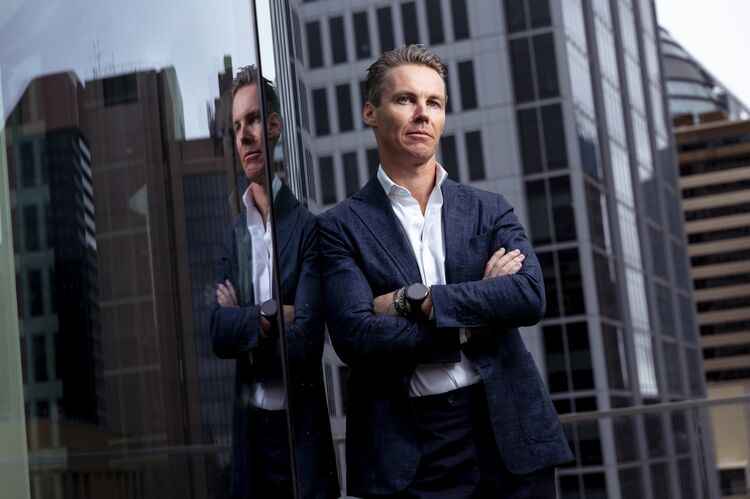
Firmus targeted a listing valuing it at $30 billion . While the size of Curtis’s stake is unclear, even a relatively small holding would have vaulted him into the ranks of Australia’s richest people.
Firmus did not immediately respond to a request for comment.
The company, which relies on a continuous influx of new capital, will now explore alternatives · . The terms of the IPO didn’t “appropriately reflect the strength of the business and long-term outlook,” Firmus said Friday.
Whether or not that outlook holds will in part depend on Curtis’s ability to raise new capital for the company that’s come to be his second act.
“The valuation was just way too aggressive,” said Emanuel Datt , chief investment officer of Melbourne-based Datt Capital.
| Read more about Firmus |
|---|
| Nvidia-Backed Firmus IPO Collapses as AI Valuation Concerns Grow · |
| Firmus Seeks to Raise $5 Billion in Landmark Australian IPO |
Curtis attended Saint Ignatius’ College, Riverview, a boarding school that’s the alma mater to cricketers, industrialists and one Australian prime minister. The school’s motto, translated from Latin, reads : “Dare to do, as much as you can.”
After finishing school Curtis began working in finance. In 2013, he was charged with conspiracy to commit insider trading with a childhood friend. Prosecutors alleged that the friend, employed at an asset manager, had passed information about impending trades to Curtis, who’d traded on it. The trades generated A$1.43 million ($998,350) of profits, according to a statement from prosecutors that referred to him as a former banker.
The court proceeding was closely watched in Australia, with many seeing it as a comeuppance of two young men from a privileged background. Curtis, who pleaded not guilty, was convicted and sentenced to two years in prison.
“I was a young man,” Curtis said on podcast Rampart Talks in March. “I was silly, I was stupid and I made a mistake.”
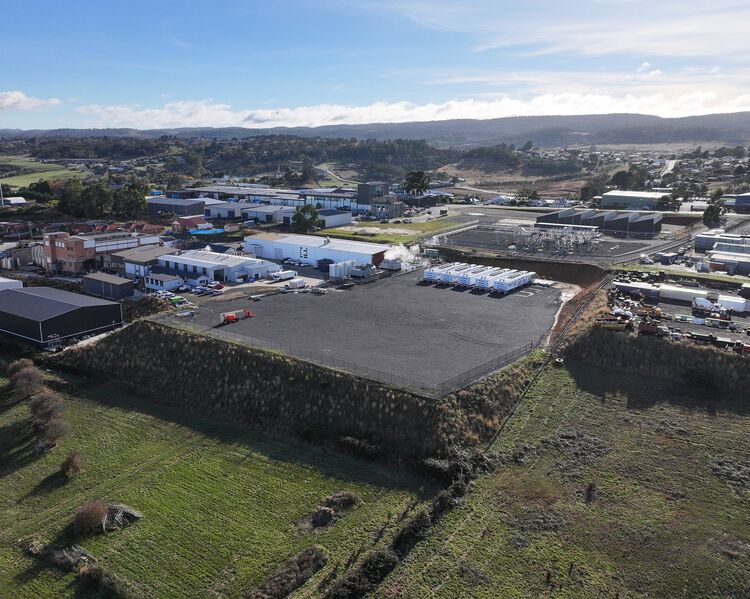
After his release, Curtis teamed up with Tim Rosenfield and Jonathan Levee to found Firmus. What began as a Bitcoin mining operation in the Australian state of Tasmania in 2019 eventually turned into a provider of data centers and related AI infrastructure, using a special cooling technology that helps cut costs. Curtis’s father, Nick, a former Macquarie Group senior banker and mining executive, served on the board for more than seven years before stepping down in 2025.
The company was valued at $5.5 billion in an April investment round led by Coatue Management LLC and backed by Nvidia. It has partnerships with companies including Meta Platforms Inc. and OpenAI , and has expanded into Singapore, Indonesia and Malaysia. It also got $2 billion in commitments from a group of investors, including Jane Street, in August.
It began setting up investor meetings in September for the planned IPO, seeking to raise as much as $5.5 billion. It was also in talks with lenders for roughly $10 billion of debt and equity to buy chips, Bloomberg has reported.
News of the canceled listing marked a dramatic turn for Firmus, which just days earlier had signaled that there was ample investor demand for a deal that would have valued it at $30 billion.
“I wouldn’t say the withdrawal of the Firmus IPO was inevitable, but it is understandable that investors were closely examining the proposed valuation,” said Rachel Waterhouse, chief executive officer of the Australian Shareholders’ Association , which represents retail investors. “A promising industry and an exciting growth story do not automatically make a sound investment.”
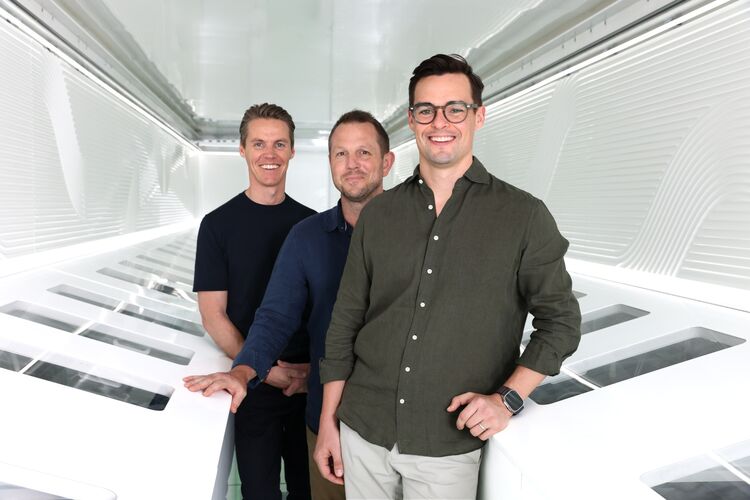
Firmus’s rapid growth and Curtis’s angling to take it public has time and again drawn attention to his criminal conviction. Curtis has largely avoided interviews in recent years. But in the Rampart podcast, he acknowledged his past and said that he, in hindsight, would’ve done things differently.
“I think that in acknowledging and owning your mistakes of the past, you naturally should be able to get a second chance,” Curtis said. “Redemption is based off making sure that you can set an example for your children, that you can continue to build a successful business, that you can be taken seriously.”
“Redemption,” he added, “is an absolutely essential part of chapter two.”