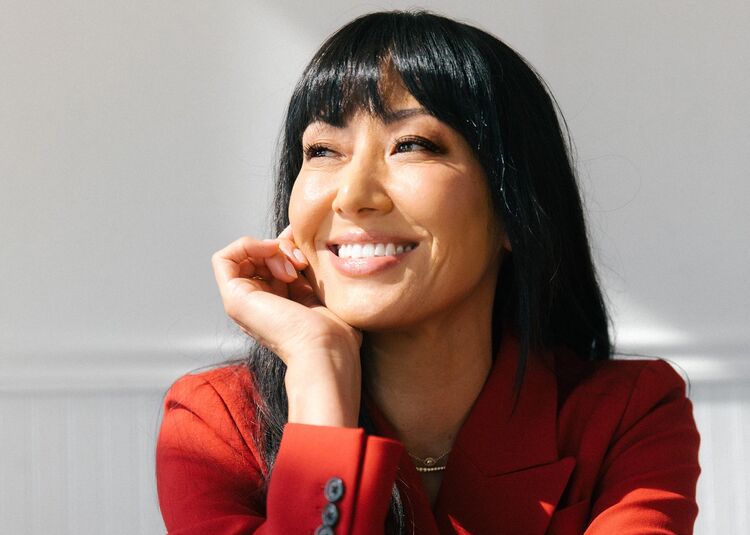
Lindsay Kagawa Colas is a dealmaker. The sport agent’s currency is dollars and handshakes, clauses and stipulations. It was Kagawa Colas who first secured inclusion riders and maternity protections for athletes’ contracts in 2018. It was she who finagled an agreement between Nike Inc. and then-University of Connecticut point guard Paige Bueckers to make a custom sneaker in 2024, the brand’s first with a college athlete following the NCAA’s landmark name, image and likeness rule.
As executive vice president at the talent agency the Team , Kagawa Colas has a roster that includes some of the most celebrated women in sports: scores of WNBA stars like Breanna Stewart and Brittney Griner , champion fencer Ibtihaj Muhammad , and three-time All-American volleyball player Harper Murray . She’s negotiated with fledgling teams, professional leagues, huge corporations, upstart companies and, in Griner’s case , proxies for the Russian government.
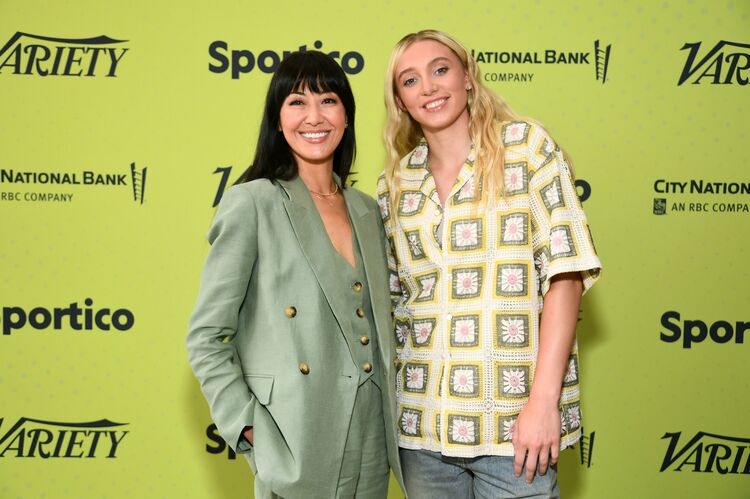
Kagawa Colas has been called demanding and combative. She takes a hands-on approach not just to her clients’ contracts, but to the development of their public personas. She vets. She needles. “The ‘manipulation’ word — somehow there’s a negative connotation,” Kagawa Colas says with a smile at the Soho House in Portland, Oregon, where she lives with her husband and two children. She prefers to think of it as influence. A sneaker executive once recited all the ways he had found her to be difficult throughout their negotiation, she recalls; he read his list off an iPad in a meeting.
Her reputation is formidable. Yet in professional circles, Kagawa Colas continues to be introduced with a caveat: She does women. “All the time, all the time,” she says. “It would bother me if I heard it from someone I care about. I hear it from a lot of people that I don’t think are very smart. Misogyny runs the world, and so I just know what I am up against.”
Kagawa Colas was born in California, just north of Oakland. Her father was a teacher and basketball coach, and she can still picture him up late, composing letters of recommendation for his students. Observing what he expected of them, she became an accomplished athlete herself, playing Division I volleyball at Stanford University, where her teammates included future Olympians Kerri Walsh and Logan Tom. The experience of competing alongside them was its own education: “It became obvious what ‘world-class’ means. I had other talents.”
Those included maniacal organization, tireless hustle and a knack for persuasion. Kagawa Colas was named captain and developed a keen self-awareness. She doesn’t think of her athletic background as a requirement for what she does now — “if I called it a prerequisite, people would think I was firing shots” — but she does believe it gives her a “distinct advantage.” Like her clients, she has a sense of what it means to sacrifice for your sport.
After graduating from college in 2001, she stuck around campus for a master’s degree and a fellowship researching the effect athletes have on their communities through thoughtful engagement. Those wrapped up in 2002, and she was soon hired as an executive assistant to agent Bill Duffy at talent and marketing firm BDA Sports . When Duffy was approached about representing then-Phoenix Mercury point guard Diana Taurasi — still the WNBA’s all-time leader in points, 3-pointers, field goals and free throws — Kagawa Colas put herself forward.
Duffy was considered a top-tier agent, but he’d never worked with someone from the WNBA. Kagawa Colas and Taurasi shared a background in college sports and a drive that each recognized in the other. “The minute we met, we had the same headstrong mentality about what we wanted to do,” Taurasi remembers. “It felt like we had known each other a long time.” Kagawa Colas became her agent. Taurasi remains a client.
The two pursued ambitious careers in tandem, Kagawa Colas growing her business at BDA and Taurasi setting a new standard for women’s basketball on the court. “She became the definition of success for me,” Kagawa Colas says, “but we also experienced the frustration of how hard it was for her to get the recognition she deserved.” Taurasi’s prowess was evident to Kagawa Colas. The obstacles were also clear. For Kagawa Colas, who had gone into sports hoping to make an impact and still has an athlete’s hunger for competition, it was an intoxicating combination.

Kagawa Colas started to specialize, developing a women’s practice at BDA and jumping to her current agency, then called Wasserman, to launch a similar division there in 2009. The WNBA was a little more than a decade old. Endorsement deals and media attention were meager, so Kagawa Colas drew on the research she’d done during her postgraduate fellowship to strategize. Her clients had issues that mattered to them. The press didn’t care, but local organizations did, so she learned to shape her clients’ narratives with their help. “Community foundations were my way to find the right connections for athletes to pursue what they were interested in,” she says. “For women it was the only PR I could get.”
It was an elegant workaround. Before social media made it possible for athletes to cultivate a direct relationship with their fans, that kind of philanthropic work — making event appearances, showing up at churches, schools and hospitals — gave them a place to develop their profile and an audience eager to engage with it. Kagawa Colas used the response to these events to persuade brands to invest in her clients’ burgeoning star power. The deals that resulted from that agitating, however spare, helped establish them as public figures and supplemented the modest income earned from their work with their respective teams. It could be exhausting for the athletes and for Kagawa Colas (“a $10,000 deal is the same amount of paperwork as a million-dollar deal; it just is”), but the process established her clients as compelling, dimensional figures. It made them real.
“The heart of what makes women’s sports and women athletes different and sticky and interesting,” Kagawa Colas says, “is their identities as people, as creatives, as moms.”
In 2018, at the urging of Minnesota Lynx power forward Maya Moore, Kagawa Colas negotiated maternity protections into her endorsement contracts, safeguarding Moore’s compensation in the event of pregnancy. That language has become standard in the contracts of professional athletes. In 2020, when a group of WNBA players wanted to oust Georgia Senator Kelly Loeffler — a Republican who’d objected to the league’s activism on behalf of the Black Lives Matter movement, and who also happened to be a co-owner of the Atlanta Dream — the call came to Kagawa Colas, who helped roll out the league’s high-visibility endorsement of Democrat Raphael Warnock. His polling had just climbed out of the single digits when Kagawa Colas and her clients designed T-shirts emblazoned with “Vote Warnock.” Wasserman footed the bill. Athlete endorsements and voter registration drives continued through the runoff election in 2021, in which Warnock prevailed. “He was a very, very, very good candidate,” Kagawa Colas says. “And WNBA players got him elected.”
The triumph thrilled Kagawa Colas, partly because it was evidence of the league’s growing might. But the financial difficulties remained more or less the same. In the offseason she was still negotiating deals with international clubs where her clients could earn multiples of their WNBA salary in the span of a few months. Their dependence on those contracts became much more public in 2022, when Griner was detained at a Moscow airport. Kagawa Colas can still recall getting the phone call from Griner’s wife saying the basketball star had been stopped after Russian authorities found vape cartridges containing cannabis oil in her luggage. She tracked her client’s phone as Griner disappeared into the terminal.
Kagawa Colas began to wake up to predawn phone calls with Griner’s Russian attorneys. She held regular meetings with the US State Department, confabs that started in what Kagawa Colas calls “the hopes and prayers division” but soon ended up in the Office of the Special Presidential Envoy for Hostage Affairs. She was in constant communication with WNBA and NBA leadership, plus an army of legal experts, security consultants and policy wonks on both sides of the aisle. She built an enormous campaign to raise awareness of the case that in turn “held the government’s feet to the fire,” says Roger Carstens, who ran Speha during the Biden administration.
“Lindsay may come off as calm and measured, and she is all that,” Carstens says. “But make no mistake about it, underneath that calm lies a spine of steel and a hardened, tough and calculating interior.” It’s obvious he means this as a compliment. “There’s no one better to have on your side during a fight, and there’s probably no worse person to have on the opposite side in a fight than Lindsay.” (This from a man who negotiates with dictators.)
After 10 months in prison, Griner was returned to the US in December 2022. It was a jubilant homecoming, and Kagawa Colas doesn’t dwell on how the preceding period affected her. But those close to her could see it took a toll. “She got up every single day almost singularly focused on that,” says Vince Kozar, president of the Phoenix Mercury and a longtime friend. “To be frank, she went through a transition in her client base because of it. She spent all her time doing that because she knew that was perhaps the most important thing she’ll ever do in her life aside from raising her kids.”
Kagawa Colas casts her commitment to bringing Griner home as “keeping the ultimate promise” as an agent and advocate. It was proof of her dogged investment in her clients as people. But she concedes that it cost her. “It was complex, and revealing,” Kagawa Colas says. “For a lot of clients, it strengthened our relationship. But we did lose a few, and I know other agents used the case against me.” She remembers one client dropping her within hours of Griner boarding a plane back to Phoenix. Kagawa Colas picked up the phone, thinking she was about to be congratulated on Griner’s return.
“This can be a cold business, and clients have a right to the kind of representation they want,” Kagawa Colas says. “The bottom line is that it isn’t the client’s job to care about your feelings or how hard you’re working. Clients care about results, and it’s my job to deliver them.” The work depends on “a natural imbalance of power in a relationship.”
In March 2026 the WNBA and the league’s union reached an agreement on a contract that governs the current season through 2032. To observers and fans, it represented a clear tipping point. While it still pales in comparison to contracts in men’s sports leagues, it will transform the experience of being a women’s basketball player. In 2025, Kagawa Colas’ client Bueckers earned $78,831 for her rookie season as the top draft pick. In 2026, Azzi Fudd was selected in the same spot. She’ll earn $500,000 for her first year with the Dallas Wings.
Bueckers has had no trouble making up the difference. There’s the Nike deal Kagawa Colas negotiated, plus dozens of other endorsements the basketball phenom racked up at UConn. Since going pro, Bueckers has inked partnerships with DoorDash Inc. and Louis Vuitton. Taurasi and Kagawa Colas once could only have dreamed of that kind of recognition. Taurasi retired in 2025, but she and her agent continue to work together, plotting. “We’ve been through all the ups and downs of women's sports,” Taurasi says. “Now we have to be careful. How do we sustain this? What happens next?”
The women Kagawa Colas represents still make 80% to 90% of their income through endorsement deals. New league contracts are exciting, but playing money continues to account for a small fraction of earnings. Kagawa Colas would like to see those numbers reversed. It would free women to focus on their game and prioritize the issues and brands that resonate most.
“We fight hard for parity. We want equal money for equal services, and we make sure companies have all the data — that male athletes have more followers, but women will still outpace them in engagement,” Kagawa Colas says. “There’s a different kind of relationship that people have with women athletes.”