
Barely a generation ago, India was a place where capital was scarce and household wealth overwhelmingly flowed into banks, gold and property. Today global private equity firms deploy billions of dollars at a time in the country, and venture capitalists have financed companies worth tens of billions. Digital infrastructure has put banking, payments and investing within reach of people the formal financial system struggled to serve. The next part may be harder: India must turn the new money and access to its markets into globally important companies. And it still needs to broaden income and household wealth.
Bloomberg Markets asked four people who occupy very different places in this new world how they think Indian finance needs to change over the next decade. Their answers have been edited for clarity and length.

Lalit Keshre
Co-founder and chief executive officer, Billionbrains Garage Ventures
Keshre grew up the son of a farmer in a village in central India where buses still don’t reach. The company he co-founded is the parent of Groww, the country’s largest stockbroker by active investors.
“India still has a huge access problem in finance. We have 1.4 billion people spread across very different geographies, speaking different languages and earning very different incomes. For a traditional financial institution, there were always millions of people who were simply too expensive to reach and serve. Technology keeps changing those economics. Payments showed what can happen when the cost of distribution collapses. The next big opportunity is in investing, financial advice and credit. Artificial intelligence could change the economics again. A good financial adviser may be able to look after 20 or 30 people properly. If AI can do much of the routine work — understand a portfolio, answer questions, flag what needs attention and personalize information — that same adviser could potentially serve 1,000.
“But the bigger opportunity goes beyond getting more Indians to buy stocks and mutual funds. Indians already have enormous wealth; much of it sits in physical assets such as gold and property. Think about a shopkeeper who owns his shop and needs money to expand. If ownership records and valuations become reliable and digitally verifiable, a lender can understand that asset and make a credit decision much more easily.”
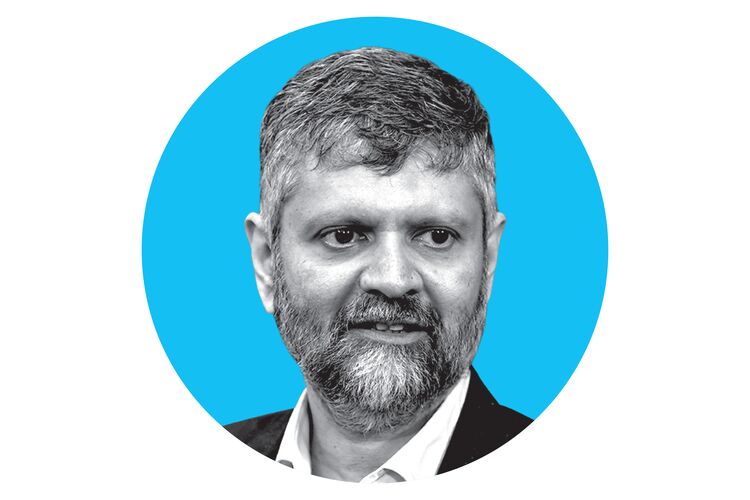
Tuhin Parikh
Executive chairman, Real Estate India, Blackstone Inc.
When Parikh joined Blackstone in 2007, he and his colleagues were working out of a Mumbai apartment. The company bought office parks when other foreign investors were retreating, and it helped shape India’s market for real estate investment trusts. Now, with roughly $50 billion of assets across real estate and private equity, Blackstone says that it’s India’s largest foreign investor by assets and that the country is its most profitable market globally.
“The Indian market matured much faster than many people expected. That doesn’t mean returns disappear. It means you have to work harder for them. The biggest change is in how investors think about India. They no longer ask whether India is investable or whether exits exist. The questions now are the same ones investors ask in developed markets: What are the returns? How resilient are they? Can you execute?

“That makes discipline even more important. Nothing is a runaway [success] in India. The market rewards endurance and staying power. You wait for regulatory clarity, and then you deploy with conviction. You also have to know what to watch when things are going well. For me there are two warning signs: inflation that begins to hurt consumer demand, and asset prices rising much faster than the fundamentals underneath them.”
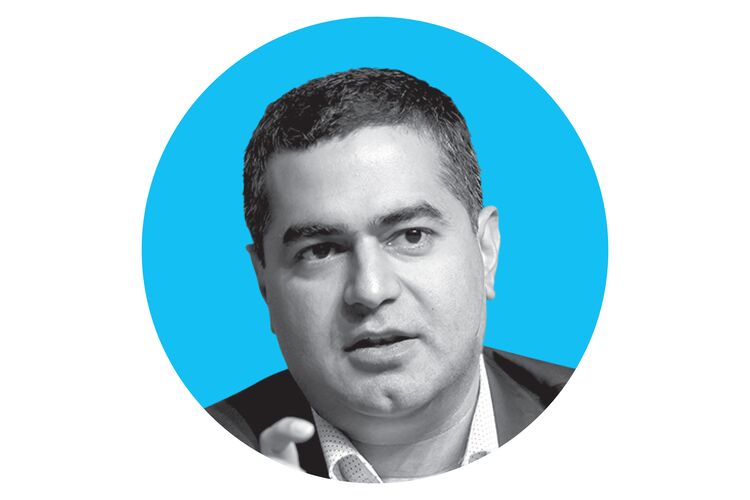
Shailendra Singh
Managing director, Peak XV Partners
At Peak XV Partners, India’s largest venture capital investor, Singh has invested across technology, consumer businesses and financial services. The firm broke away from Silicon Valley VC giant Sequoia Capital in 2023. Its bets include Pine Labs, a digital payments company, and Cred, a fintech platform aimed at affluent consumers.
“Around 2015 we started tracking how many companies in our portfolio had at least $100 million in annual revenue. There were only two or three. Today, even after years of exits, we have roughly 55.
“Multiple founders, though they may not say it publicly, have the ambition to build $100 billion valuation companies from India. That changes the mathematics of venture capital. Something else is changing: who supplies the capital. Indian family offices and domestic funds are already sharing cap tables [lists of company ownership] with us. Look at India’s 100 largest companies by market value today. Only two or three are venture-backed technology or consumer companies. If I were a betting person, I think that could be somewhere between a quarter and half over the next decade or so.”

Sarada Kunjappan
Farm laborer, Anchiri, Kerala
During a lunch break from farmwork in Anchiri, among the lush hills of Kerala on India’s southwestern coast, Kunjappan sits in a shed surrounded by tools and speaks in Malayalam. She carries an ordinary mobile phone, not a smartphone. Yet formal finance has reached her: Kunjappan recently borrowed 250,000 rupees ($2,600) against her land from a local cooperative bank at about 6% interest.
“Getting a loan is easier now. Earlier it was much harder. I have some land, and because I have that land, the bank was willing to give me money against it. It was the first time in my life I had taken a loan like this. But a loan has to be paid back every month. I work on other people’s farms. If there is work, I go. If there is no work, I stay home. In a good month, I can earn around 20,000 rupees, but there is no guarantee that every month will be a good month. When the rains are heavy, there is less work in the fields. Getting a loan is easier now. Earning enough to repay it is still hard.”