German spies haven’t enjoyed the best reputation among Western peers. The arrest this week of the country’s one-time intelligence chief on suspicion of treason is unlikely to help matters.
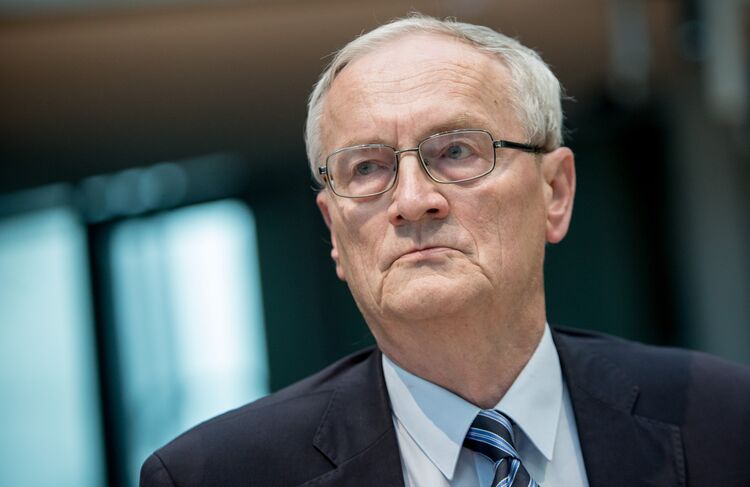
In a shock to the security establishment, August Hanning, an 80-year-old former president of Germany’s Federal Intelligence Service, or BND, was taken into custody at his home north of Münster early Tuesday. Prosecutors accuse him of arranging access to some 2,000 highly classified BND documents and peddling the information for his consultant work, including in at least one case with a foreign service.
The episode, which a top lawmaker overseeing intelligence called a “betrayal,” amplified longstanding concerns among allies about the BND’s capabilities and track record for safeguarding sensitive information. German authorities are now trying to bolster the agency’s abilities to keep up with peers such as the US Central Intelligence Agency and Britain’s MI6.
Any spy service has to contend with such vulnerabilities, including the US, said JC Lintzenich, who was an adviser to former Director of National Intelligence Avril Haines in the Biden administration. Even if it doesn’t change the BND’s relationship with Washington, the US is likely to assess closely what was compromised and whether it involved American intelligence, he said.
“What is surprising and particularly disturbing here is the level of the individual accused,” said Lintzenich, currently a visiting senior fellow at the German Marshall Fund in Washington. “This isn’t a junior officer, Hanning actually led the BND.”
Read More: Germany’s Ex-Intelligence Chief Arrested in Espionage Probe
The arrest of a top official who ran the BND under former Chancellor Gerhard Schröder from 1998 to 2005 reopened old wounds for a service that’s been dogged by charges of leakiness. Authorities four years ago detained a senior BND official accused of working as a double agent funneling intelligence to Moscow in exchange for cash.
The Germans in that instance were tipped off by an allied intelligence agency. The agency’s reputation for being caught off guard was typified in February 2022, when then-BND chief Bruno Kahl was on a visit to Kyiv when Russian launched its full-scale invasion of Ukraine. The spymaster initially struggled to leave the country.
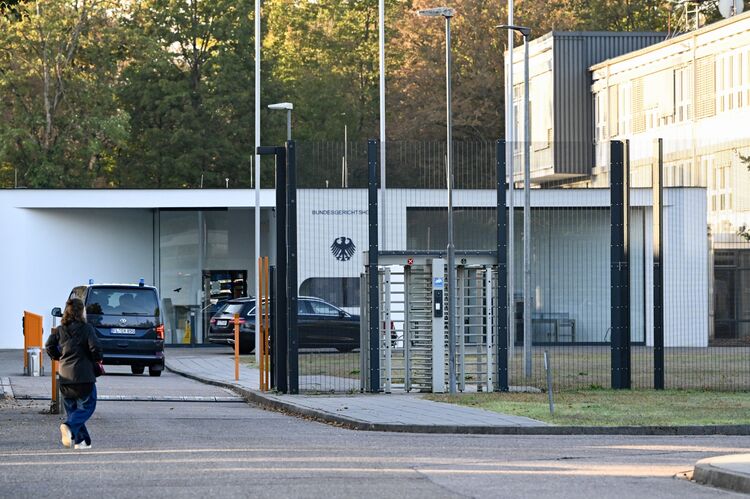
German authorities are now working to turn around the agency with a set of measures that would make it able to more actively respond to security threats. German intelligence will be able to intervene in certain circumstances to disrupt threats from a foreign power, including hacking IT infrastructure, retaining data for longer and enabling access to telecommunications and digital-services systems, according to draft legislation approved by Chancellor Friedrich Merz’s cabinet in August.
Read More: German Spies to Gain Powers in Deterring Mounting Threats
Lintzenich lauded recent efforts by the BND to recruit talent, collect more intelligence and transform into a more operational service. BND President Martin Jäger, a former ambassador to Ukraine, this week told lawmakers that Germany has become a prime adversary in a “shadow war” with Russia, whose threat is taking on a “new, more dangerous quality.”
“We are also seeing increasingly clear-eyed assessments of Russia and the threat it poses to Germany and Europe,” Lintzenich said.
But the fallout from this week’s arrest signals that the German services have more work to do.
Konstantin von Notz, a Green lawmaker on the Bundestag’s parliamentary control committee, called the revelations around Hanning, whose lawyer has rejected the treason charges, “appalling.” He called for an investigation and an end to the practice of former security officials cashing in as lobbyists, saying that the vulnerabilities such work opens is a matter of national security.
“These activities are evidently also a gateway for hostile intelligence services,” von Notz said in an interview.
Von Notz’s role as a member of a parliamentary body tasked with overseeing intelligence activities represents one of the complaints of German peers: that the BND is in a regulatory vise that potentially places sensitive intelligence in the hands of lawmakers who may have other agendas. The panel currently has no members from the far-right Alternative for Germany or the anti-capitalist Left party.
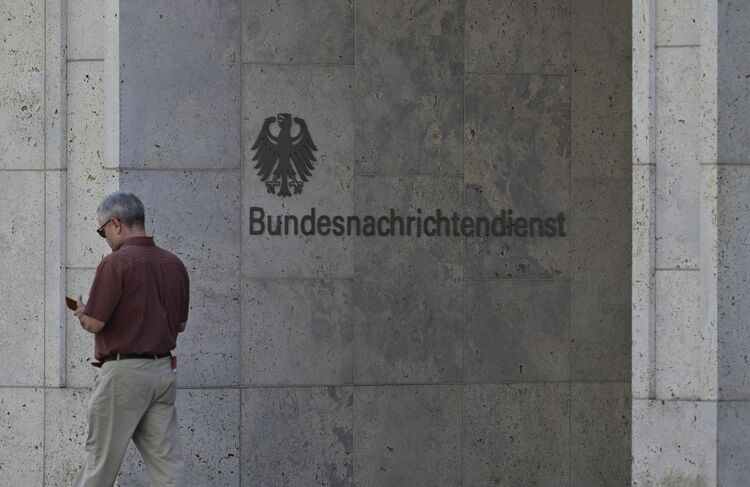
But the arrangement is a response to the country’s dark history. Communist East Germany’s Ministry of State Security, known as the Stasi, placed a surveillance blanket over the country that kept citizens closely watched. The Gestapo under the Nazi dictatorship used a vast network of informants to hunt down perceived enemies of the regime.
The BND’s own history shows how incomplete the break with the past was. The agency’s post-World War II precursor was led by Reinhard Gehlen, a general in Adolf Hitler’s army who led a division of military intelligence. The US used his knowledge after the war and he worked for the CIA, deploying his wartime resources to develop espionage against the Soviet Union. The BND under his watch — he led the agency until 1968 — was replete with former Nazi officials.
For now, Hanning’s incarceration shows that the state’s safeguards are working, according to Marc Henrichmann, a lawmaker from Merz’s bloc who leads the oversight panel in the Bundestag.
“Handling classified information is a matter of national security, not a trivial offense,” Henrichmann told Bloomberg. “Anyone who joins forces with the enemies of our free democracy will not go undetected. We will not tolerate the betrayal of secrets.”