
On a weekday in Tokyo Station, a steady cross-current breaks across the lunchtime commuter flow. Shoppers stride with purpose into Trainiart, a tiny wedge of a store selling specialty train merchandise. From the back wall, dozens of little faces look out, blank and unblinking.
They belong to Suica Penguin, the placid, genderless, round-eyed mascot for railway company JR East. After a 25-year career, the penguin is being retired, prompting nationwide dismay — and a flurry of merch grabs by loyal fans.
Among them is Kaneko Kazumi, 54, who’s looking to add to her growing collection that includes a rare vinyl handbag she wears like a clutch, with Penguin’s face smiling from the vise of her armpit. After perusing a wall of branded shoulder bags, file folders, plushies, tissue box covers and key chains, she leaves to consider her options over lunch. “I’m a bit lost,” she says. “I can’t buy too much.”
JR East , Japan’s largest passenger railway company, which carries 16.5 million people a day, first introduced Penguin, adopted from a children’s book by Chiharu Sakazaki , in 2001 as part of a campaign for a rechargeable smart card that automatically calculates fares. The Super Urban Intelligent Card was called Suica for short, a name that also captures the “sui sui” sound of passengers gliding through the ticket gate. Over the years, Penguin became a firm fixture on the card; in 2016 a bronze sculpture of the mascot was placed at Tokyo’s Shinjuku Station, where it became a convenient meeting spot within the world’s busiest train station.
Smart cards like Suica, used not only for transport but also shopping, are ubiquitous in Japan, and Penguin is everywhere in Tokyo. As of last year, JR East had issued 112.3 million Suica cards, more than double the Tokyo metro system’s Pasmo card, which bears no mascot, just an illustration of a bus and train car. Penguin’s black head also appears on the digital wallet version of Suica, used on phones as well as wearables.
Penguin’s evident popularity made it all the more surprising when the company announced in November that it would “graduate” in March 2027 and be replaced by a new character that would be put to a popular vote. It’s part of a wider planned upgrade that includes linking Suica to national ID data and allowing digital money transfers — an overhaul dubbed the “ Suica Renaissance .”
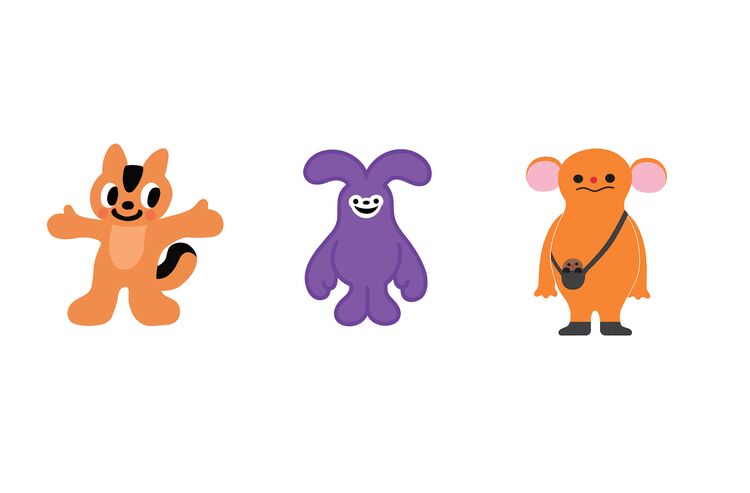
On Sept. 8, JR East introduced the new mascot candidates : a cheerful squirrel, a strangely proportioned purple rabbit and a miserable-looking orange creature wearing a purse with a mole inside. They were met with round derision on social media, with users ridiculing them as “creepy” and “cringe.” Comments poured in suggesting alternate candidates or calling for Penguin to keep its job. A popular “Plan D”: a reclining watermelon with Penguin’s round eyes and little smile pasted on. (“Suica” also means watermelon in Japanese.)
One user posted a photo of Penguin plushies dressed in the work apron of bookstore chain Junkudo, noting “Penguin has already nailed a job change — impressive as hell.” It received 265,000 likes.
The outpouring of Penguin attachment is part of a wider wave of train-related nostalgia that also swept New York City last year when it retired its MetroCard. New Yorkers held a symbolic funeral at Manhattan’s Washington Square Park to mourn the three-decade old swipe card, while limited editions flooded resale platforms . When Paris stopped selling paper train tickets at the end of 2025, they became keepsakes for locals and tourists alike.
But that’s not the whole story. Japan has a robust mascot culture, wherein characters are dreamt up to represent not only places and brands but even regional fruits, such as Gunma prefecture’s tomato-head boy, and public awareness campaigns, like Yokohama City’s condom fairy.
Mascots and more generally characters like Hello Kitty often get swept up in a culture of oshikatsu , which is frequently translated as “fandom.” But it implies something beyond ardor: actual actions taken to support (typically financially) one’s oshi , the object of adoration. Oshikatsu spending in Japan is worth an estimated ¥4.1 trillion ($25.9 billion) a year, while the average fan sets aside a monthly budget of ¥16,356.
Penguin is the Holy Grail of Japanese marketing — a mascot that crosses into bona fide oshikatsu territory, with a set end date fueling demand. There’s infinite merch potential, and it exists within an atmosphere of intense FOMO, like the buying frenzy surrounding Myaku-Myaku, the googly-eyed mascot of last year’s Osaka Expo.
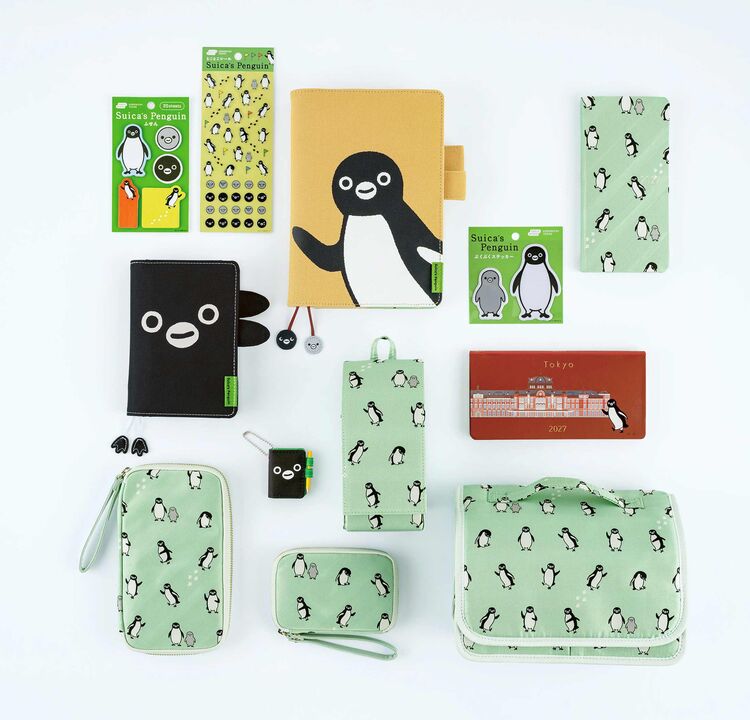
As Penguin’s days wind down, pockets of the city and the web are aflutter with activity. One afternoon, people huddle inside Pensta at Ueno Station, one of four stores in Tokyo that exclusively sells Suica Penguin products such as shoes and umbrellas and more niche merch, such as Penguin as a stuffed, fuzzy teapot. Tokyo Station is holding a monthlong fair this month, with products ranging from patterned Penguin wallets to a Castella cake with Penguin’s face stamped into it, many of which were sold out by the second day.
Co-branded notebooks by Hobonichi Techo, a globally popular daily diary notebook, have sold out, but that hasn’t stopped people from showing up at the Tokyo Station store and taking photos of the sample notebooks, as if they’re celebrity handprints. On Sept. 24, online preorders for the notebook crashed the site. When I got in line around noon, I was 14,039th. The next day, the notebook was going for more than double its price on resale sites. “People are panicking,” Kazumi says.
People are exposed to Penguin on a daily basis, says internet media researcher Yuzuru Kido. “Even if people weren’t enthusiastic fans from the start, I imagine a natural affection for the Penguin grew over time as part of their daily lives,” he said in an email. “Many people never expected this relationship to end.”
It may take some time for people to adjust to a Penguin-less world. But as Kido has pointed out , the crazed-looking Myaku-Myaku was initially met with public derision — as the three Suica candidates are now — before going on to become an immensely popular figure.