At 9:45 p.m. on a Monday night in July, I found myself sitting across a folding plastic table from a 12-year-old in the auditorium of a Masonic lodge in San Marino, California. We’d been there for three hours, playing a single game of chess.
To my chagrin, my young opponent’s concentration didn’t seem to be flagging at all. In fact, as his clock ticked down below a minute — we’d begun with 90 each — he only seemed to grow more focused. Despite having more time on the clock and 25 more years on this Earth, I struggled to convert my winning position. Under pressure, I made a mistake and he pounced. Now he was the one with the winning position, though I managed to save the draw.
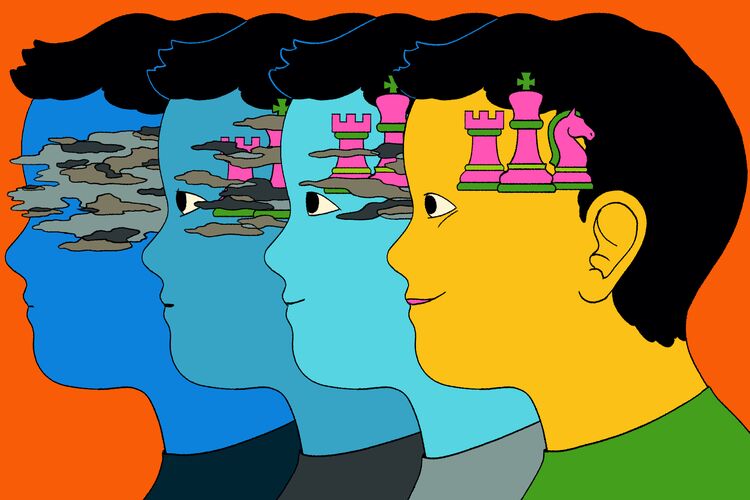
As I stumbled to my car, exhausted from the furious and single-minded concentration, I thought about something other than chess for the first time since I’d walked into that building: the attention crisis. This is the widespread belief that we’re in the process of losing our ability to think , focus and process information because of our overreliance on technology, a belief that’s increasingly being documented both anecdotally and in scientific studies.
What I’d just witnessed was a fascinating counterexample of this phenomenon. The kid I played against seemed wholly capable of focusing his attention for hours on end, and he’s far from an anomaly. Although much of the recent chess boom has taken place online via Twitch streamers and lightning-fast mobile games, classical chess, as the slower in-person matches are known, remains the foundation of the rated US Chess Federation pathway toward becoming a master-level player.
And the best classical players are only getting younger. A 14-year-old recently became the youngest-ever player to qualify as a so-called super GM; later this year a pair of 20-year-old GMs will play each other for the world championship title. The fifth-highest-rated 9-year-old in the country belongs to my chess club just outside Los Angeles. (The last time I played him, he absolutely destroyed me.)
These youngsters don’t erase trends at a population level. But I see on a regular basis the level of focus they’re capable of, and it flies in the face of the narrative about the decline of attention.
So what’s going on here? Might old-fashioned “slow” chess have some lessons to teach us about how to address these larger challenges we’re facing? Could the attention crisis really be more of a crisis of interest?
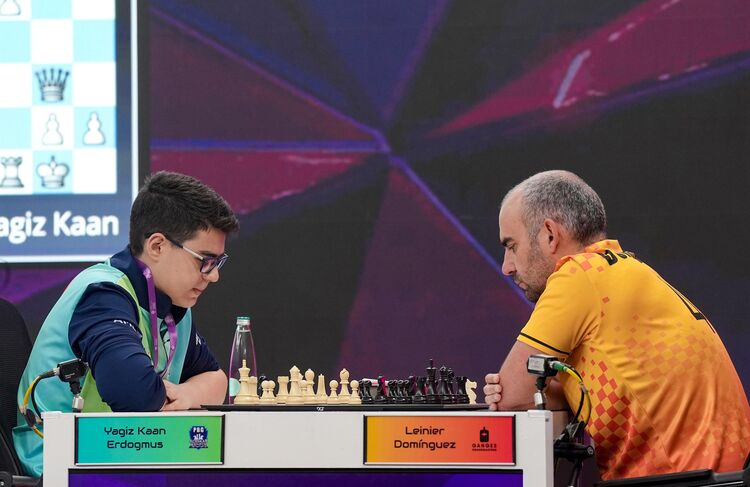
Mike Klein, a journalist and commentator who works with Chess.com , taught chess in a classroom setting for 15 years, and while he doesn’t think it’s some sort of silver bullet for solving academic problems, he does believe it satiates a clear need of many young brains. “Increasing the attention span and the focus of kids is certainly one of the things that we use to sell the game as educationally viable,” Klein says. He adds that the “constant, relentless problems to be solved that a single chess game gives you” provide children with something to focus on: Every turn offers a new challenge to be faced. It also forces them to stop and think before making a move. “In chess you have to sit for 5 or 10 minutes and restrain yourself from trying to pick the first answer.”
This format — one problem after another, posed sequentially, with each answer receiving a positive or negative response — creates an ideal learning environment, and it’s one we see far more often in recreational pursuits than in the classroom. Judy Willis, a neurologist and teacher who’s extensively studied how the brain learns, calls this “active learning.” “If they get timely feedback, like in a video game or in a musical instrument or a sport, then they make the correction and they see that they improve,” she says. “That certainly happens in chess.”
While a significant part of the attention conversation revolves around kids’ raw ability to focus, an equally significant part has to do with motivation. “The brain likes to learn,” Willis says. “It likes to fill in gaps.” But problems emerge when kids don’t feel engaged with what they’re learning. Without that sense of connection and relevance, the act of learning might not mean anything, and you miss out on that inherent motivation lying dormant in the brain.
Chess, on the other hand, is a kind of motivation machine. Beyond the basic reality that most kids who are playing chess are doing it because they want to — if you’re picking activities that might make you rich and famous, chess isn’t going to be high on the list — the game also offers constant feedback. Every move you make either improves or harms your position, and every game you play affects your rating. This gives the brain constant rewards.
“When [the brain] gets it right, it might win at a chess move, but it also gets dopamine, and it really, really likes dopamine,” Willis says. This means the brain is motivated to improve so it can receive more dopamine when it gets future problems right. Such realizations can be applied to other subjects as well: Willis gives the hypothetical example from her work of showing a French class a video of a comedian cracking up an audience. They’re going to be motivated to learn enough French to understand the joke, because they want to know what’s so funny.
It turns out chess is a near-perfect environment for experiencing motivation, says Paul Silvia, the Lucy Spinks Keker Excellence Professor & Graduate Program Director at the University of North Carolina at Greensboro. “It’s easy to get started, and you can improve really quickly. Just the feeling that you’re getting better at it is so satisfying, and that’s behind almost anything that people get really consumed with,” he says.
This is particularly relevant to children, Silvia points out, since childhood is a period essentially dedicated to developing skills with increasing complexity and sophistication, an idea that’s been the focus of a sizable body of research . A pursuit such as chess matches up perfectly with this inherent drive to improve and grow.
This also applies beyond chess. As hopeless as many of us might feel when we reach for our phone for the thousandth time in a day, research demonstrates that we can train attention like a muscle . The trick is to motivate kids to want to do so, and while chess is one good way to do this, it isn’t the only way — so long as they believe they can. Such a dynamic is at the core of Albert Bandura’s self-efficacy theory , which suggests one’s belief in their own abilities plays an enormous role in their eventual success. Chess offers concrete proof of one’s improvement through rising ratings, and that makes it work particularly well for training attention.
That’s the secret with the young chess players who are becoming so successful. You can’t force someone to study and work as much as you need to study and work to be an exceptional chess player; you also can’t dangle it like a carrot as a way to achieve a life of fame and fortune, like you can with sports. They need to love it, and they must put in that time and effort because they want to do so. The literature backs this up : Intrinsic motivation is a powerful predictor of success with or without extrinsic incentives. On top of that, people who are interested in the work they do both perform better and show more persistence .
One problem with this has been parents’ desire to engineer the effect: Put your kid in as many extracurriculars as possible, find the one they’re best at and most interested in, and then that can be their place to excel. Silvia calls this “instrumentalization,” and he thinks it’s been one of the biggest obstacles to genuine curiosity. Once we begin to instrumentalize our kids’ hobbies, we risk killing the very thing that’s motivating them in the first place — that fundamental buy-in.
Connecting and committing to chess “all adds up to something, and I think that’s a part of it too,” says FIDE Woman Grandmaster Jennifer Shahade, who’s also the author of multiple books, including her most recent one, Thinking Sideways: How to Think Like a Chess Player and Win at Life . “It’s an important thing when we talk about reading and academic stuff. If [kids] don’t have a feeling of what this is building toward and what it’s helping them to get better at and understand more deeply and to appreciate more deeply, it doesn’t really feel like there’s that much of a purpose to it.”
At its most basic, then, what chess demonstrates is the power of interest for driving attention. Kids want to stare at a wooden board for three hours because they’re interested, and if we can fuel that interest in other aspects of their lives, then we can drive the same focused attention. Of course, there’s one other quality chess has that reading and other academic pursuits don’t — and it would be hard to imagine how you’d replicate this one.
“A book is not trying to kill you mentally like your opponent is,” Klein says.
Kevin Lincoln is a journalist and filmmaker who lives in Los Angeles. He writes a newsletter about chess called Good Moves .