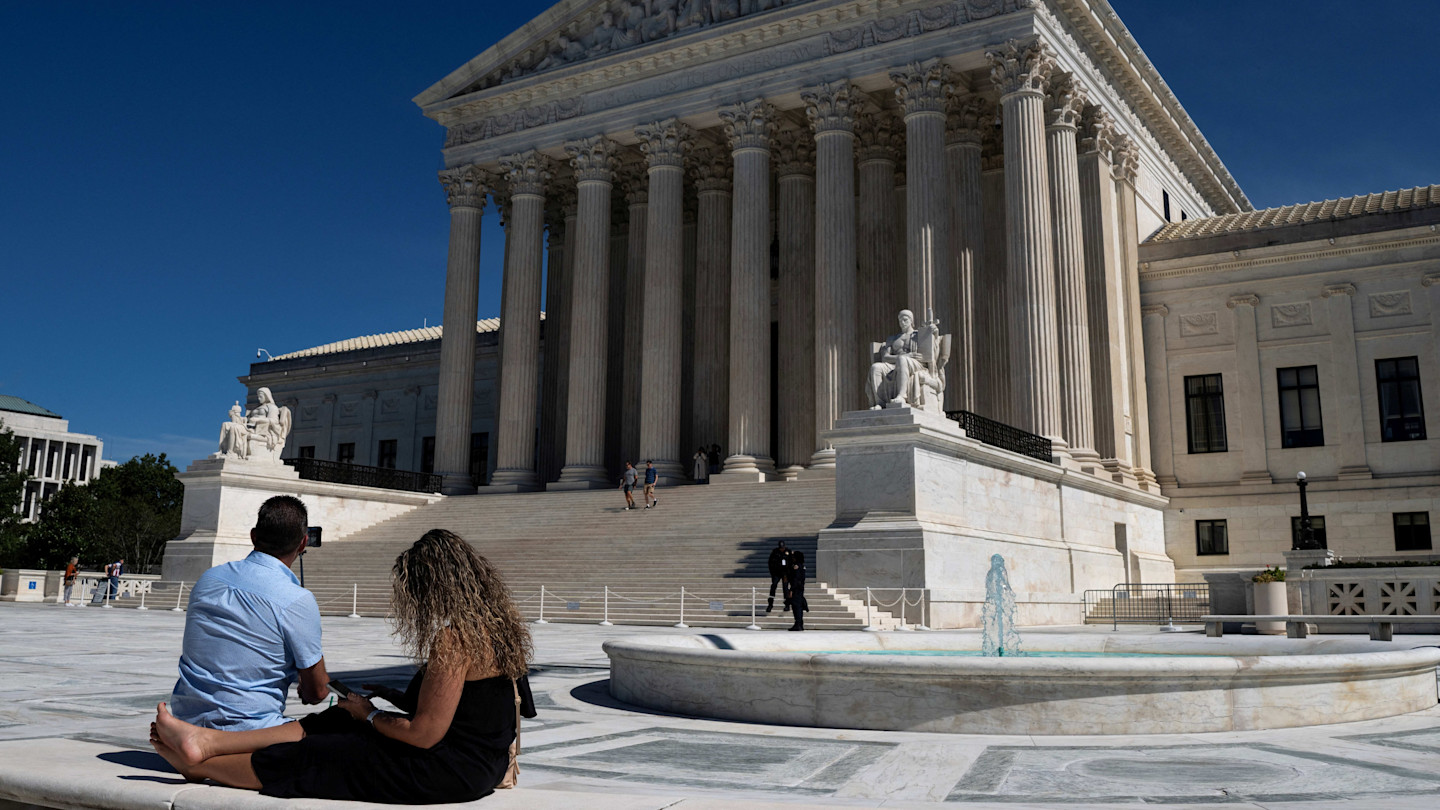
The US Supreme Court grappled on Monday with a pivotal case that stands to determine whether state courts can hold top polluters liable for the costs of dealing with climate change.
ExxonMobil and Suncor Energy have asked the US’s highest court to block the progression of a compensation case first brought against them in 2018 by the county and city of Boulder in Colorado.
During the court hearing, the companies encountered pointed questioning from justices across the ideological spectrum. Hanging over the proceedings was the potential of billions of dollars of claims and other far-reaching implications of letting Boulder’s suit move forward.
A lawyer for the oil companies argued that interstate pollution claims are governed by federal law, and that the US constitution bars applying state law in such circumstances. “This case involves an unprecedented effort to use state law to regulate global conduct,” said Kannon Shanmugam.
He said there was a “regrettable” effort to resolve what he described as political issues in the court, and said climate cases against the energy industry were proliferating, with some plaintiffs seeking billions of dollars' worth of damages. “More are being filed literally by the week.”
Chief Justice John Roberts raised the point that state courts had been allowed to proceed in similar situations where there were broad effects, such as in legal fights involving the internet.
“I’m not quite sure what makes this situation different from those, all those other ones where we’ve allowed them to proceed in state court,” Roberts said.
However, the chief justice also noted that “a municipality in every single state” would likely file suit if Boulder prevails. “How would you think that will work out on the ground?” he asked the Boulder lawyer.
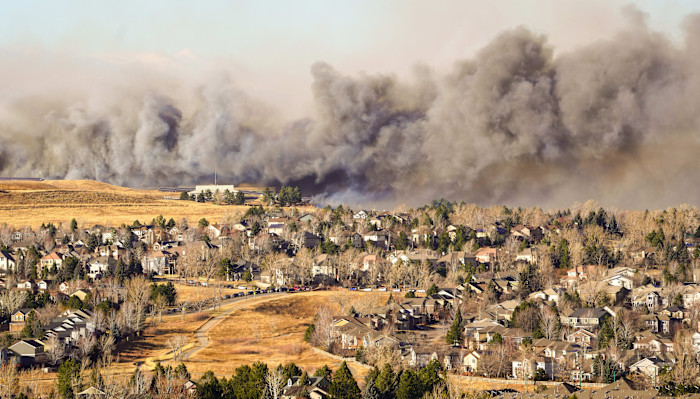
Boulder’s underlying case against some of Big Oil’s giants argues that Exxon and Suncor have knowingly contributed to global warming since the 1960s while obstructing public understanding of the human-caused phenomenon.
The Supreme Court outcome could kill or bolster Democratic states’ ability to demand that energy groups pay for fire, flood and drought damages and prevention in dozens of ongoing cases.
But the cost of extreme weather events in Colorado and elsewhere was largely absent from the court debate.
The arguments were largely technical, focusing on whether federal law pre-empts state authority over the fallout from climate change — and if the case is even far enough along for the Supreme Court to weigh in.
In the court briefs, conservative interest groups, Republican states and the Trump administration had complained of efforts by states such as Democrat-led California to impose their regulatory preferences beyond their borders.
Justice Elena Kagan, one of three liberals on the court, likened aspects of the case brought by Big Oil to “chapter three” in a history of litigation that began with the tobacco and opioid industries.
“In multiple respects this appears to be based on the old 1990s tobacco suits,” she said, highlighting the claims in the underlying case that oil companies had deceived the public over their role in global warming. “This is chapter three.”
The oil companies’ lawyer pushed back, arguing that the matter before the court came from a “very different book”.
Kevin Russell, a lawyer representing Boulder, said that harms that crossed state lines, such as computer viruses, were not exclusively federal matters. States should not be prevented from litigation simply because a harm was widespread or the defendants were “part of an important industry”.
While the oral arguments were heard on Monday, the first day of the court’s new term, a decision is expected by the time it breaks for summer in 2027.
The case comes at a time of Republican-led efforts to grant the fossil fuel industry immunity from climate laws and lawsuits, in contrast to attempts in Vermont and New York to charge coal, oil and gas companies for damages.
Fossil-fuel companies, industry-funded groups or climate-denial networks have filed a majority of the Supreme Court briefs in favour of Exxon and Suncor, according to the non-profit group Consumer Watchdog.
Former Environmental Protection Agency officials who served under both Republican and Democratic administrations, along with prominent legal scholars, have in recent months filed briefs to the Supreme Court arguing that a previous ruling regarding the Clean Air Act does not preclude the Boulder case.
In that ruling, the Supreme Court unanimously held in 2011 that federal common law could not be used to resolve this kind of case. But it left the door open to climate litigants drawing on state law instead.
The ruling could determine the outcome of two dozen other cases brought by states, counties and cities against fossil fuel companies, said Michael Gerrard, an environmental law expert at Columbia University. Particularly relevant was a case against Exxon in Massachusetts and one against companies including BP in Hawaii. “It’s an extremely important case.”
Justice Samuel Alito, one of the court’s most conservative members, recused himself from the Boulder case a week before it was due to start. His recent financial disclosures from 2025 show that he held stock in companies including ConocoPhillips, which is involved in claims that would be affected by the ruling.
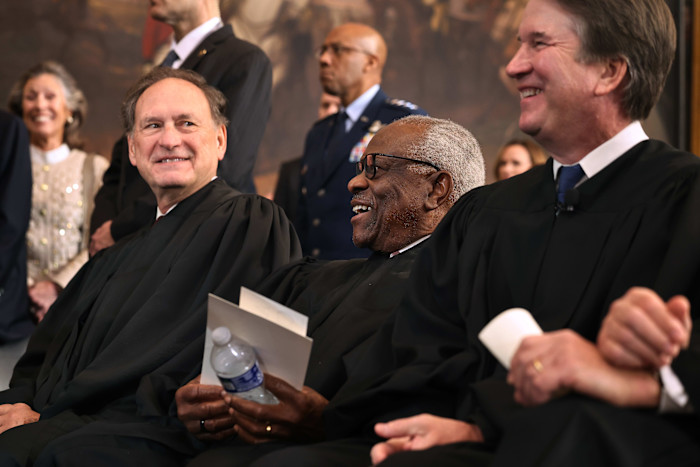
Alito’s departure raised the possibility of a deadlock among the justices, which would leave intact a Colorado Supreme Court ruling from last year that allowed the Boulder case to proceed in state court.
Conversely, a clear ruling against Boulder would “close the most promising door of climate litigation that currently exists, quite firmly”, said Jonathan Adler, a conservative legal scholar. For environmental groups, “that takes a lot of chips off the table”.
However, it could also vastly widen the circumstances in which federal law prevails over state law, muddying the court’s framework. “It’s hard to see how the fossil companies win without doing real damage to legal doctrine that the conservative justices really care about,” Adler added.
The high-stakes case has galvanised US-based climate change campaigners and deniers alike, after a summer of extreme weather events.
Ahead of the case, the Massachusetts-based Union for Concerned Scientists said it had noticed a step-up in attacks on scientists who focus on the link between extreme weather and burning fossil fuels. These are “part of the broader effort by fossil fuel companies . . . to discredit the evidence they don’t want to have heard,” said Carly Phillips, a scientist and member of the group.
The case also attracted global attention after a German court upheld its position last year that companies could be held accountable for climate harms abroad.
The result of the Boulder case will not transfer “neatly” on to other jurisdictions, said Harj Narulla, a barrister at Doughty Street Chambers in London. Unlike ongoing cases against Shell in the Netherlands and TotalEnergies in France, the Boulder case does not demand that companies cut production or emissions.
“But it’s an important global signal that this type of exposure to liability for fossil fuel companies is just a matter of time,” he said.

Where climate change meets business, markets and politics. Explore the FT’s coverage here.
Are you curious about the FT’s environmental sustainability commitments? Find out more about our science-based targets here