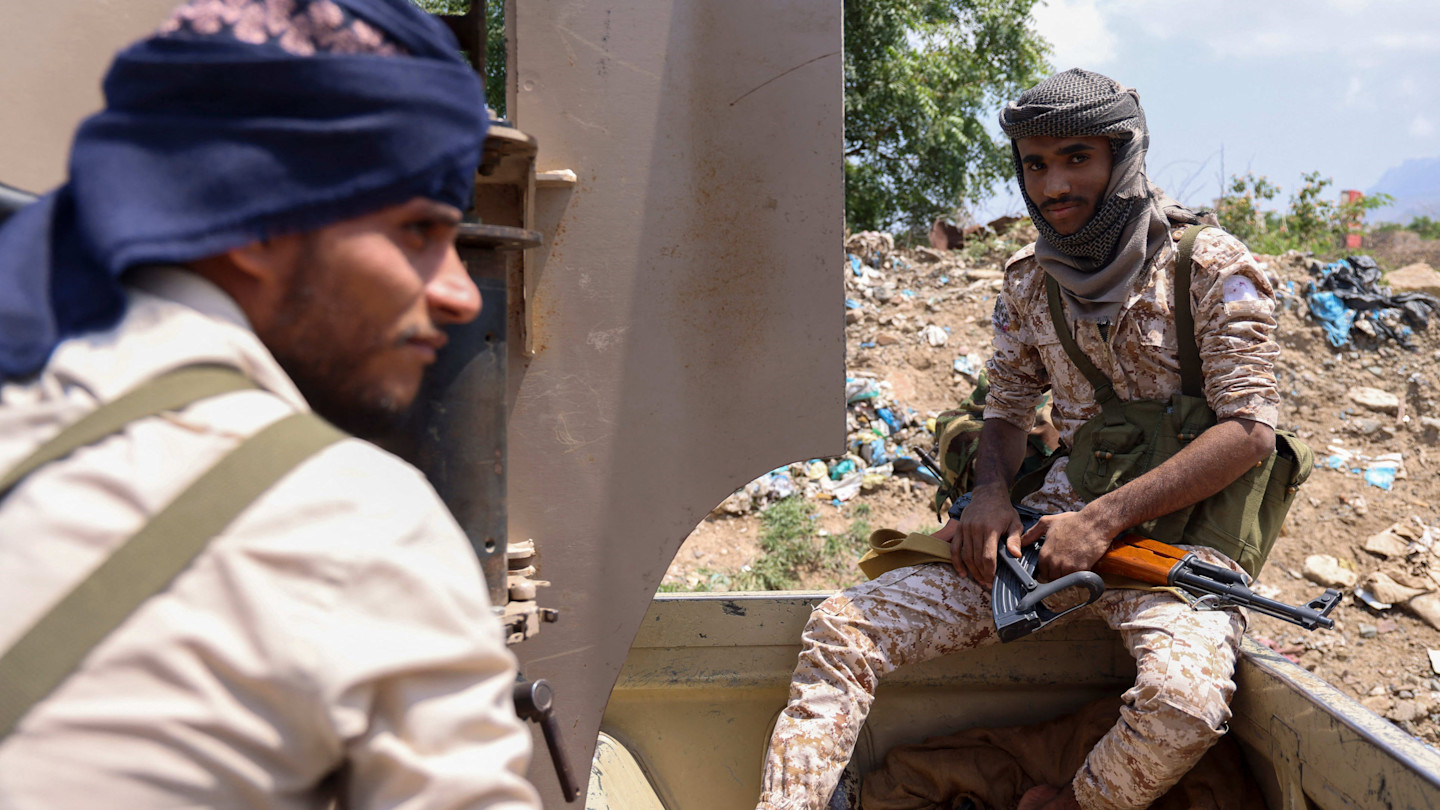
Yemen’s Saudi Arabia-backed government says it is launching a major counteroffensive to retake territory captured by Houthi militants, as the conflict between the Iran-backed rebels and Saudi Arabia escalates.
Rashad al-Alimi, head of Yemen’s Saudi-backed Presidential Leadership Council, said in a televised address on Sunday that he had ordered the army to begin operations “until the country is liberated from the terrorist militia”, weeks after a lightning offensive by the Houthis captured swaths of new territory and a critical Red Sea port.
The Houthis have reignited the long-running conflict with Saudi Arabia in recent months, attacking oil installations and tankers while making their largest territorial gains in Yemen for years, capturing the country’s Red Sea coast and gaining control over the Bab al-Mandeb Strait, a critical maritime trade route.
Analysts said Alimi’s ambition to regain Houthi-held territory had scant chance of succeeding. “The government pushback is too little, too late,” said Farea al-Muslimi, Yemen and Gulf researcher at Chatham House.
It has “deep issues of internal fragmentation, disorganised forces, no central command, bad morale and bad leadership”, Muslimi said, adding that while Saudi air cover could help government forces hold territory, it did not improve ground troops’ chances in Yemen’s difficult terrain.
Video description
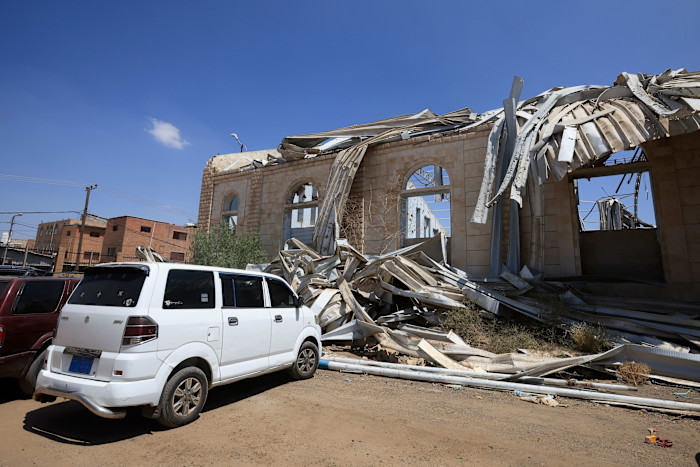
Saudi Arabia-backed forces hit a factory in Sana'a on Sunday
Yemeni government forces melted away when the Houthis, who control much of northern Yemen, advanced on the Red Sea port of Mocha last month.
Major General Turki al-Maliki, a military spokesperson for the Saudi-led coalition, said in a statement that they would provide “full operational support” to the Yemeni armed forces in their offensive against the Houthis.
One hundred fighter jets took part in Monday’s attack and destroyed 324 “high-value targets”, he added, as they provided air support for the Yemeni government forces on the ground.
Maliki said Saudi Arabia had the right to deter Houthi attacks after the group launched strikes on multiple Saudi cities and energy infrastructure sites in recent weeks, roiling international oil markets.
Houthi rebels announced a blockade on Saudi ports this July and have repeatedly targeted Saudi ships attempting to sail through Bab al-Mandab, strangling the world’s largest oil exporters’ trade through the Red Sea. The militants then hit a crucial oil export pipeline.
The Yemeni offensive coincided with a high-level meeting in Riyadh on Monday of the Mecca mutual defence pact, a Nato-style agreement between Turkey, Saudi Arabia and Pakistan that treats an armed attack on any of them as an attack on all three.
The pact has repeatedly condemned the Houthi attacks, but Saudi Arabia has not yet asked its fellow members to intervene on its behalf in the conflict. Monday’s meeting, which will be attended by the pact’s military chiefs and foreign and defence ministers, will discuss “recent developments in the region”, Turkey’s foreign ministry said.
Video description
A Saudi Aramco site in Riyadh that Houthi forces claimed to have hit at the weekend
The Houthis on Sunday claimed attacks targeting sites belonging to Saudi state oil company Saudi Aramco in the capital Riyadh and Khurais in the Eastern Province. There was no comment from Saudi Arabia on these claims.
Yemen’s armed forces spokesperson Majid al-Nuzaili said on Monday that government forces have conducted 1,122 “precision-targeting operations” against the Houthi stronghold of Saada, as well as al-Jouf, Taiz and the Red Sea coast.
He stated that government forces had recaptured Bab al-Mandab Strait and started a “strategic offensive” on the capital Sana’a.
Houthis confirmed that Sana’a came under air strike but denied reports of government forces advancing towards the strait.
Saudi Arabia intervened in Yemen’s civil war in 2015 in an attempt to restore the internationally recognised government after the Houthis took over the capital Sana’a. As the kingdom shifted focus to its economic reform projects, a fragile truce with the Houthis largely held even during the US-Iran war.
The truce collapsed in July after the Houthis, under mounting economic pressure, declared a blockade on the kingdom’s Red Sea ports, attacking Saudi tankers and targeting its oil infrastructure.
Additional reporting by John Paul Rathbone in Istanbul