When former president Jair Bolsonaro was given a 27-year jail sentence last year for plotting a coup, Brazil received plaudits for its willingness to defend democracy and insulate itself from the more dangerous aspects of far-right populism. Unlike the US failure to bring Donald Trump to trial over efforts to overturn America’s 2020 presidential election, Brazil took decisive action against Bolsonaro and his allies for attempting to overturn the result of the 2022 Brazilian election.
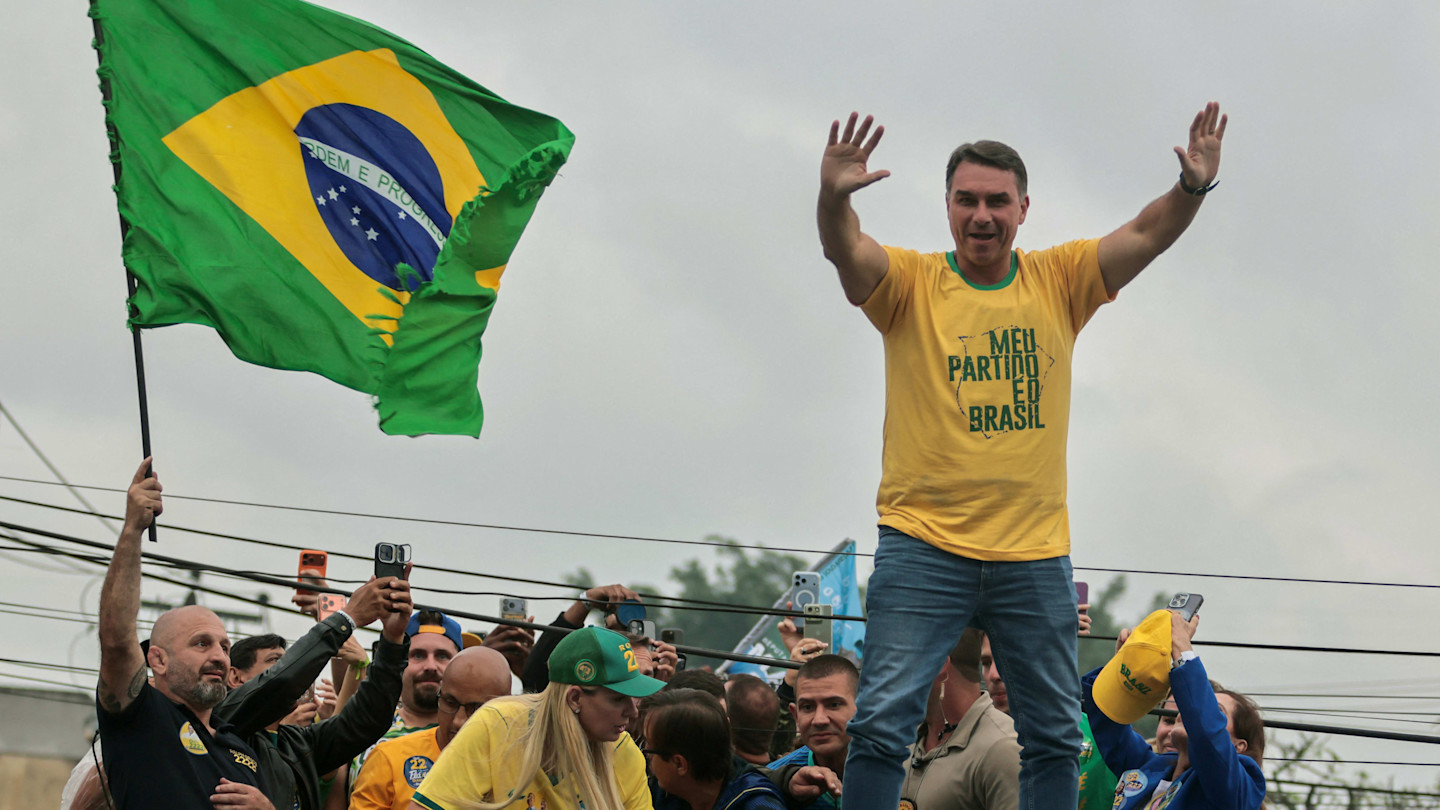
Yet just as Trump defied the odds to become US president for a second term, so the Bolsonaro family has a strong chance of making its own remarkable comeback. Flávio Bolsonaro, the eldest son of the far-right former leader, beat the incumbent Luiz Inácio Lula da Silva 47-45 in the first round of voting in this year’s presidential election. He goes into a run-off on October 25 as favourite.
A victory for the younger Bolsonaro would cap a remarkable run for Trump-friendly candidates in Latin America. The right has already won all seven presidential elections held in the region since Trump returned to the White House, in many cases with Maga-style campaigns. Mexico would be the only major economy in the region still governed by the left.
If elected, Flávio Bolsonaro risks sparking a new institutional crisis if he pushes ahead with his pledge to free his father from jail without the decisive support of Congress. He would also face the issue of what to do about his brother Eduardo, a former member of Congress who is living in the US and was convicted by Brazil’s Supreme Court of trying to interfere in the case against their father.
How have the Bolsonaros managed to bounce back to the verge of power? The answer lies less in the achievements of Flávio Bolsonaro, who has been a mediocre candidate, and more in the failure of Lula. A late recovery by Lula cannot be ruled out, especially if new corruption allegations emerge against his opponent, but his weaknesses as a candidate have been exposed in this campaign.
Like voters across the region, Brazilians have consistently listed organised crime as a top concern. Over many years at the forefront of Brazilian politics, Lula has struggled to convince voters he has an effective answer to the rise of drug gangs; many on the left have given the impression that they do not see it as a priority.
On the economy, many headline indicators have been strong, including record-low unemployment. But lax fiscal policy has contributed to very high interest rates, which are punishing the 82 per cent of Brazilian families who have personal debts. Having been elected in 2022 with the help of some centrist parties, Lula has all too often retreated to the comfort zone of his leftwing Workers’ Party, which has left him more politically isolated this time.
Lula’s biggest problem is that he has become part of the furniture in Brasília. This is his seventh run for the presidency — the first was in 1989 — and he is asking for a fourth term overall. Presenting himself as a defender of democracy has only enhanced that impression.
The result is he is blamed for the failures of others. One of the biggest stories of the election has been revelations about the links between several members of the Supreme Court and the former owner of a bank that collapsed. These included a key judge in Jair Bolsonaro’s conviction.
Lula was not directly linked to the scandal — unlike Flávio Bolsonaro, who solicited financing from the banker for a proposed film about his father — but widespread revulsion at the perception of elite corruption has damaged him badly. Brazil acted to contain Jair Bolsonaro, but amid the heavy polarisation, with outrage constantly cultivated on social media and ingrained suspicion of elites, Lula has been unable to vanquish Bolsonarismo.