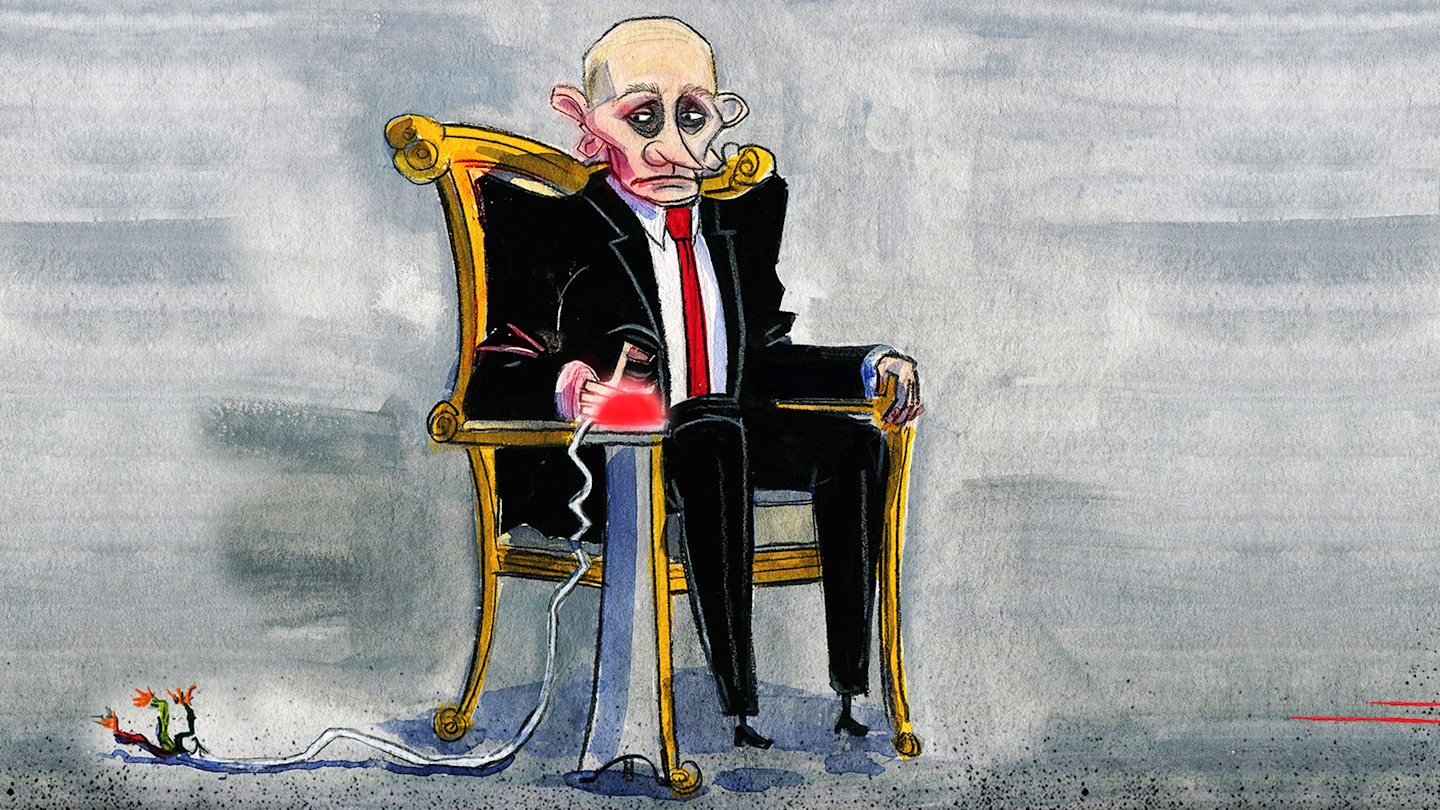
Russia has the largest nuclear arsenal in the world — and it wants you to remember that. In a document sent to Nato, the Russian government stated bluntly that it would “be ready to use the entire arsenal of forces and capabilities at its disposal, including nuclear weapons” to defend its territory.
The Kremlin claims to be responding to threats to Kaliningrad, a Russian exclave bordered by Poland and Lithuania. On October 1, Vladimir Putin weighed in personally, stating that if Kaliningrad was attacked, Russia would use “all the weapons” that it has. The Russian leader acknowledged that France and the UK also have nuclear weapons but boasted “in terms of weapons we have, we are unparalleled”.
There was a time when threats like this would have made global headlines. But in Britain, the travails of Manchester City football club were bigger news, while France was preoccupied by rioting schoolchildren.
Some security experts are concerned that Russia may be preparing the ground to take military action inside Nato territory — citing the supposed threat to Kaliningrad. But Putin’s warnings about nuclear weapons are increasingly shrugged off.
The reason for this relative nonchalance is that he has tried to use his nuclear arsenal to intimidate the west ever since he launched his full-scale invasion of Ukraine in February 2022. Those threats were effective for a while. In the early stages of the war, the US and its allies were very cautious about the military aid they gave to Ukraine — partly because they feared the war could escalate into a nuclear confrontation. But, with the passage of time, it has become apparent that the taboo against the use of nuclear weapons is very powerful. Russia was warned by both China and India not to go nuclear — and the US is also believed to have threatened to intervene directly in the war if Russia used nuclear weapons in Ukraine.
The waning of the deterrent power of the Russian nuclear arsenal has, over time, made Ukraine’s western allies much less cautious about the kinds of weapons they are prepared to provide to Kyiv. Tanks, fighter planes and long-range missiles to fire at targets inside Russia — all once off the menu — have now all been supplied.
In 2025, Ukraine also staged a successful drone attack — Operation Spider’s Web — on Russia’s fleet of strategic nuclear bombers. According to Russian military doctrine, that kind of attack justified a nuclear response. But, again, Russia did not follow through on its nuclear threats.
Observing these developments, Rose Gottemoeller, a former deputy secretary-general of Nato, has concluded “nuclear deterrence is not working”. Nuclear-weapons states, such as Russia, believed that the mere possession of the weapons would protect them against the threat of conventional attack. But that is not what happened.
As Gottemoeller observes, the failure of Russian nuclear deterrence is not an isolated case. Iran has been willing to launch ballistic missiles and drones at Israel, even though it knows Israel has nuclear weapons. India and Pakistan have also struck each other’s territory, despite the fact that both are nuclear-weapons states.
But the failure of nuclear deterrence is a particular setback for Russia. The possession of the world’s largest nuclear arsenal is one of the country’s only remaining claims to superpower status. Building and maintaining its stockpile is also enormously expensive.
Russian pundits continue to fulminate and fantasise about nuclear strikes on Europe — presumably with the Kremlin’s encouragement. But these outbursts no longer make news in Europe. When the threats come from Putin himself, as they did last week, they get more attention. But Nato’s stance on the war in Ukraine remains unaltered.
The diminishing power of Russia’s nuclear threats is mainly good news. But it also creates a new set of problems. The first is that Russia will look for other ways of restoring deterrence. The increase in Russian hybrid warfare in Europe — including sabotage, assassinations and drone incursions — reflects the Kremlin’s desire to find non-nuclear options for intimidating Ukraine’s European allies. But hybrid warfare creates its own risks of accidents and escalation. Russia’s increasing willingness to attack civilian targets inside Ukraine — and the escalating ferocity of its bombardment of Kyiv — reflects its search for non-nuclear forms of escalation.
The second big danger is that the failure of nuclear deterrence makes conventional warfare more thinkable in Europe and elsewhere. With the exception of the UK and France, the European members of Nato are all sheltering under the US nuclear umbrella. The same is true of Japan and South Korea in east Asia.
If potential adversaries of these US allies conclude that the American threat to use nuclear weapons in their defence is not credible, they may be more prepared to launch a conventional war. Indeed, Russia itself may now be less wary of starting a conflict with Nato.
The final danger is that everybody is “learning by doing”. Since the Ukraine war began, both Russia and Nato have had to adapt their ideas about how nuclear deterrence works. The taboo against the use of nuclear weapons is clearly very strong. But is it absolute? Nobody can be sure. That kind of uncertainty is dangerous.