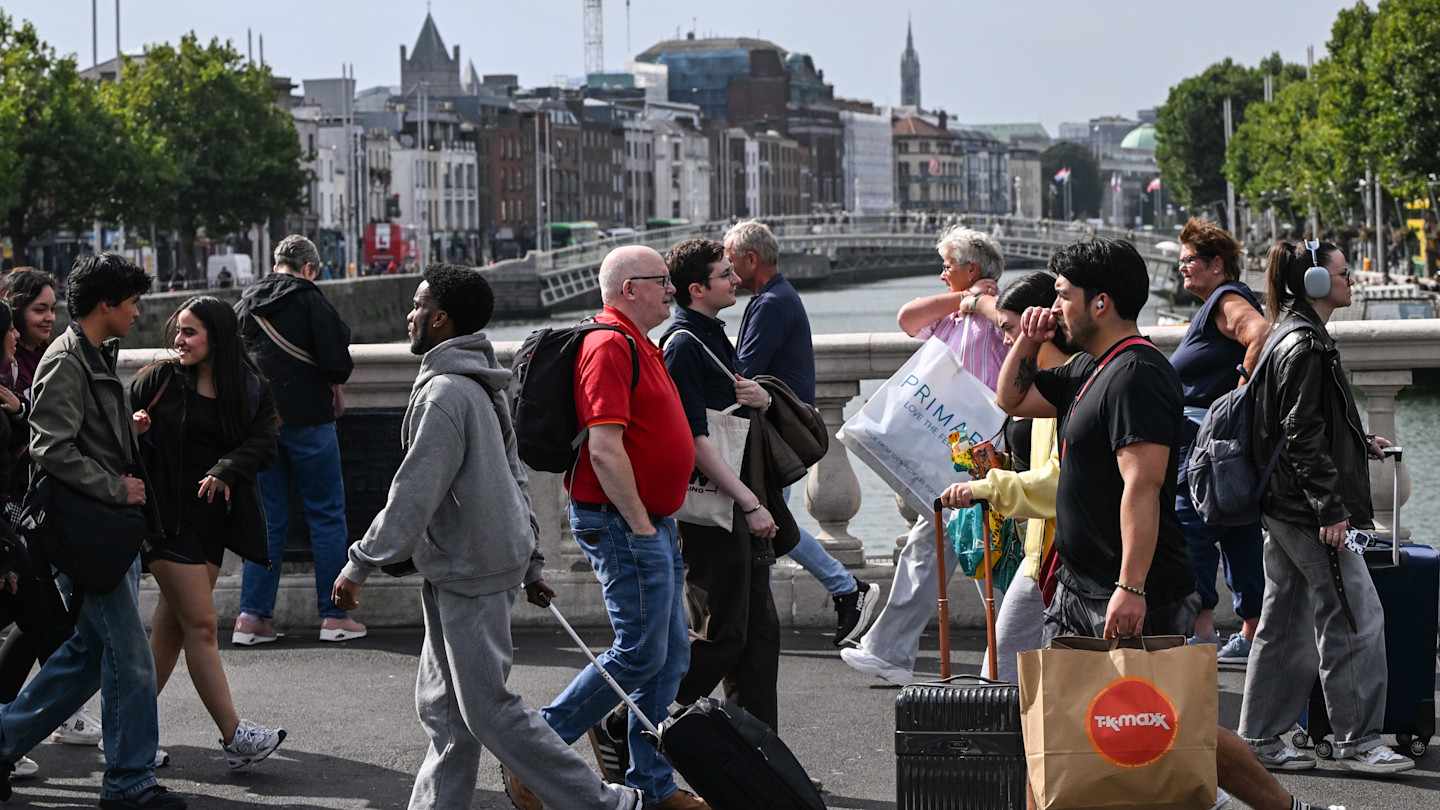
Ireland’s government unveiled a budget stuffed with tax cuts aimed squarely at helping workers weather “acute pressure” from the energy and cost of living shock driven by the US-Iran war.
Outlining the measures in Ireland’s Dáil lower house of parliament, finance minister Simon Harris said Ireland’s economic resilience had been “phenomenal” in an increasingly uncertain world but “people need to feel the benefits of economic growth . . . in their pockets”.
He announced cuts in the cost of home heating fuels to help with energy bills, which are the highest in Europe, and extended cuts on petrol and diesel in a package of measures that also increased the level at which people pay taxes to help workers on middle incomes.
Unlike many EU peers, Ireland is in the enviable position of running a budget surplus fuelled by booming corporation tax receipts paid by a handful of US tech and pharma multinationals. But the government has also faced repeated warnings from Ireland’s independent budget watchdog to save more of its extraordinary surpluses.
Harris said the country’s surplus would be €6.7bn this year and €9.5bn in 2027.
He also gave details of a long-awaited new savings scheme, under which savers would pay no tax on the first €50,000, designed to put some of the €175bn cash deposits held by Irish households to work. There were measures to boost childcare and welfare payments and the government is accelerating funding for construction of a metro system in the Irish capital.

Modified domestic demand, the government’s preferred measure of economic activity which strips out the distorting effect of the multinational sector, will grow 3 per cent in 2027, Harris added.
But Niall Conroy, acting chief economist at the Irish Fiscal Advisory Council (Ifac), said government spending was also accelerating.
“They have revised up spending this year by €1.4bn for 2026 from the spring set of forecasts. Spending is growing much faster than they planned,” he said.
Ireland's finance minister Simon Harris announces a new savings scheme, under which savers would pay no tax on the first €50,000 in the Irish budget
The government has said corporation tax is expected to bring in more than €39bn next year, but the country’s central bank and Ifac have repeatedly cautioned that it is too dependent on risky corporation tax revenues.
“It is not unreasonable to say that Ireland has been and is an island of economic and political stability in a world of increasing and growing volatility. That stability is reflected in our public finances,” Harris argued.
But he noted that Ireland “cannot and must not ignore what is happening in global bond markets”. Among the Eurozone countries, France in particular has seen a brutal bond sell-off· that has pushed its borrowing costs to the highest for nearly a quarter of a century.
“We must plan for a future in which the public finances will not always look like they do today, and we must build more resilience in a more shock-prone world,” Harris acknowledged.
Polls show the cost of living is the top voter concern. Even as the budget was unveiled, the government faced more pressure from teachers’ and public sector unions that have begun work-to-rule industrial action to push for more generous pay deals. A full teachers’ strike is planned for October 14.
Declaring that “extraordinary circumstances do call for new and extraordinary measures”, Harris announced a cut in the so-called carbon tax on home heating oil and gas which “will not increase again for the lifetime of this government”.
Rates on natural gas and kerosene that had been due to rise twice between now and next May would instead be reduced to 2023 levels, he said.
The carbon tax, designed to help fund the green transition, had been due to bring in €1.3bn this year but would now generate half of that level as a result of the measures announced, he said.
Sean Casey, energy sector lead at EY Ireland, praised the energy plans but said “it will be important that this focus on necessary short-term supports does not come at the expense of longer-term investment” and the government should still focus on boosting renewables and accelerating renewable energy.
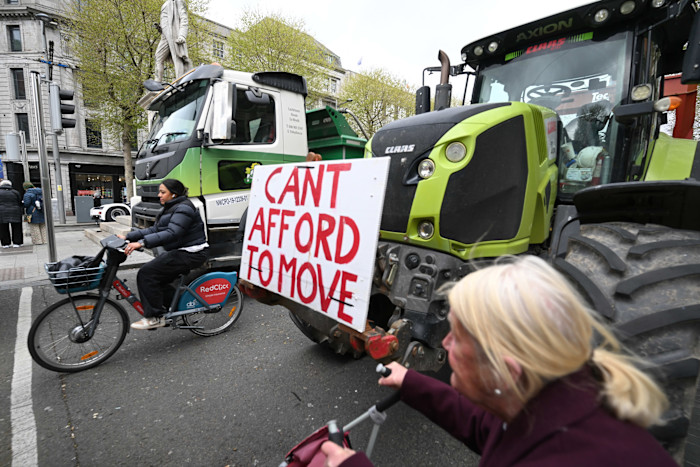
The government cut the excise tax on petrol and diesel earlier this year after farmers and demonstrators blocked roads and the country’s only oil refinery in a protest over high prices fuelled by the US-Iran war.
It had planned to restore those taxes from next month but Harris said their gradual reintroduction would now be delayed until March and would not be restored in full until the end of June next year.