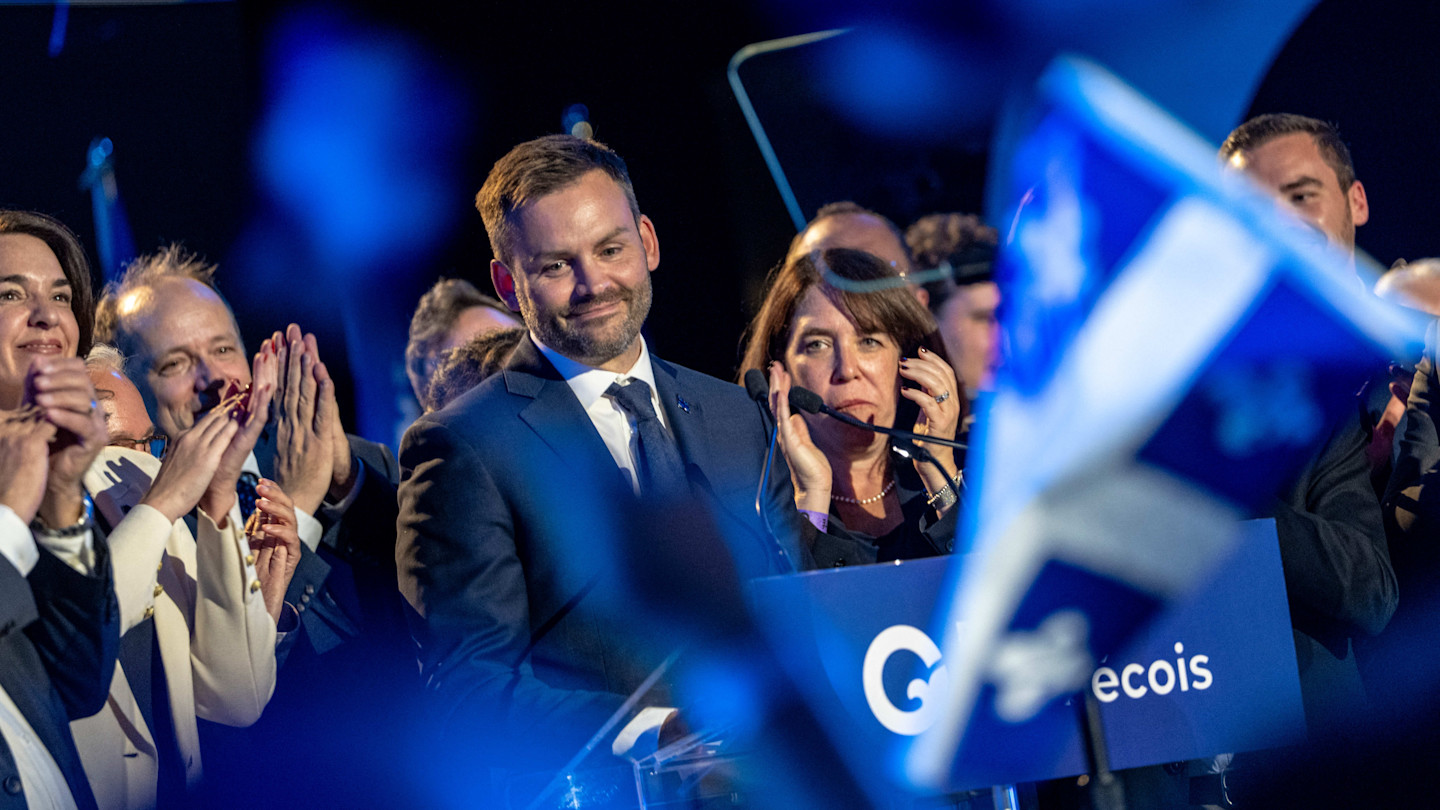
Voters in Quebec have elected the separatist Parti Québécois in a dramatic political comeback that paves the way for a sovereignty vote on whether the province should leave Canada.
The party won close to 30 per cent of the vote, gaining 59 of the provincial assembly’s 127 seats and will form a minority government. The victory marks a remarkable renaissance for the party after it won just three seats in 2022.
“The Quebec we want to build for ourselves will be French-speaking,” said PQ leader Paul St-Pierre Plamondon on Monday night. “It will be prosperous and modern, but above all, it will be among the most exemplary democracies on the planet.”
Video description
Supporters celebrate with Parti Québécois leader Paul St-Pierre Plamondon in Montreal
The separatist victory poses a new political test for Prime Minister Mark Carney as he tries to foster national unity in the face of relentless attacks by US President Donald Trump. It comes as the oil-rich province of Alberta votes this month on whether to cut ties with Canada.
Both separatist movements have been accused of foreign interference, online disinformation campaigns and US meddling.
French-speaking Quebec, with a population of 9mn and an economy worth about C$600bn, is Canada’s second-largest province and held two unsuccessful independence referendums in 1980 and 1995.
Despite the PQ pledging to postpone any future sovereignty vote until Trump leaves the White House, the party’s victory will challenge Carney’s efforts to strengthen Canada’s economy and political unity in the face of a hostile US.
Julian Karaguesian, economics professor at McGill University in Montreal, said PQ’s win was a “minor stumbling block” that will make it “more thorny, more difficult” for Carney’s nation-building agenda.
“You could see a dynamic where the new PQ leader tries to play Carney and the US off against each other, but that is a very dangerous game,” he said. “Trump may try the same,” he added.
For the past 18 months, Canadians have faced relentless hostility towards their sovereignty, character and economy from Washington, inspiring a wave of patriotism in response.
This year the FT revealed US state officials met Alberta separatists on three occasions in 2025 to discuss ways to support their independence movement, including a $500bn credit facility.
Jeff Rath, legal counsel at the separatist Alberta Prosperity Project, who attended the meetings, told the FT “the US is extremely enthusiastic about a free and independent Alberta”.
Quebec has eight of Canada’s nine aluminium smelters, which have been hard hit by US tariffs. It also has a highly protected dairy industry that is a regular target of Trump complaints.
But polls show that only 30 per cent of Quebec voters want the province to separate from Canada.
“It’s not clear they’re all in favour of separatism,” said Karaguesian, despite the PQ leader saying during the campaign that “Quebec would be better off negotiating with the US as an independent country”.
“It is also worth noting Mark Carney is more popular in Quebec than the PQ leader right now,” he added.
But he said the province’s “low-growth” economy remained its biggest challenge. This year investment in the province fell by C$5.2bn, according to the National Bank of Canada.
“Quebec’s weak economy is set to be disproportionately hit by the new wave of US tariffs and export bans,” TD Bank wrote in a note to clients on September 21.