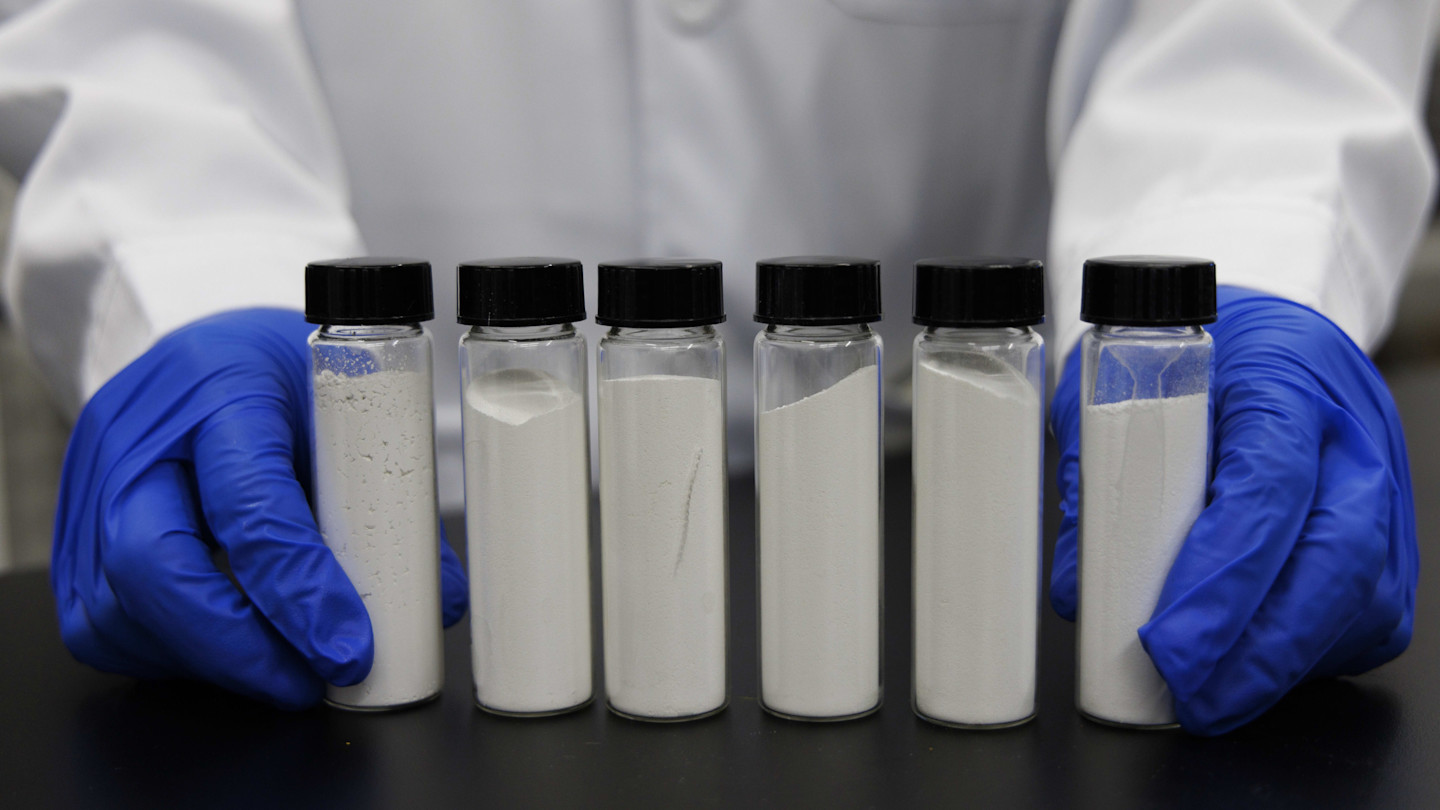
The UK government should impose steep tariffs on Chinese imports of a key industrial chemical, the country’s trade watchdog has said, putting further pressure on ministers to take a side in the EU’s trade dispute with Beijing.
The proposal by the Trade Remedies Authority (TRA) to add anti-dumping duties on Chinese titanium dioxide, an industrial whitening agent widely used in paints and plastics, comes after the EU raised fears that the UK is becoming a backdoor for cheap products.
It means UK business secretary Jonathan Reynolds will soon have to decide whether to follow the recommendation and risk angering China and its investors, or go against Brussels’ wishes at a time when the UK government is trying to build closer ties with the EU.
A six-month investigation by the TRA into Chinese titanium dioxide concluded that UK industry was “suffering from a threat of material injury”. It has proposed minimum anti-dumping duties of £660 a tonne.
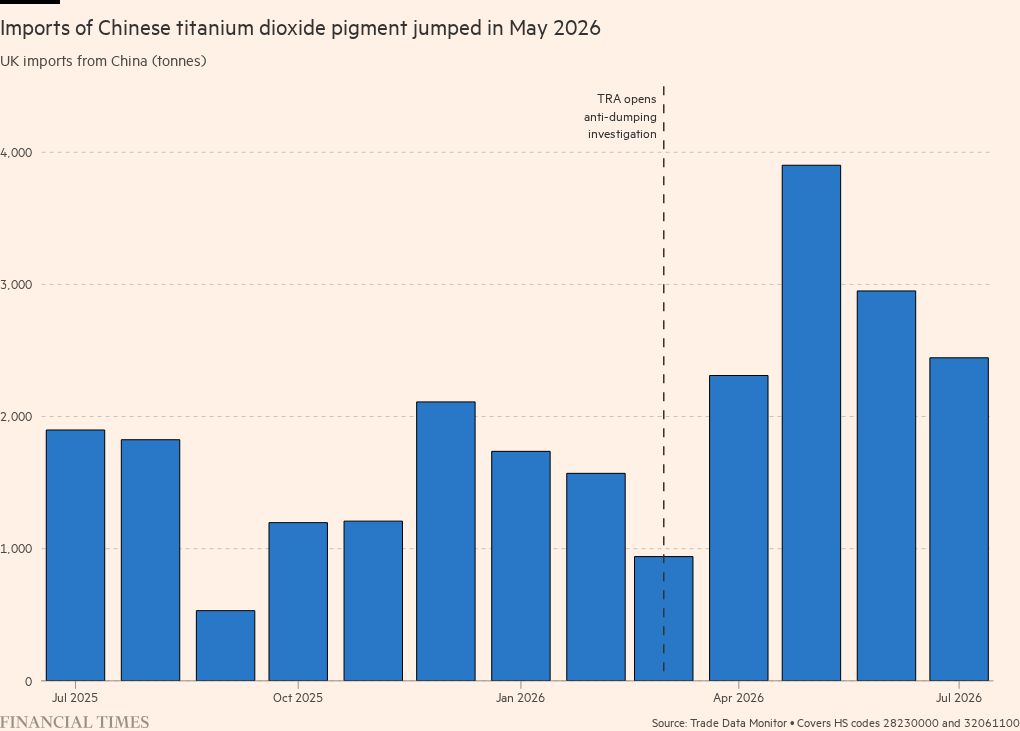
The volume of titanium dioxide imported into the UK from China was three times higher in May 2026 than the same month a year earlier, the TRA said, adding that “this trend would be likely to continue if a trade remedy measure were not imposed”.
Affected parties have until October 26 to respond to the preliminary findings before the TRA sends its final recommendations to Reynolds, who must then decide whether to accept or reject them.
Amid fears that the UK was becoming a backdoor for Chinese goods trying to evade EU duties, Brussels announced last month that it would be monitoring UK exports of titanium dioxide to ensure that EU “anti-dumping measures . . . are not being circumvented”.
The UK has already matched EU trade safeguards on steel and is under pressure to follow suit on cars and chemicals if it wants to avoid “made in Europe” barriers that would hit key exports.
The government has warned that the bloc’s move to prioritise production inside the EU risks severely damaging UK firms involved in autos, nuclear and green energy supply chains.
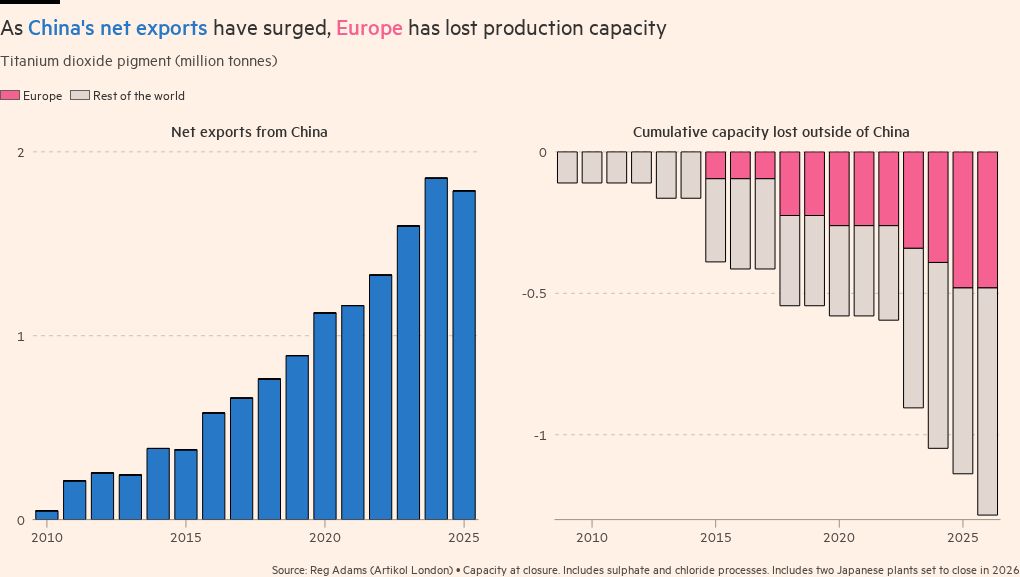
The EU imposed anti-dumping duties on titanium dioxide in 2024 at similar levels to those proposed by the TRA and is poised to take further measures against other chemicals, including PET plastics and resins.
The UK, which has three of its own active dumping investigations under way, will be under pressure to follow suit.
This month Beijing launched its own anti-dumping investigation into European exports of p-nitrotoluene, a chemical used for pharmaceuticals and dyes.
Over the past decade, China has massively increased its output of bulk chemicals such as titanium dioxide, with the TRA finding China provided subsidies for the industry in a host of areas, including land, energy and finance.
In apparent anticipation of the coming pressure from Brussels, Reynolds last month wrote to the UK chemicals industry asking for information about the risk posed by unfair trade practices.
In the letter, seen by the FT, Reynolds said the information would help the UK “in deciding where further trade defence action may be required”.
The TRA opened the investigation in March after companies led by US-owned Tronox alleged that Chinese titanium dioxide was being dumped into the UK.
The enquiry came after one of the UK’s two remaining plants producing the chemical went bust in 2025 with the loss of 270 jobs and was subsequently bought by LB Group, China’s largest producer of the product.
The $70mn purchase of the Teesside plant was cleared by UK competition authorities despite objections from competitors.
Imposing anti-dumping duties would impact LB Group and risk a potential rift with Beijing. China’s account of UK Prime Minister Andy Burnham’s first call with President Xi Jinping noted that Beijing expected the UK to “fully protect the lawful rights and interests of Chinese investors”.
Representatives for LB Group did not immediately respond to a request for comment.
Tronox chief executive John D Romano urged Reynolds to implement the proposed tariffs “swiftly” to protect an industry he said was also a vital part of supply chains in aerospace, nuclear and battery industries.
However, trade groups representing companies with the chemical in their supply chain questioned any move to impose tariffs. Tom Bowtell, chief executive of the British Coatings Federation, said alongside rising energy and labour costs, the tariffs would “hinder the Government’s drive for growth and job creation”.
The European Commission said: “The EU and the UK are close partners and share many of the same concerns when it comes to tackling unfair competition and ensuring a level playing field.”
The Department for Business, Innovation, Science and Trade declined to comment on an ongoing investigation. The Chinese Ministry of Commerce did not immediately respond to requests for comment.
Additional reporting by William Langley in Guangzhou