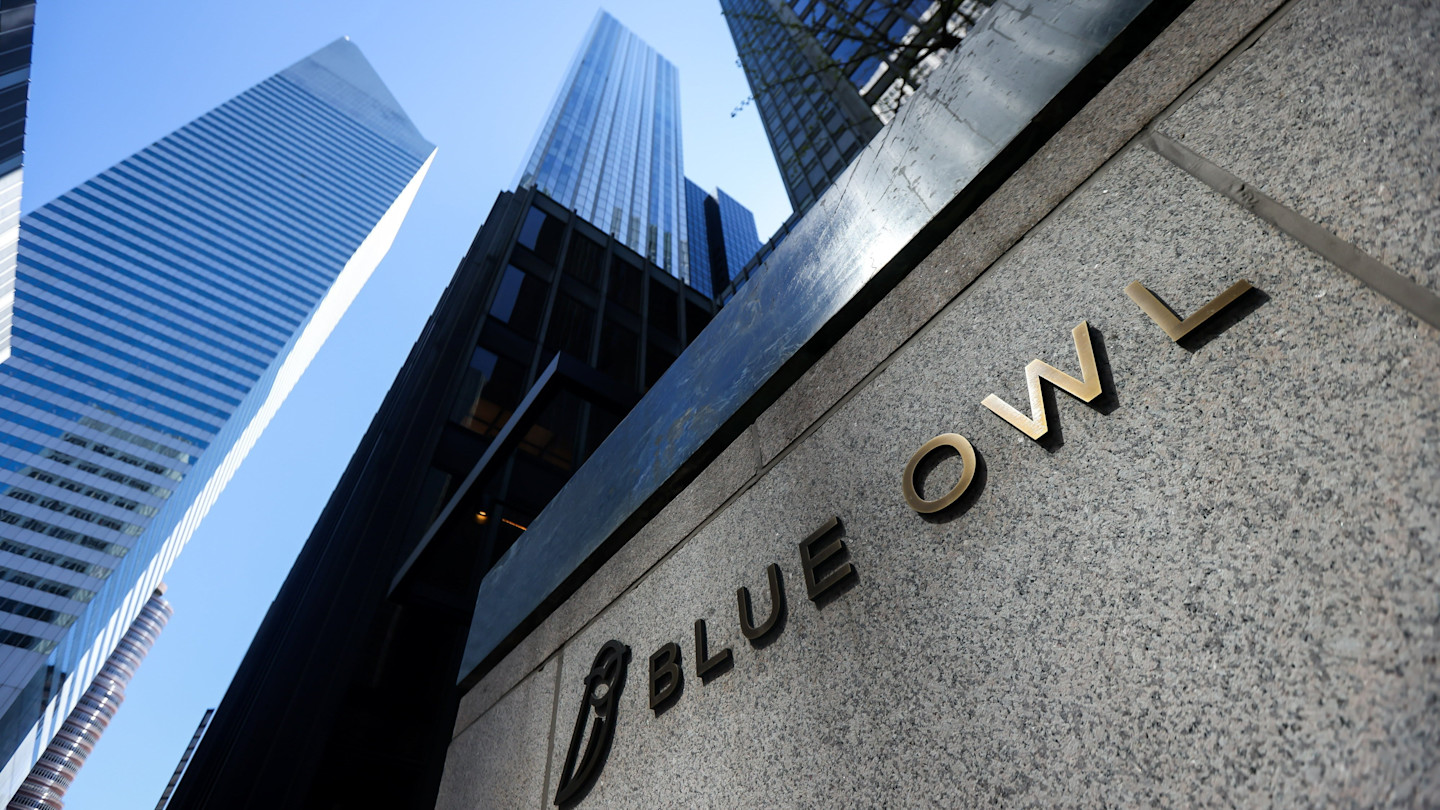
Blue Owl, the group at the centre of recent turmoil in private credit, is planning a “big push” into insurance to tap a growing source of long-term capital as it seeks to expand into new areas.
Co-chief executive Doug Ostrover said the company was looking to increase the amount of insurance capital it manages as large alternative investment groups compete to deepen their ties with big insurers.
“We are not managing enough capital,” Ostrover said at the FT and Latham & Watkins’ Private Capital Summit in London.
“We’re realising that if we had a bigger pool of capital, meaning insurance capital, we could provide really unique solutions . . . It’s something we’re going to make a big push in,” the former Credit Suisse and Blackstone executive added.
Ostrover ruled out Blue Owl acquiring an insurer outright, a strategy some rivals have used to turbocharge growth.
“Apollo bought Athene. KKR bought an insurance business. We’re thinking about it more from the balance-sheet-light approach,” Ostrover said.
While Blue Owl already manages billions of dollars in insurance assets for Kuvare, in which it has a minority equity stake, it manages just a small fraction of the insurance assets overseen by larger rivals like Blackstone. Blue Owl recently hired insurance executive Deva Mishra to help develop its strategy.
The insurance push comes as the private capital industry braces for consolidation, with institutional investors concentrating their allocations among fewer, larger managers, known as general partners.
“The biggest allocators of capital want to allocate to fewer GPs. It’s happening. We see it,” he said. “If . . . you’re a mid-market PE firm, you invest in kind of everything, you’re not an expert in anything. Those are going to get merged up, or they’re going to fade away.”
Ostrover struck a bullish tone on private credit following a difficult period for the industry in which concerns over default risk have prompted wealthy individual investors to redeem their money from some funds.
Blue Owl’s outsized exposure to software companies that could be disrupted by AI contributed to a 40 per cent decline in its share price over the past year.
Ostrover did not rule out an increase in defaults but said there was a disconnect between how the industry was perceived and the performance of its underlying loans.
Credit performance remained strong, he said, adding that he could “look out 12 or 18 months and feel pretty good that these portfolios will continue to perform . . . I know people think defaults are going to be going up. I don’t see that occurring.”
Blue Owl has meanwhile expanded aggressively into real assets, including the infrastructure underpinning the AI boom.
Ostrover said Blue Owl’s data centre operation was comparable in scale with Blackstone’s, the largest investor in the sector.
Blue Owl operates 140 data centre facilities and leases them to large technology groups, typically for a period of about 20 years, rather than simply providing financing.
Ostrover said that even if the infrastructure was worth “zero” at the end of the leases, its investors would make double-digit returns. “You can make 10 to 12 per cent [without relying on the terminal value]. We think that’s a really compelling investment.”
He said he would have expected the opportunity to shrink as capital poured into the sector, but instead demand for computing power has exploded and it had become more difficult to build data centres.
“The arbitrage has widened out,” Ostrover said. “Today is an incredibly attractive time and I think it’s going to remain like that for some time.”