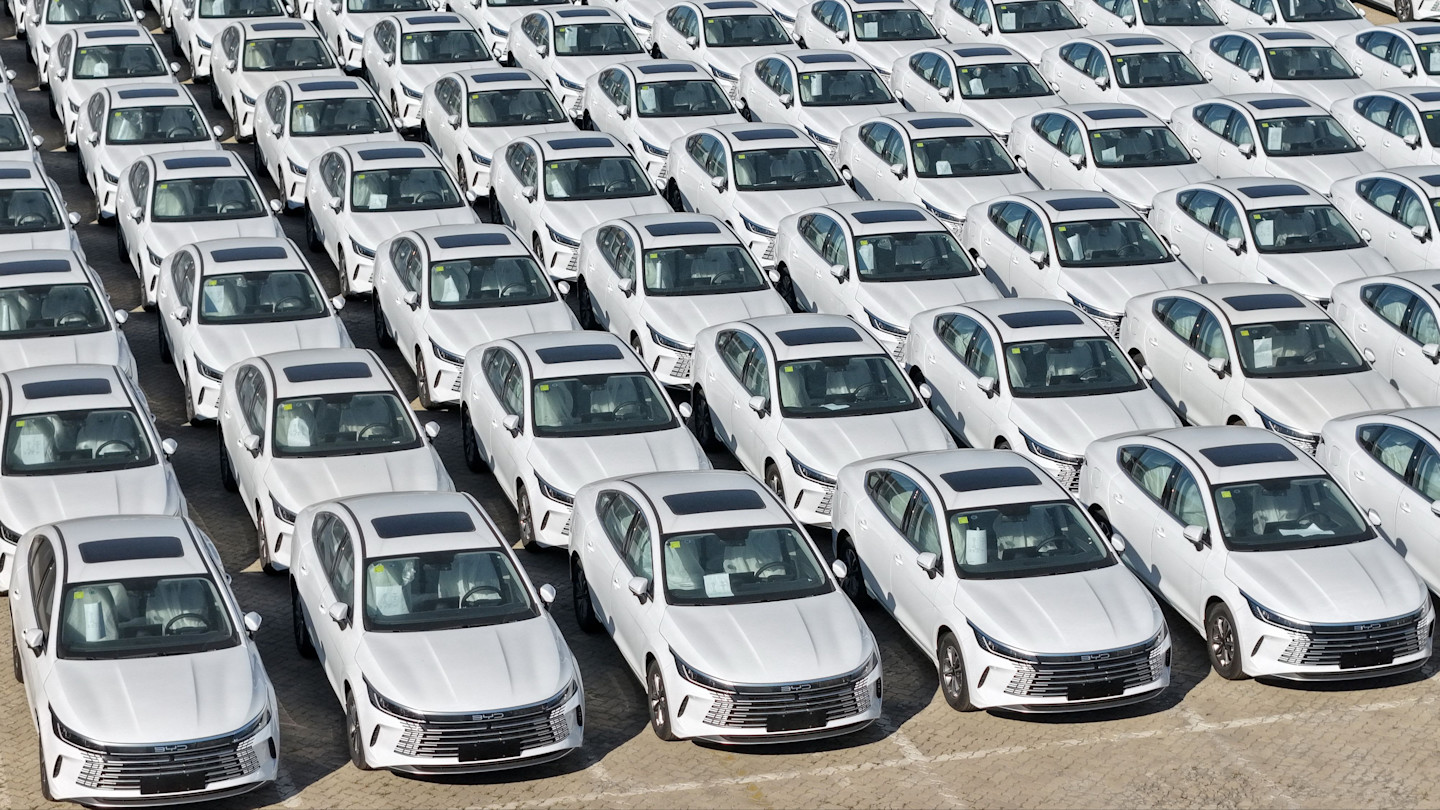
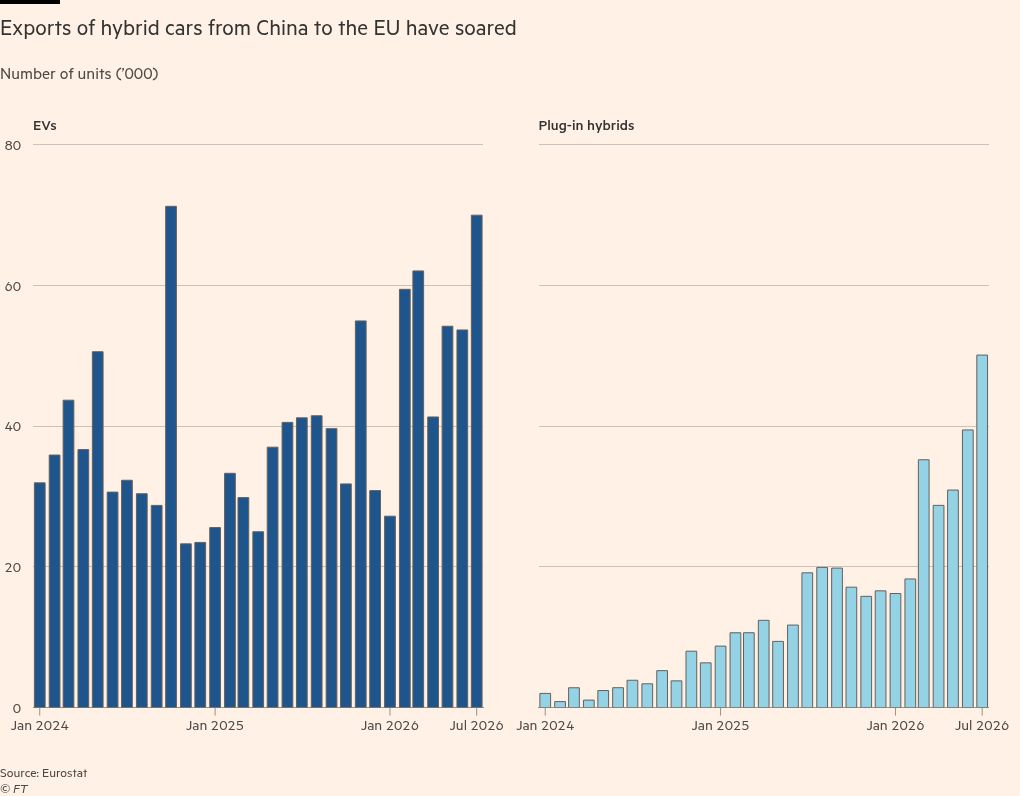
China has rejected an EU request to voluntarily restrict its surging exports of hybrid cars to the bloc as the two sides enter last-ditch talks to avert a trade conflict.
The European Commission now hoped to get Beijing to accept a unilateral EU measure to cap hybrid imports instead, two diplomats briefed on the plan said.
European trade commissioner Maroš Šefčovič starts two days of talks in Beijing on Thursday and wants to agree at least one measure to reduce China’s ballooning trade surplus with the EU rather than launch punitive measures that could spark a retaliatory spiral.
His original pitch was that Beijing agree to limit hybrid vehicle exports to the EU to about 15 per cent of the EU market compared with more than a third today or face retaliatory action such as tariffs.
However, EU officials told member states on Wednesday that China had refused, according to the diplomats.
Now the Commission is discussing a temporary “safeguard” trade defence measure, which could be applied even without evidence of market abuse. This would allow China to export a limited number of vehicles, with a steep new supplementary tariff applied to the rest.
The aim is to agree a number China can accept privately without retaliating, according to the diplomats. The downside would be that safeguards would also have to be applied to trading partners such as the UK, Korea and Japan, which would likely get quotas in line with their historic exports to the bloc.
The surge in hybrid shipments came after the EU levied anti-subsidy duties on electric vehicles from China of up to 35 per cent on top of the usual 10 per cent rate.
Beijing hit back with anti-dumping duties on EU cognac, pork and dairy products.
Officials have said the Beijing talks will be a failure if there is no solution to the hybrid cars issue, probably leading to a serious trade conflict since the EU has declared the €1bn-a-day trade deficit to be unsustainable.
Germany and France this week issued a joint paper urging the Commission to take strong measures on China because “a massive industrial shock is affecting sectors at the heart of the European industrial model and of systemic relevance”.
These sectors included pharmaceuticals, aerospace, automotive, machine tools and chemicals industries, they said, calling for a new tool that could be triggered quickly to cut off access to the EU market for targeted products. Berlin and Paris believe this would help deter any Chinese retaliation.
A third diplomat said the EU had long been reluctant to risk trade conflict with China, but the damage inflicted on Germany’s industrial base had changed the mood. They said they had little faith in the talks process.
“If there was an easy answer we would have found it by now. We are asking them to change their entire economic model,” the diplomat said.
The talks also concern the EU’s declining exports to China. The diplomats said the EU was asking China to lower tariffs for some goods, but it is reluctant to do so.
They are also deadlocked over export controls. Brussels is pressing Beijing to loosen its export restrictions on some rare earth magnets and critical minerals that are vital to the automotive, cleantech and defence industries.
Companies must apply for a Chinese licence, handing over sensitive information about customers and manufacturing processes. About 90 per cent were approved, the diplomats said.
China wants the EU to lift sanctions on some of its companies accused of supporting Russia in its war with Ukraine and remove export controls on technology such as chipmaking equipment from ASML of the Netherlands.
The Chinese embassy in Brussels did not immediately respond to a request to comment. Beijing’s commerce ministry said last month that China firmly opposed “voluntary export restrictions”, which it said seriously violated World Trade Organization rules and “ran counter to the laws of the market economy and the principle of fair competition”.
The European Commission declined to comment.