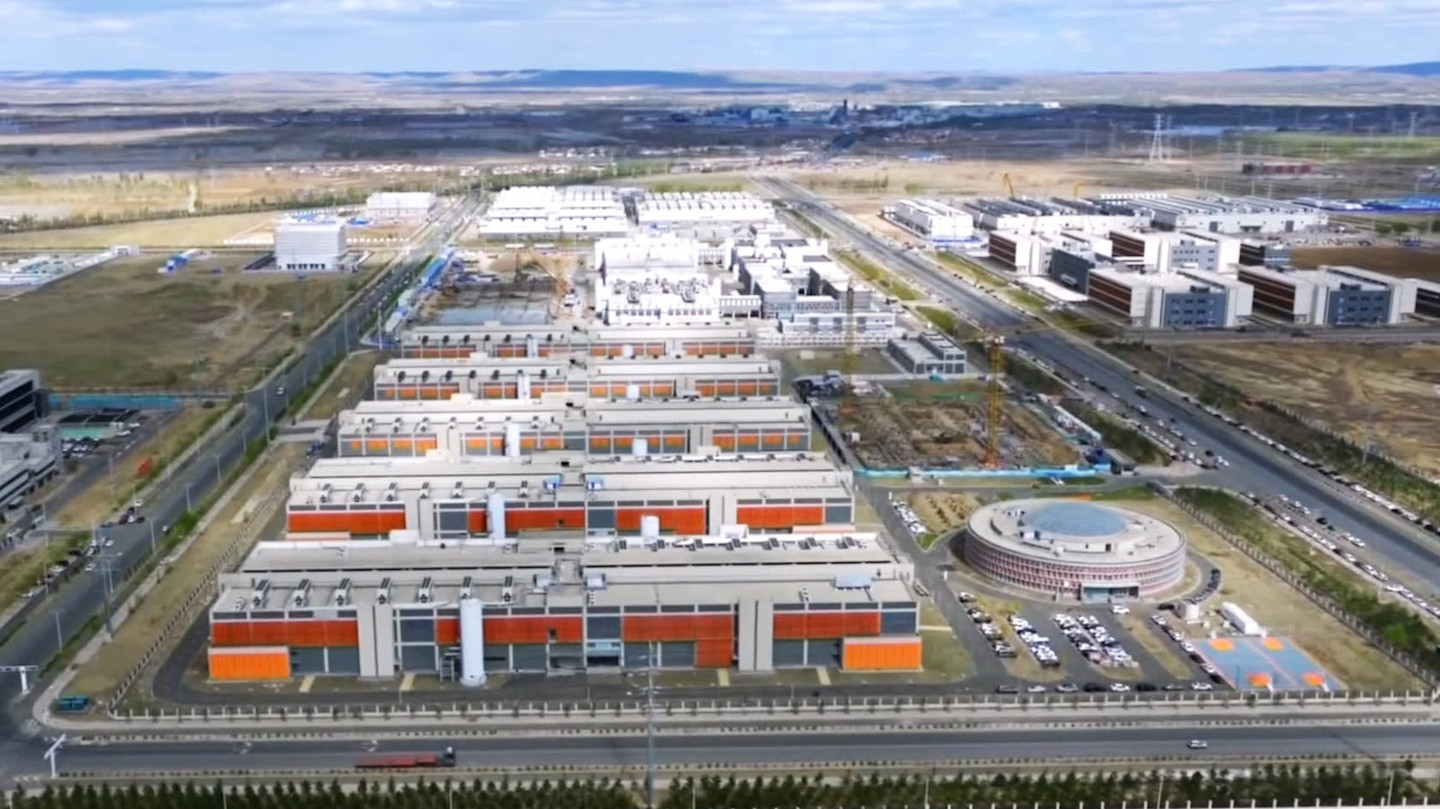
China is building data centres at rapid speed across its energy-rich hinterland, as Beijing seeks to turn abundant electricity and cheap land into an advantage in the global race to develop AI.
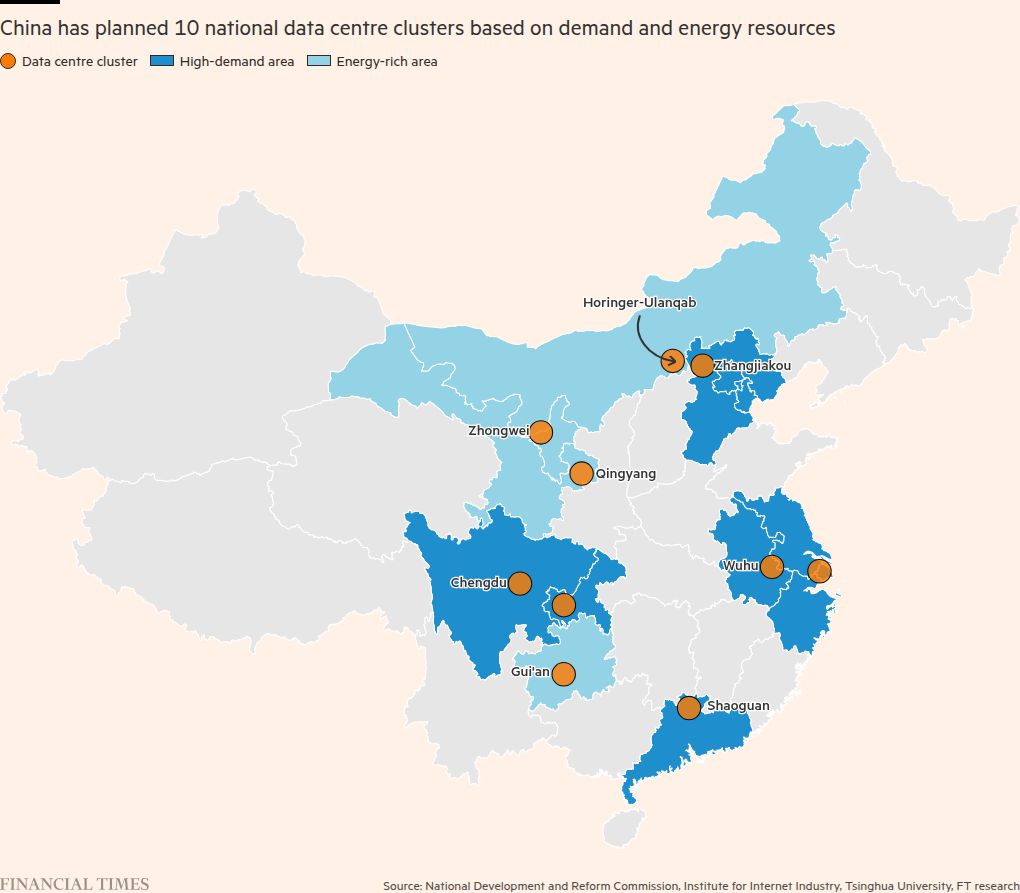
The push is creating vast new computing hubs such as Ulanqab in Inner Mongolia, where 89 data centres are built or planned. The AI infrastructure build-out is among the fastest and biggest anywhere in the world.
Beijing has outlined AI progress as a national strategic priority, as a means to bolster economic productivity, entrench domestic political influence and secure China’s global influence by ensuring more of the world becomes reliant on its technology.
While China is struggling to secure enough advanced chips to satisfy soaring AI demand, it has been able to mobilise the land, electricity and construction capacity needed to build the data centres that house them.
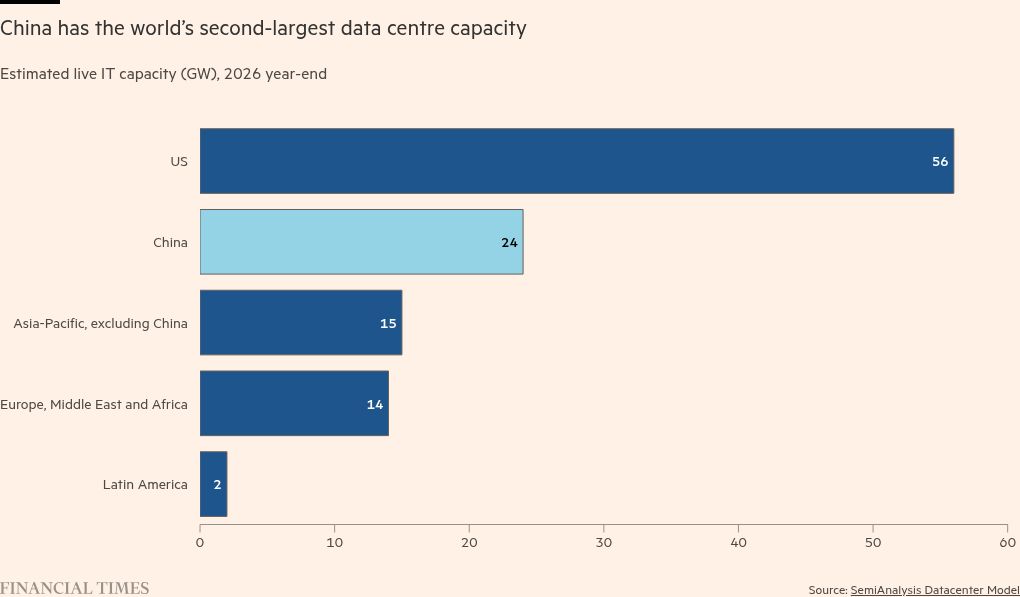
China already has 24 gigawatts of operational data centre computing capacity, more than the rest of Asia combined but less than half the 56GW in the US, according to SemiAnalysis, the chip-focused research firm. A further 50GW is under construction or has been announced.
Ulanqab, a remote agricultural city famed for its potatoes and yoghurt snacks, is among the most striking examples of that expansion.
About 15GW of computing capacity has been committed in the city, making it the fastest-growing data centre hub in Asia, according to an executive at a leading data centre operator in the region who declined to be identified due to the sensitivity of the topic.
The city is benefiting from advantages increasingly scarce in other markets: abundant wind and coal power, cheap land, cold climate and the ability to build facilities rapidly. This contrasts with the US, where securing electricity and grid connections has emerged as a key constraint on its data centre boom.
FT series: China’s data centre dreams
This is the first in a three-part series examining China’s breakneck build-out of AI infrastructure as it seeks to become the pre-eminent tech superpower
Coming soon:
Part II: China’s uphill battle to wean tech firms off Nvidia chips
Part III: China’s forgotten cities look to AI data centres for economic boost
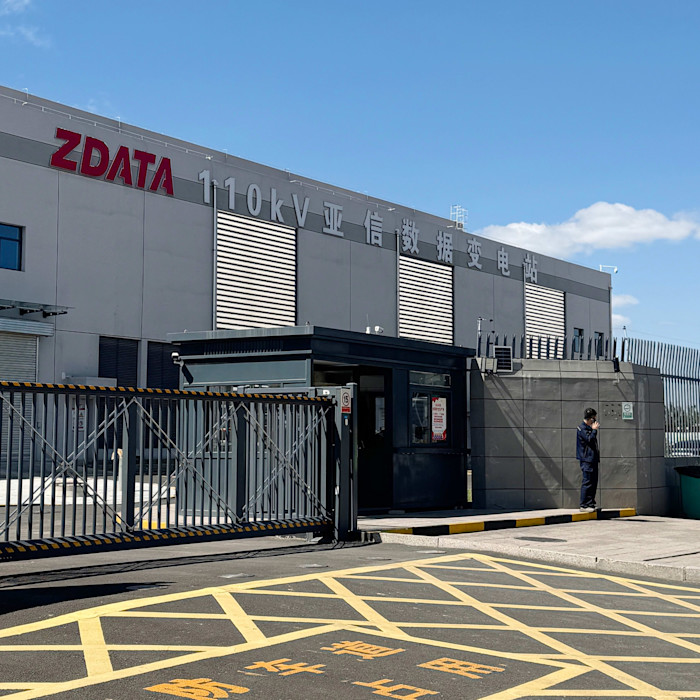
Engineers are even turning an abandoned high school into a data centre. Operator ZData took over the campus after it closed as enrolment fell alongside the region’s shrinking student-age population. Soon, rows of computing racks will occupy the playground where students once hung out between classes.
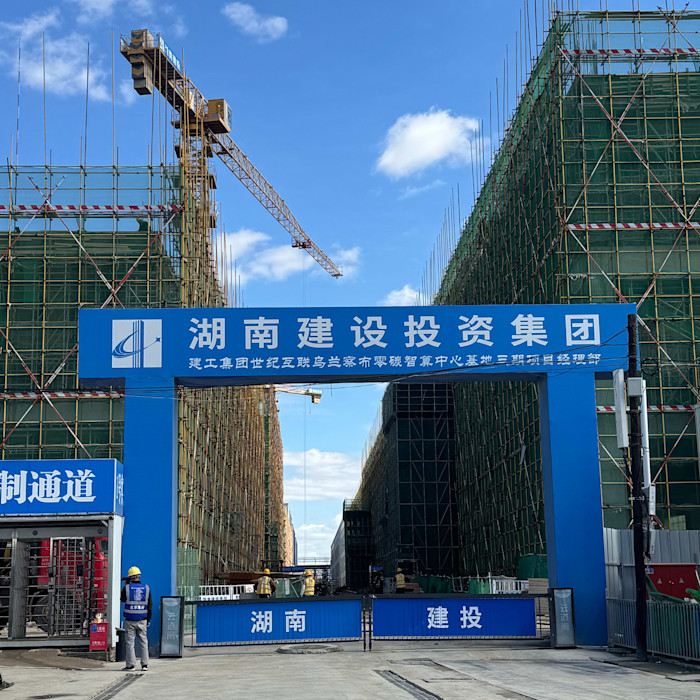
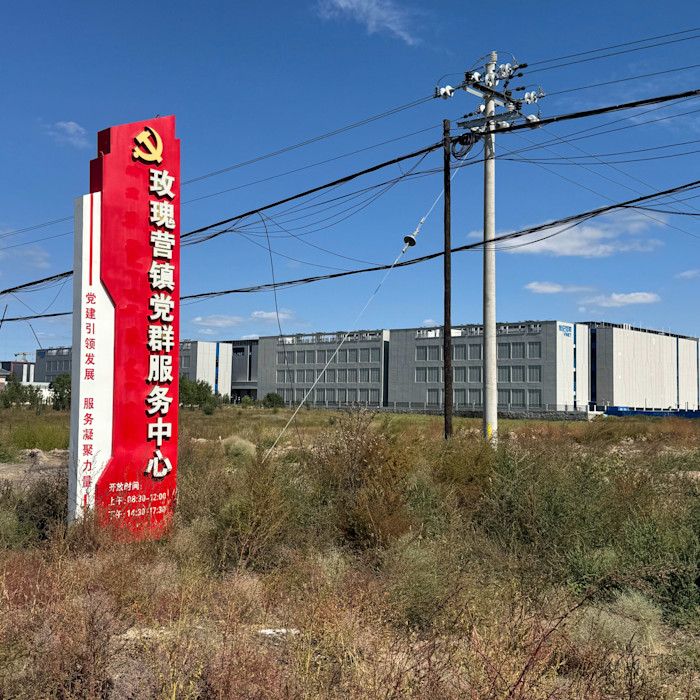
The scale of construction is visible across the city’s outskirts. The FT saw work under way by at least a dozen companies across four sprawling data centre campuses, with some operators building at multiple sites.
They include Alibaba and Huawei, as well as operators such as ZData and VNET, which build facilities and rent computing capacity to technology groups.
ByteDance has emerged as China’s largest source of demand for rented computing infrastructure, while AI labs DeepSeek and Z.ai are also building facilities in Ulanqab, according to people briefed on the matter. Z.ai did not respond to a request for comment.
Eric Xu, the rotating chair of Huawei, which has three data centres in Ulanqab, said the technology giant considered numerous locations before settling on the city because of its cheap electricity and proximity to Beijing, just two hours away by high-speed rail.
“I thought it was a small city,” said Xu, who travelled to Ulanqab for the first time in August. “I was surprised by the scale. It’s very different from what I expected.”
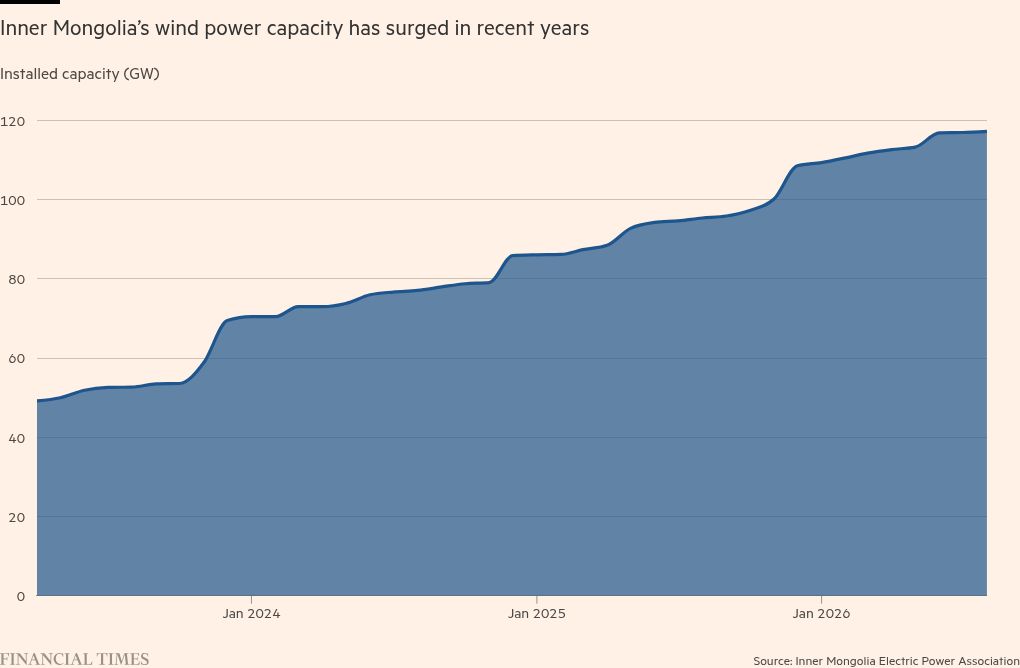
Inner Mongolia had 117GW of installed wind capacity by June this year, the largest fleet in China and nearly four times the entire wind capacity of the UK. It also has roughly 130GW of fossil-fuel power capacity, mostly made up of coal power.
David Fishman, energy analyst at consultancy The Lantau Group, said Inner Mongolia likely had the “largest electricity local oversupply” of any administrative region in the world. “There is an immense amount of electricity that operates at very low capacity,” he said. “Data centres help soak up this excess power.”
Data centres in Ulanqab currently pay about Rmb0.358 per kilowatt-hour for electricity, compared with average industrial electricity prices of more than Rmb0.60 per kWh in many Chinese cities and about Rmb0.80 per kWh in Beijing.
The region’s cold climate also helps reduce the enormous cooling requirements of AI computing clusters. Average annual temperatures in Ulanqab are about 4.3C, while its proximity to Beijing allows engineering teams to reach the sites quickly.
Inner Mongolia also has the advantage of an unusual degree of flexibility over how large computing projects are powered. While most of China is served by State Grid, the national electricity utility, western Inner Mongolia is served by the independently operated Mengxi Power Grid.
Authorities have allowed some data centre projects to build dedicated power generation connected directly to their computing clusters, avoiding some of the grid constraints facing developers elsewhere.
“By building power plants directly connected to the facilities, they can cut down costs and don’t have to pay transmission costs to the state grid,” said Edison Lee, head of China tech research at Jefferies.
The region is not free of resource constraints, however. Inner Mongolia does not have abundant water supplies, and one data centre executive warned that this could become an issue as the industry expands.
But China’s advantage extends beyond access to power. Developers in Ulanqab are also building data centres more cheaply and quickly than is typical in the US.
Contractors from across the country have won orders for the projects, with construction costs in the region about 20 per cent lower than in larger cities, according to Goldman Sachs.
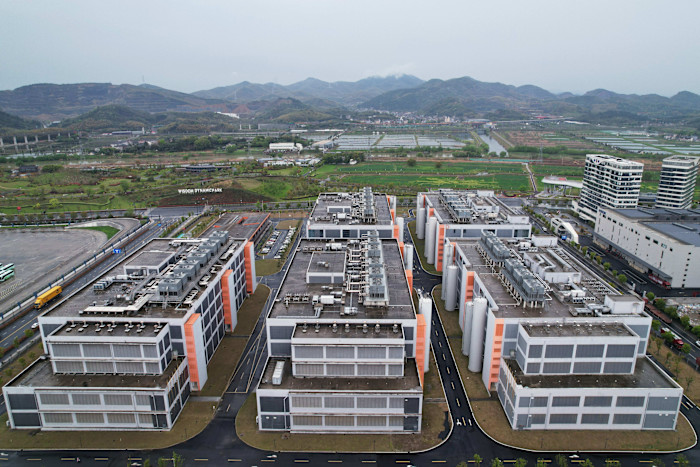
Thousands of workers have been brought in and housed in temporary accommodation beside the sites, many of which are scheduled to be completed within 12 to 18 months. US counterparts typically take between 18 and 24 months.
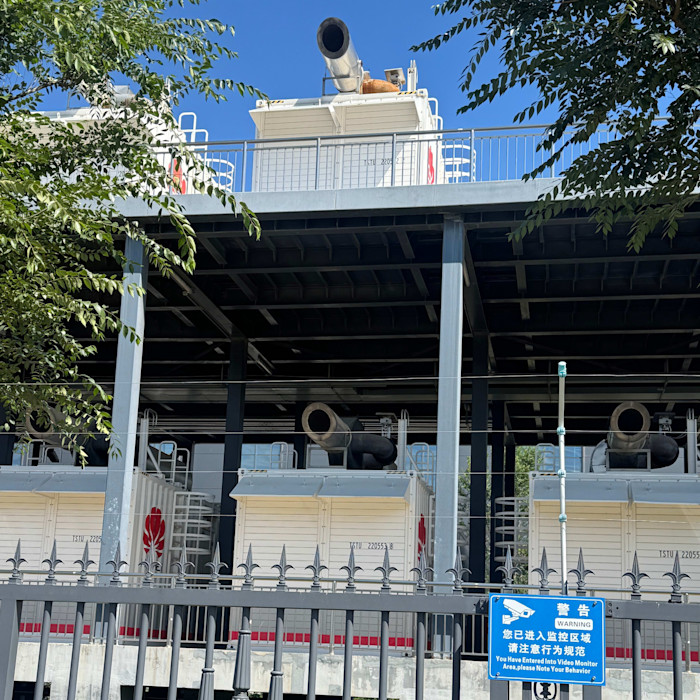
China has pioneered the use of prefabricated modules — uniform, shipping-container-like units housing computing racks that can be assembled rapidly. SemiAnalysis calls the approach “Lego data centres” with the design also adopted by US hyperscalers.
The pace and scale of construction are in turn creating an industrial ecosystem around the new computing hubs, as equipment suppliers establish manufacturing and assembly operations nearby to cut costs and construction times further.
Envision, the Chinese renewable energy group, is building a green power project beside several of Ulanqab’s new data centres. The company says it will eventually have 2GW of generating capacity — enough to support as many as 1mn AI accelerator cards.
Just down the road, workers at an assembly plant are putting together wind turbines that will help supply electricity. Foreign suppliers are also benefiting. Vertiv liquid-cooling equipment was visible at several sites, including facilities operated by ZData and Centrin Data System.
Beijing is also using incentives to steer the enormous build-out towards its goal of reducing China’s reliance on foreign technology. Data centres that use domestic processors rather than Nvidia’s AI processors receive better tax benefits and discounts on electricity and water bills, according to people familiar with the policies.
For now, analysts see little danger that the construction boom will leave China with large amounts of unwanted computing capacity.
Lee said demand for computing power was accelerating as Chinese technology companies expanded their use of AI, particularly AI agents, contributing to rising prices for rented chip capacity.
“There is no risk of overbuilding,” he said. “Token consumption is going through the roof.”
Instead, the extraordinary speed with which China can build and power data centres is exposing the problem at the heart of its AI infrastructure push: securing enough advanced processors.
Beijing and Washington’s restrictions on Chinese purchases of Nvidia chips and limited production capacity at Chinese fabs have made this a key constraint.
“The question is whether the data centres can get enough chips to put into the buildings,” Lee said.
Data visualisation by Haohsiang Ko. Visuals by Kari-Ruth Pedersen and Alex Wheeler.