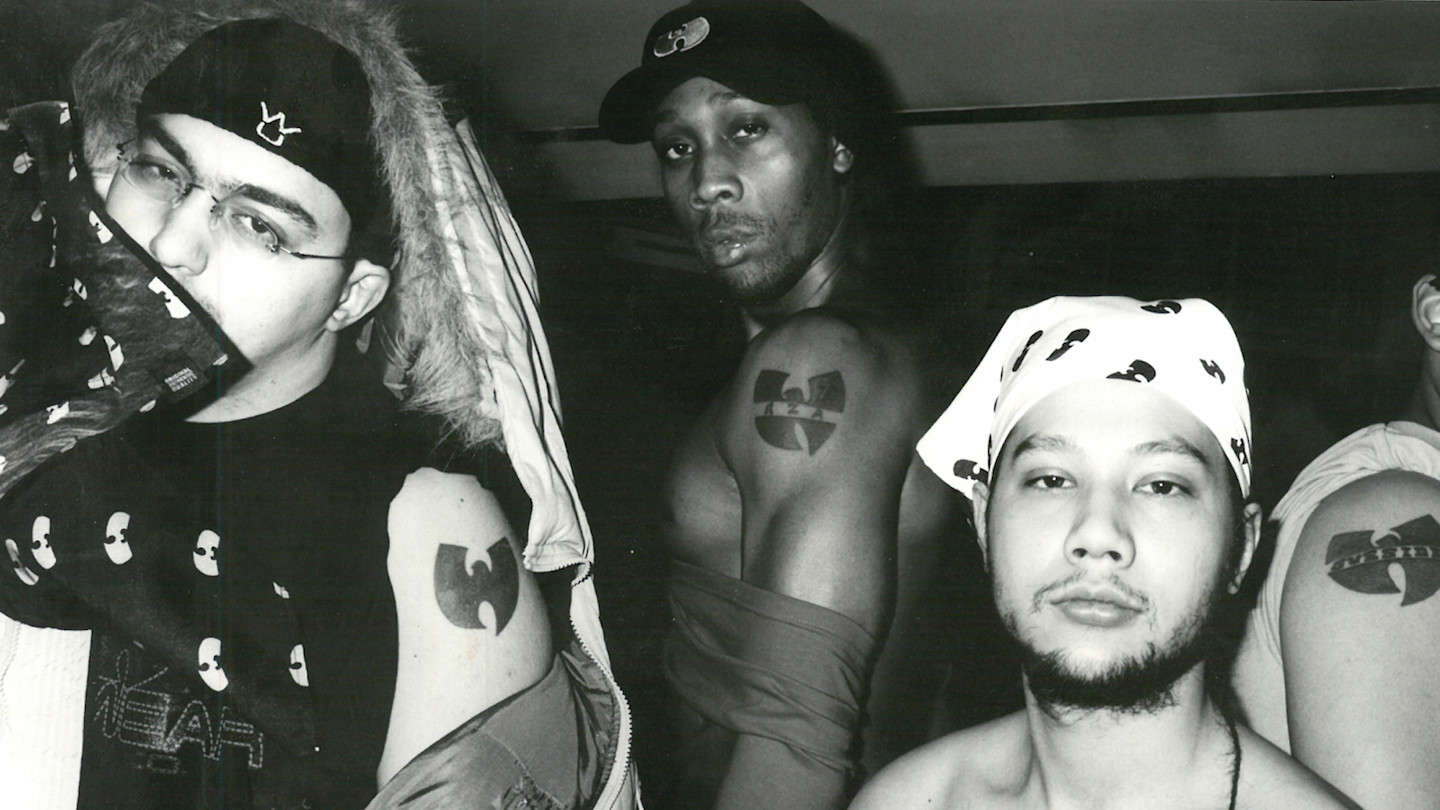
When legendary rappers Wu-Tang Clan broke through in the early 1990s, their sound was a shock — a seeming bedlam of nine different voices. The chaos endures in documentary The Disciple: A Wu-Tang Fable, retelling a uniquely weird music business tale. It unfolds in the provincial Netherlands and New York’s Staten Island, as well as atop an Egyptian pyramid, with stop-offs at Eton College and the US Department of Justice. Such is the story behind the group’s seventh and final album, Once Upon a Time in Shaolin (2015).
Yet our starting point is as simple as a teenage boy obsessed with music made far away. This is Tarik Azzougarh, son of Moroccan immigrants in the Dutch city Tilburg, whose Wu fandom leads to an unlikely Cinderella story. Eventually, as producer Cilvaringz, he does not just meet his idols, but becomes a creative partner of group mastermind the RZA.
And then, in 2014, he has an intriguing and incendiary idea. Partly in response to recorded music’s loss of value in the digital age, Azzougarh conceives of a Wu-Tang album limited to a single copy. The contents will be legally barred from reproduction until 2103 — an attempt to make literal a status as work of art.
Much hell breaks loose. Director Joanna Natasegara’s film is fan service that speaks to plenty beyond — not least hip-hop’s eternal tension between street solidarity and a rampant love of money. (The album was sold in 2021 for $4mn.) It is also streaked with darkness even before the entrance of Martin Shkreli, the disgraced former pharmaceutical CEO, who takes a bizarre late role.
Faced with the weight of competing angles, the movie settles on a knockabout tone that can feel a little jarring. Perhaps, though, that is the nature of Wu-Tang — still spinning heads after all these years.
★★★☆☆
In UK and US cinemas from October 9 and on Netflix from October 16