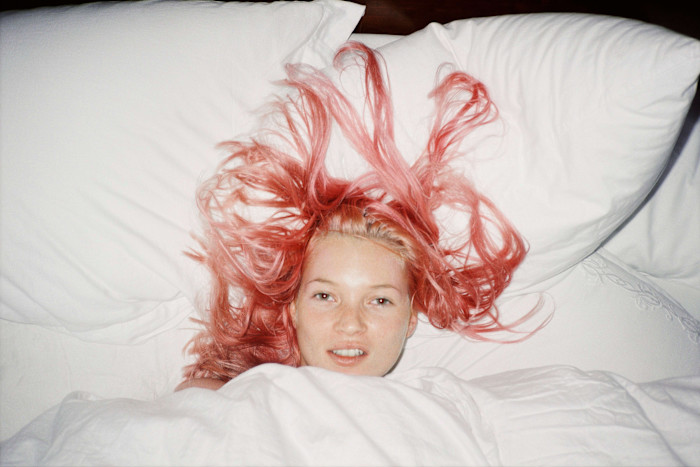
Bucking the gloom surrounding London nightlife earlier this year was a club called “Lost”. Not only was it held in a disused building, but for details and tickets you had to call a telephone hotline or just turn up. Once you got there, your phone was locked away for the night. For those who had never known phoneless clubbing, the effect was electrifying; for those who had, well, it was just like the ’90s.
As the less positive aspects of the internet become ever clearer, so the fascination grows with the freedom and innocence of the final years before its ubiquity. Tate Britain’s new show The 90s: Art and Fashion shines a light on the decade through the work of nearly 70 artists, photographers and designers who worked in the UK during this time, contributors to a flowering of creative talent that helped reshape Britain’s cultural identity.
Tate has invited Edward Enninful, editor of British Vogue from 2017-23, to be its guest curator. Enninful came to the UK from Ghana as a child, and at the age of 18 was made fashion director of i-D, one of the most influential fashion magazines of the era. It is his experiences growing up as a young Black man in west London and of life on magazines during this creative boom time that inform the show.
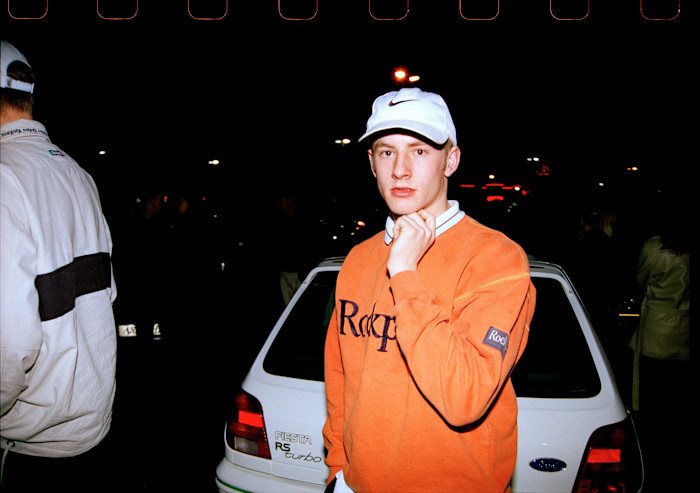
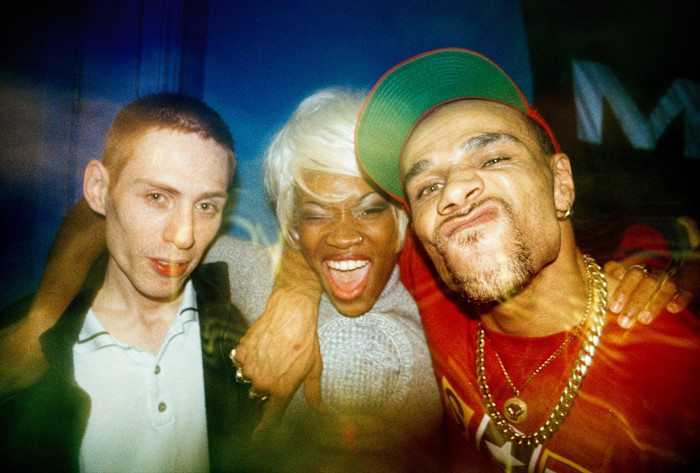
In an introduction on a wall at the entrance, Enninful recalls starting at i-D in 1991: “London felt raw, restless and open to reinvention . . . Art, fashion, music and nightlife collided — and a new creative language began to emerge . . . The 1990s was not defined by a single movement, but by a shared impulse to break down boundaries . . . That’s the energy I want to capture in this exhibition.”
Large-scale photographic blow-ups show key figures out and about: Tracey Emin and fellow artist Gillian Wearing dance on a Kent seafront; Kate Moss and Naomi Campbell waft disdainful cigarettes; Sarah Lucas and Chris Ofili are in cahoots at Dick’s Bar in Soho. We also recognise the massed feet of the Spice Girls, a less than reverential view of so-called Cool Britannia to which Enninful gives full vent later on.
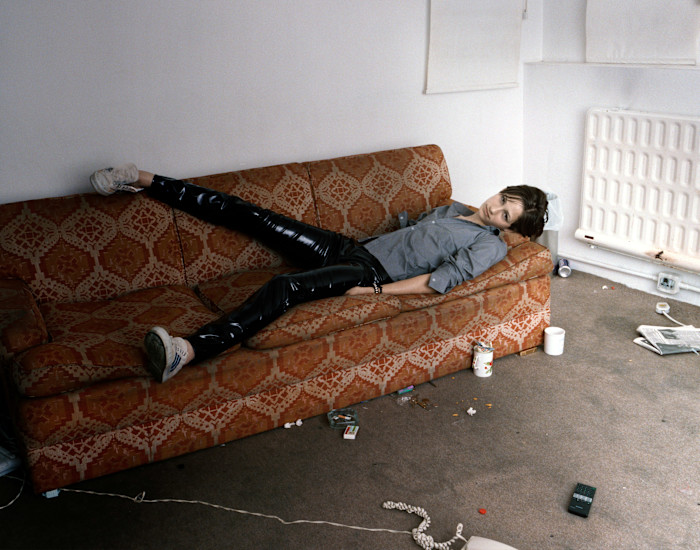
He frames the decade through a sequence of seven rooms that sets out to show how style and image became increasingly political as the 1990s progressed and the divide between high and low culture dissolved. Rooms one and two, titled “Be Real”, open on gritty, unfiltered photography and work that brims with a defiant do-it-yourself attitude. The chosen artists are female, Black or queer. “England’s Dreaming”, Corinne Day’s fashion shoot at her Soho flat for another key publication, The Face, is instantly evocative of the times. It’s not just the naturalism and the candour, it’s the state of the carpet, on which sit dirty mugs, full ashtrays, a TV remote control, a tabloid and a knackered sofa.
The low-rent dwelling drove the decade in more ways than one. Miranda Sawyer, who wrote for The Face, recalls in the excellent catalogue: “Throughout the 90s I never paid more than £60 a week for a room . . . The flats we lived in were rubbish . . . but because of that, and because the internet hadn’t been invented, we went out all the time . . . If you wanted anything interesting — food, drink, fun, a shag — you had to leave the house.”
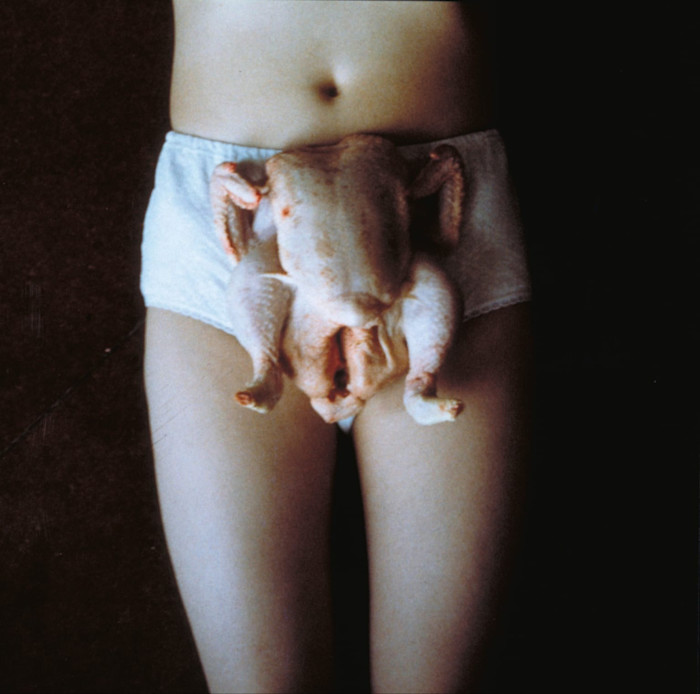
That turn of phrase itself has a ’90s flavour, and the highlights of this early section show women reclaiming bawdy humour with a sense of protest. Abigail Lane’s “Bottom Wallpaper” features a 12ft-high wall decorated with a repeat pattern of her bum cheeks in a tasteful pale blue. The laughs are laced with shock in the Sarah Lucas piece “Chicken Knickers” as she positions the gaping giblet cavity of a supermarket chicken on her groin. For the 1993 photographic work of the same name, Sam Taylor-Johnson sports a T-shirt that says “Fuck Suck Spank Wank”. Copies of the shirt are available in the gift shop.
In room three, the focus moves to the rave and club scene. The joy in the photography and video work here is almost overwhelming. We are taken to the heart of the dance floor, among crowds that are Black, white, Asian, queer and straight, in clubs, warehouses and fields across the UK. “People were dancing everywhere you looked,” says photographer Mark McNulty. “Everyone was the star for the night.”
There is a strong sense that this is the source of the zeitgeist, that energy that Enninful set out to capture. In the mesmerising “Fiorucci Made Me Hardcore”, Mark Leckey reveals a poetry in found footage of everyday blokes dancing at full tilt. The vast montage of Vinca Petersen’s “Subversive Joy (Constellation 005)” documents an entire way of life lived in pursuit of the rave.
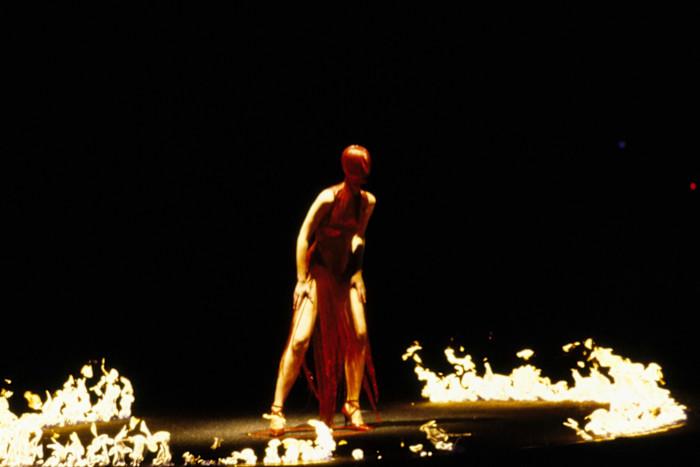
Self-expression takes a more cerebral form in the dimly lit and black-painted room four, which centres on vitrines and colour prints of work by Alexander McQueen. In designs such as “It’s a Jungle Out There”, featuring a jacket with impala horns mounted on the shoulders, he weaves fashion and art into something menacing and visceral. Displayed alongside the Chapman brothers’ life-size rendering of dismemberment after Goya, “Great Deeds Against the Dead”, the sensation is a disconcerting mix of the droll and the brutal.
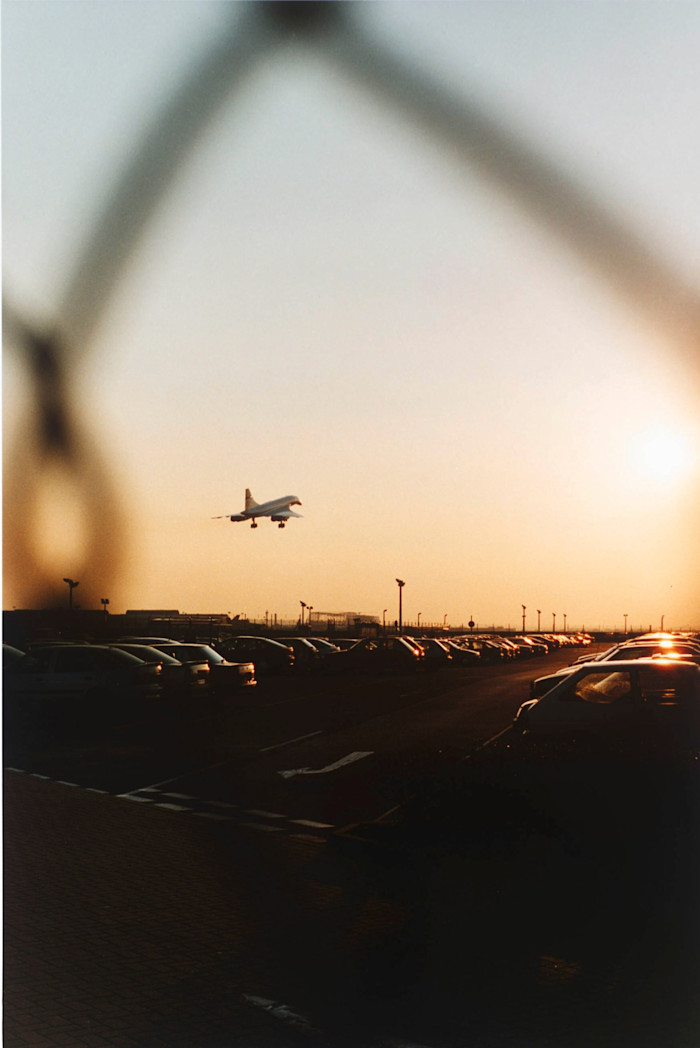
I felt as captivated by the 56 photographs of Concorde over Heathrow as artist Wolfgang Tillmans surely was in 1997 when he took them. The series opens the bright white fifth room, along with pieces by Damien Hirst and Rachel Whiteread. The YBAs feel respectfully acknowledged, but Enninful wants a place in history for other stories, too — not least the coffee table by designer Hussein Chalayan that transforms into a skirt. A-line G-Plan? A work of genius.
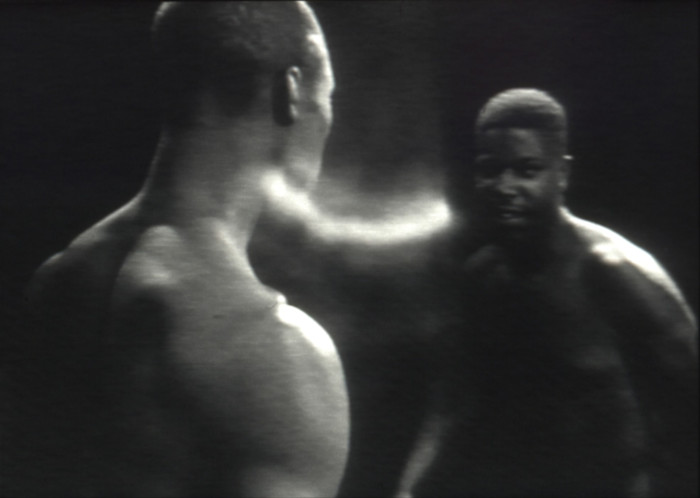
In the penultimate room, Enninful addresses the “patriotic myth” of Cool Britannia, a vision of national identity that he says “failed to represent the inequality experienced by many Britons”. The works here — from the exquisite tailoring of Ozwald Boateng and bold video “Bear” by Steve McQueen to “No Woman, No Cry”, Chris Ofili’s poignant tribute to Doreen Lawrence, mother of the murdered teenager Stephen Lawrence — place Black excellence at the forefront of these cultural golden years. “Britpop’s bullshit,” observes McQueen in the catalogue.
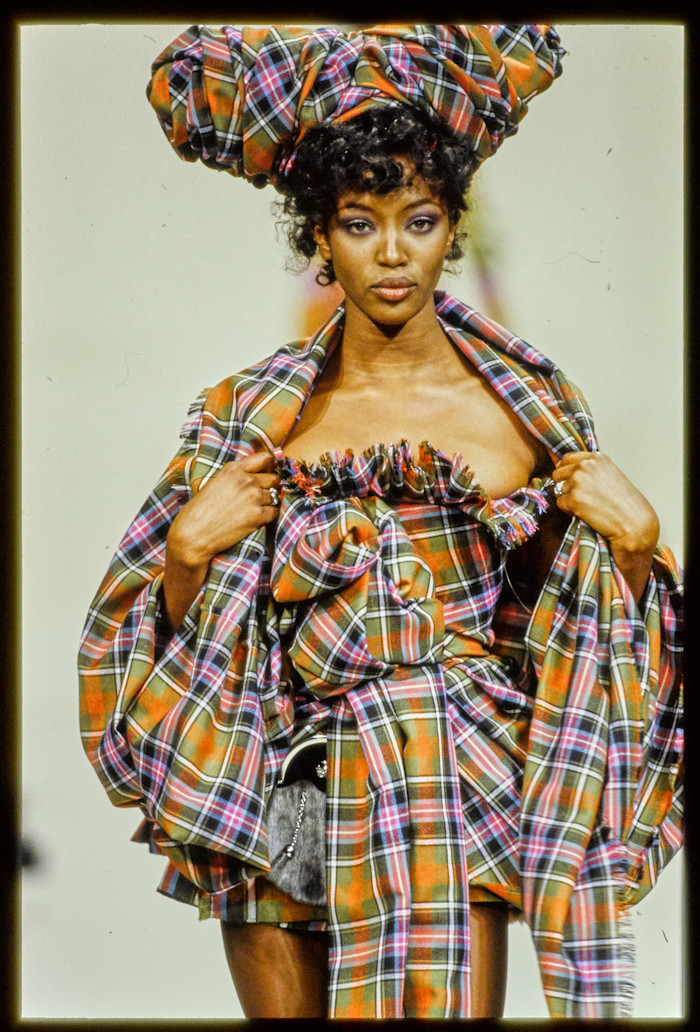
To stand up this refreshing, somewhat revisionist and frankly pretty convincing version of the decade, Enninful concludes with a room that feels designed to wrongfoot any remaining preconceptions about art and fashion in ’90s Britain. We are presented with the works of designers and artists inspired by the 18th century: John Galliano, Vivienne Westwood, Yinka Shonibare. “Their work shows us that history is not fixed,” runs the panel. “It is actively rewritten by those who choose to contest it.” We exit to the strains of light orchestral music.
It’s an entertaining end to an exhibition meticulous in its avoidance of cliché yet alive with the flavours, the textures and the feelings of the decade. For those who weren’t around, it will bring the ’90s vividly to life. For those who lived through them, this show will remind you what riotous times they were.
October 8-February 14 2027, tate.org.uk
Follow us on Instagram and sign up for Fashion Matters, your weekly newsletter about the fashion industry