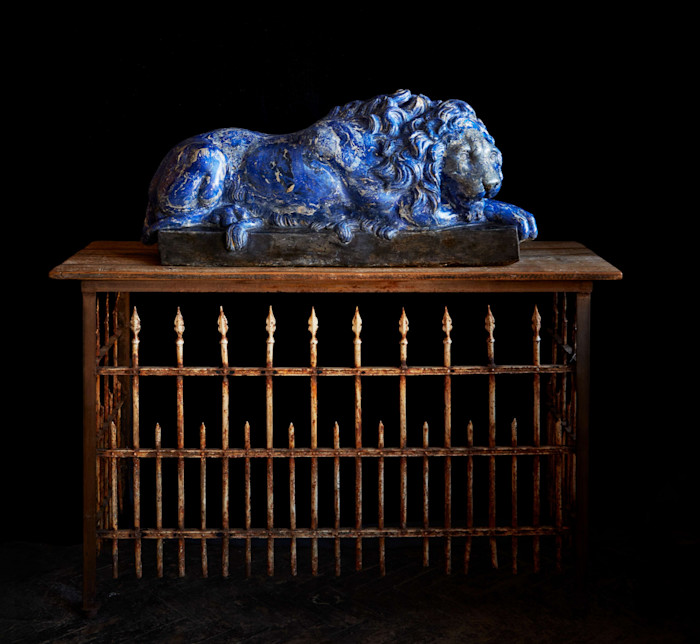
Drive 20 minutes south of Florence towards San Casciano in Val di Pesa, and the road eventually narrows into a dirt track bordered by cypresses and olive groves. At the end stands the Tuscan stone house where Jilly Bernard lives and works, one of the few practitioners of a craft so specialised that its name often draws blank looks.
“Scagliola is one of those words a lot of people won’t know,” Bernard says. “Even decorators, designers, artists, they’ll ask, ‘What is that?’”
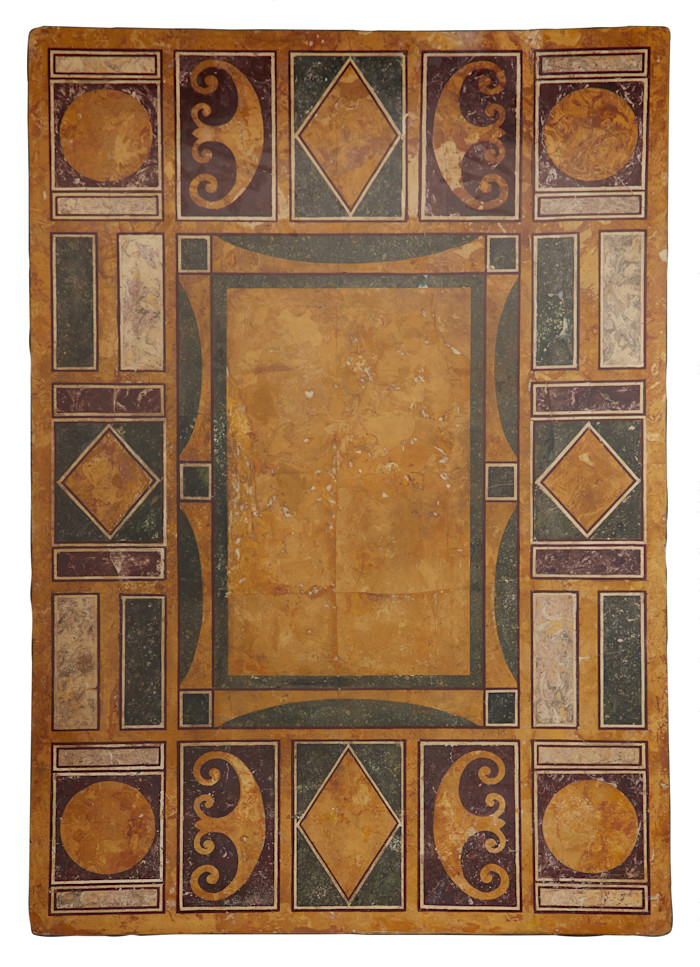
The word comes from the Italian scaglia, meaning chips of stone. Developed in Italy during the late Renaissance, scagliola is a decorative technique in which plaster, animal glue and raw pigments are worked together to produce a richly coloured, polished, imitation marble. It has graced the altars of churches and the floors and columns of grand residences from Ham House in Surrey to the Lower Belvedere in Vienna.
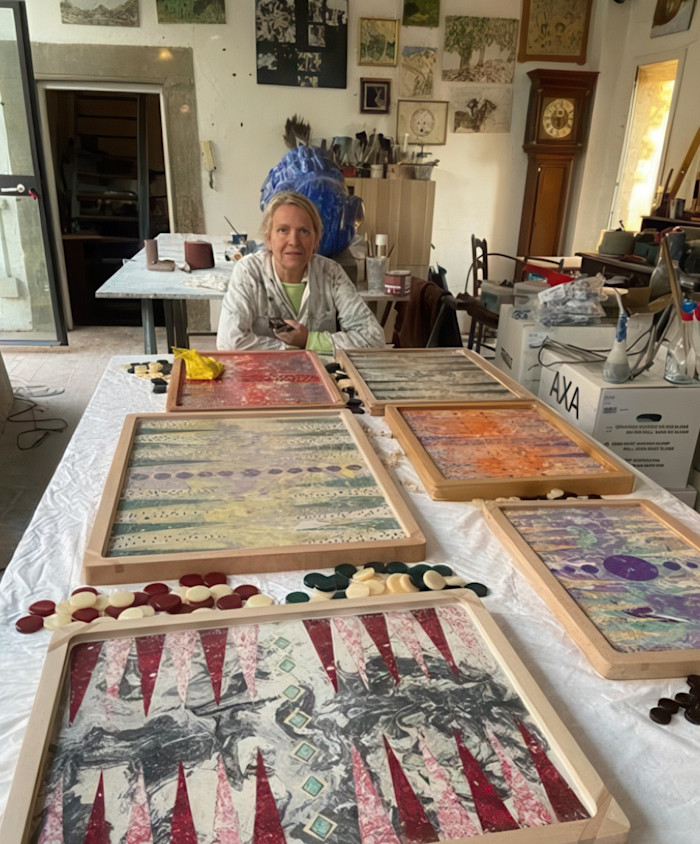
Bernard’s work, embracing classical figures, landscape, wildlife motifs and abstract designs, is commissioned for private interiors across the US and Europe. She created the centrepiece of the foyer of the Princess Royal stand at Cheltenham racecourse and “a pastiche of animal images” by the gun room at Blenheim Palace.
Scagliola rewards patience and punishes shortcuts. Bernard has spent almost three decades studying its peculiarities. “You never really finish learning,” she says. “You just get better at it.”
She works with a spatula to produce a “plaster pasta”, then adds pigments and rearranges it by hand to form veins and passages of colour. The piece is then sanded and refilled. “Those touches can take days, sometimes weeks,” she says. Finally, it is oiled, waxed and polished. “Eventually my husband comes in and tells me, ‘Jilly, it’s finished.’”
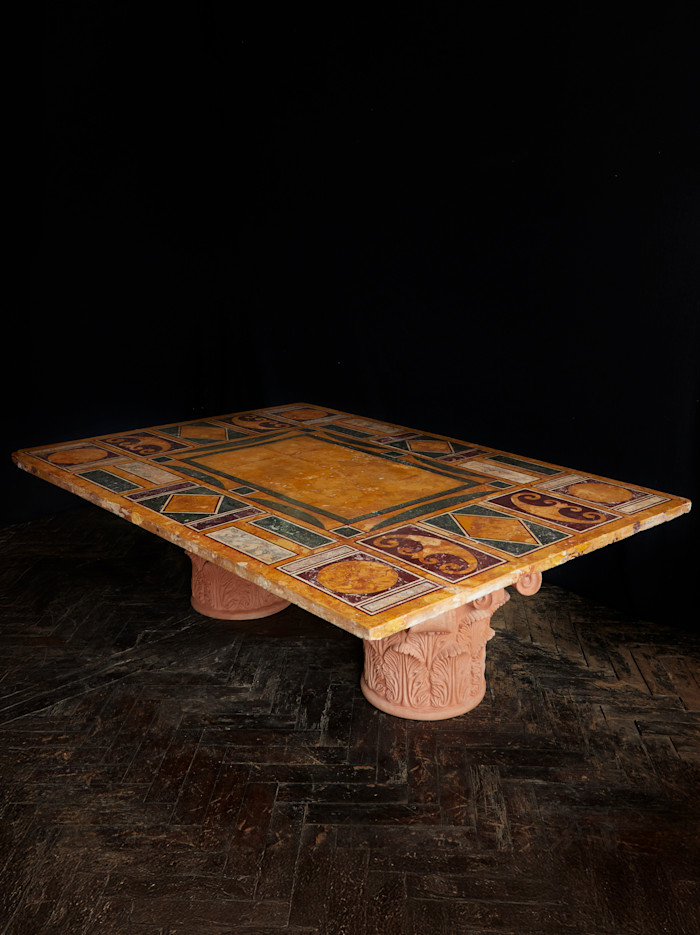
Bernard’s route to the craft began far from Tuscany, on the sheep farm in Scotland where she grew up. She often visited the nearby home of textile designer Bernat Klein, known for his intensely coloured couture fabrics. “He had an extraordinary eye,” she recalls. “Mohair mixed with silk, shocking pink against bright orange. As a child, you absorb all of that without even realising it.”
In the 1980s, Bernard started her career in London as a specialist decorative painter. She discovered scagliola during a year in Italy studying fresco painting with Leonetto Tintori. Later, she worked alongside the Florentine scagliola master Cinzia Lunghetti.
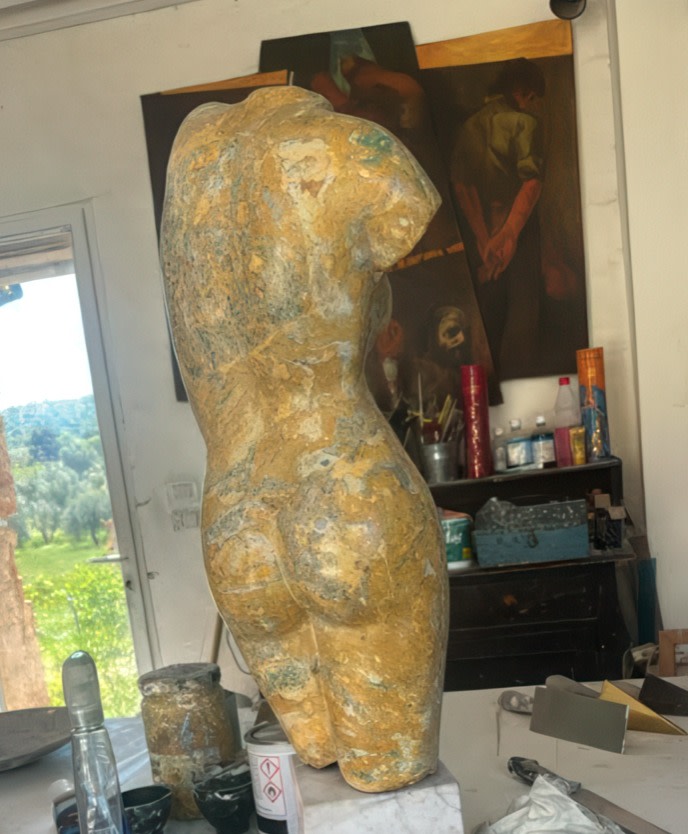
Recently, Bernard has moved beyond flat surfaces to explore scagliola as a three-dimensional art. Her sculpture series The Eternal Feminine includes 12 female torsos in tones ranging from deep reds to electric blues. She has had to develop a more complex technical dexterity to negotiate the curves of the human body.
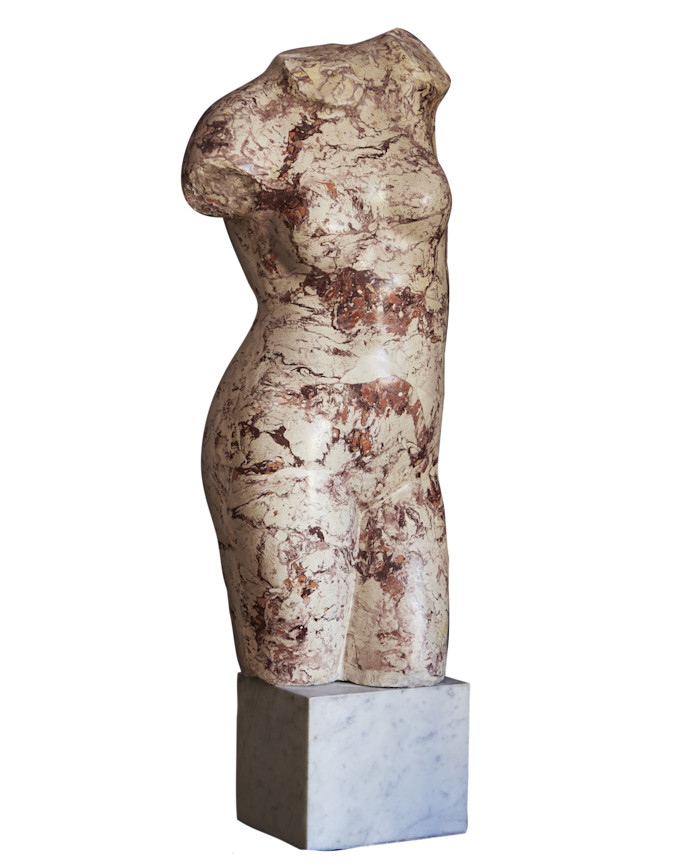
“Scagliola’s possibilities are endless,” says Tom Moy of House of Moy, the Oxford-based gallery that represents Bernard. “It is as at home on the walls of England’s stately homes as on a backgammon board in the sitting room.”
Bernard’s latest experiment may be her boldest yet: recreating the ancient clay warriors of Emperor Qin Shi Huang’s Terracotta Army. The original figures were vibrantly painted, their colours lost to oxidation. “I decided to make them as they would have once appeared,” she says. She has completed two so far, with plans for a series. “They’re the first of their kind in the world. So I’m pretty happy about that.”
Small works from £8,000, lead time from four months; tabletops from £30,000, lead times from six months; for sculptures, contact House of Moy; jillybernardscagliola.com; houseofmoy.com/scagliola
Find out about our latest stories first — follow @ft_houseandhome on Instagram