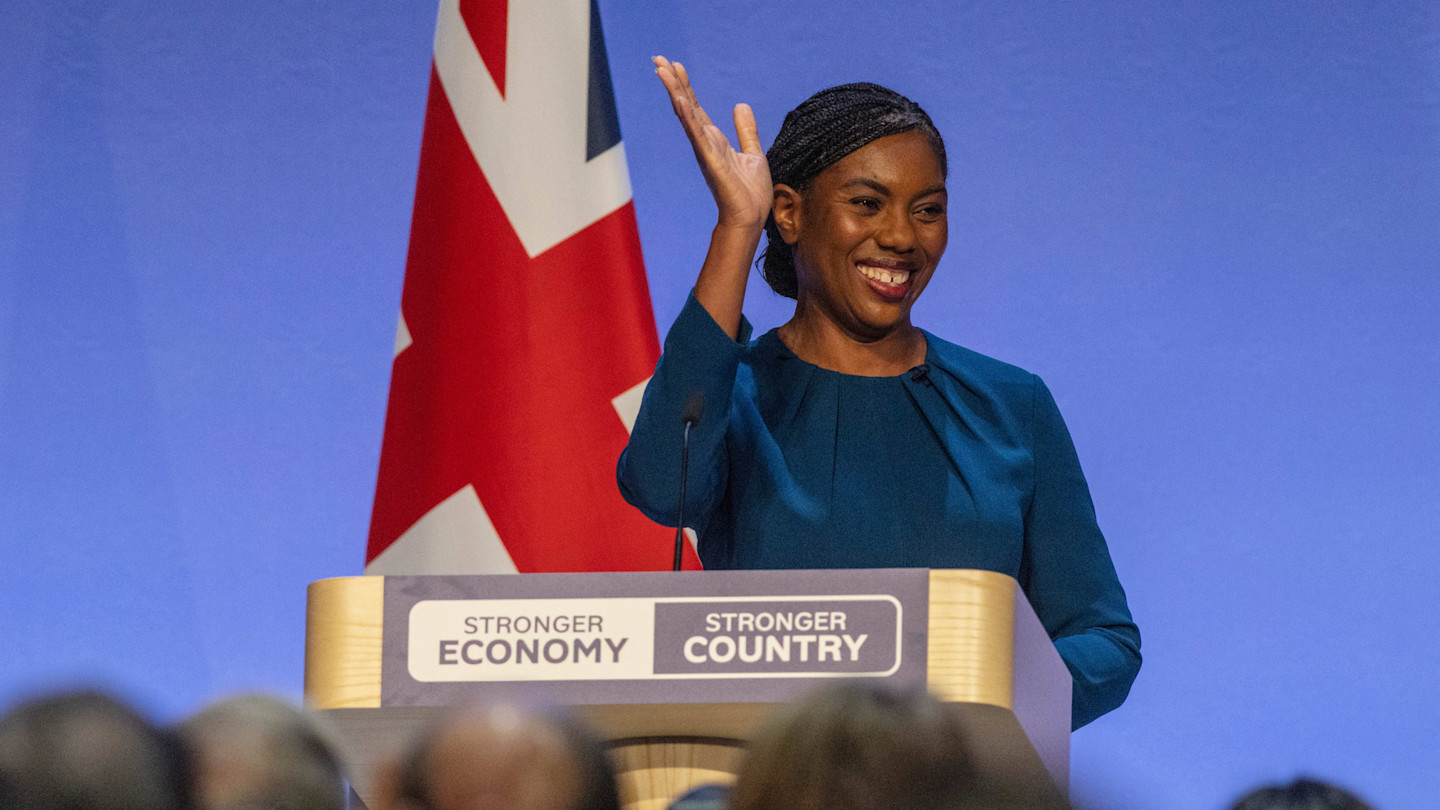
Kemi Badenoch has come quite a distance in 12 months. A beleaguered figure at last year’s Conservative Party conference, she is today master of her party; her personal ratings have improved markedly. Her party has come less far. It is still hollowed out, languishing in third place in the polls and under huge pressure from Nigel Farage’s populist Reform UK on the right. It remains far from being a credible party of government. It is, though, beginning to shape up as a credible party of opposition.
That is significant in itself. New Prime Minister Andy Burnham is shifting his government alarmingly towards the big-state, high-spending Labour of old, seeming to repudiate not just Thatcherism but the Blairite blend of social democracy and free markets. After the Starmer government heaped taxes on business, his successor seems less committed to freeing animal spirits than to expanding public control.
This not only opens up a space in the political centre that Badenoch’s Conservatives ought to be seeking to occupy. It also makes it all the more important for a centre-right opposition party to be holding Burnham’s Labour firmly to account.
The Tories are showing some progress on both. Most welcome is the re-embrace of business, in rhetoric and policy. Despite business scepticism given the Conservatives’ economic record in the 14 years to 2024, the party is earning a hearing for its emerging offer: lower taxes on work, wealth and business, with fewer regulatory constraints and stronger incentives to work and invest.
Halving employer national insurance contributions for 21- to 24-year-olds, cutting business rates for 250,000 high street businesses, simplifying Britain’s bloated tax system and abolishing a childcare support cliff edge for higher earners are encouragingly pro-business or pro-work policies. Badenoch’s pledge to scrap inheritance tax on family homes, with an additional £1mn tax-free allowance, is a stark contrast to Labour’s post-2024 extension of taxation on wealth.
Less favourable is the Conservative leader’s insistence, for now, that she would keep the unsustainable triple lock on pensions, which Burnham said he would loosen in 2030 to help fund a national care service. It betrays a tendency to play politics rather than to make savings wherever they can sensibly be found.
Among the party’s big weaknesses are its neuralgia over the EU. Burnham’s pragmatic pitch to improve the UK’s post-Brexit relationship with the bloc — messy and time-consuming as that may be — is one area in which many in business may favour Labour. The Conservative proposal to rip up any UK-EU deal made by Labour to liberalise trade in agrifood has raised concerns that the food industry could face ever-shifting regulatory regimes.
The Conservatives have also spent too long trying to ape Reform’s hardline stance on immigration, hoping to win back voters lost in 2024 — but risking alienating centrist waverers. Here, however, there were signs on Wednesday of a shift. Badenoch repudiated any idea of “uniting the right”, insisting Reform “are not like us, we are not like them”. In a sometimes emotional speech that decried “people” debating whether Badenoch’s mixed-race children were English, she appealed to Reform-leaning Tories to come home to her party.
A final issue is the shrunken parliamentary party’s shortage of talent beyond Badenoch herself; new shadow chancellor Andrew Griffith’s speech failed to enthuse despite sounding some of the right notes. The leader herself is beginning to show a little more political subtlety and depth. Her rebuilding of the broader party remains a work in progress, though it is showing moves in the right direction.