One scoop to start: London credit investor Arini Capital Management’s flagship fund has suffered losses of almost 16 per cent this year, after enduring a series of soured bets on the debt of financially troubled companies.
Welcome to Due Diligence, your briefing on dealmaking, private equity and corporate finance. This article is an on-site version of the newsletter. Premium subscribers can sign up here to get the newsletter delivered every Tuesday to Friday. Standard subscribers can upgrade to Premium here, or explore all FT newsletters. Get in touch with us anytime: [email protected]
In today’s newsletter:
Kirkland stops disclosing its finances
SpaceX’s debt spree
David Ellison’s moment of candour
Rankings no more for the biggest in Big Law
It’s no secret that pay for top lawyers has soared in recent years, fuelled by the rise of private capital and an expensive never-ending battle for talent. Many now earn tens of millions of dollars per year and some are growing comfortable flaunting their newly lavish lifestyles.
This can be irksome for clients, whose fees are fuelling a new gilded age in Big Law even as many of them struggle with troubled portfolios and earn less than the lawyers they hire.
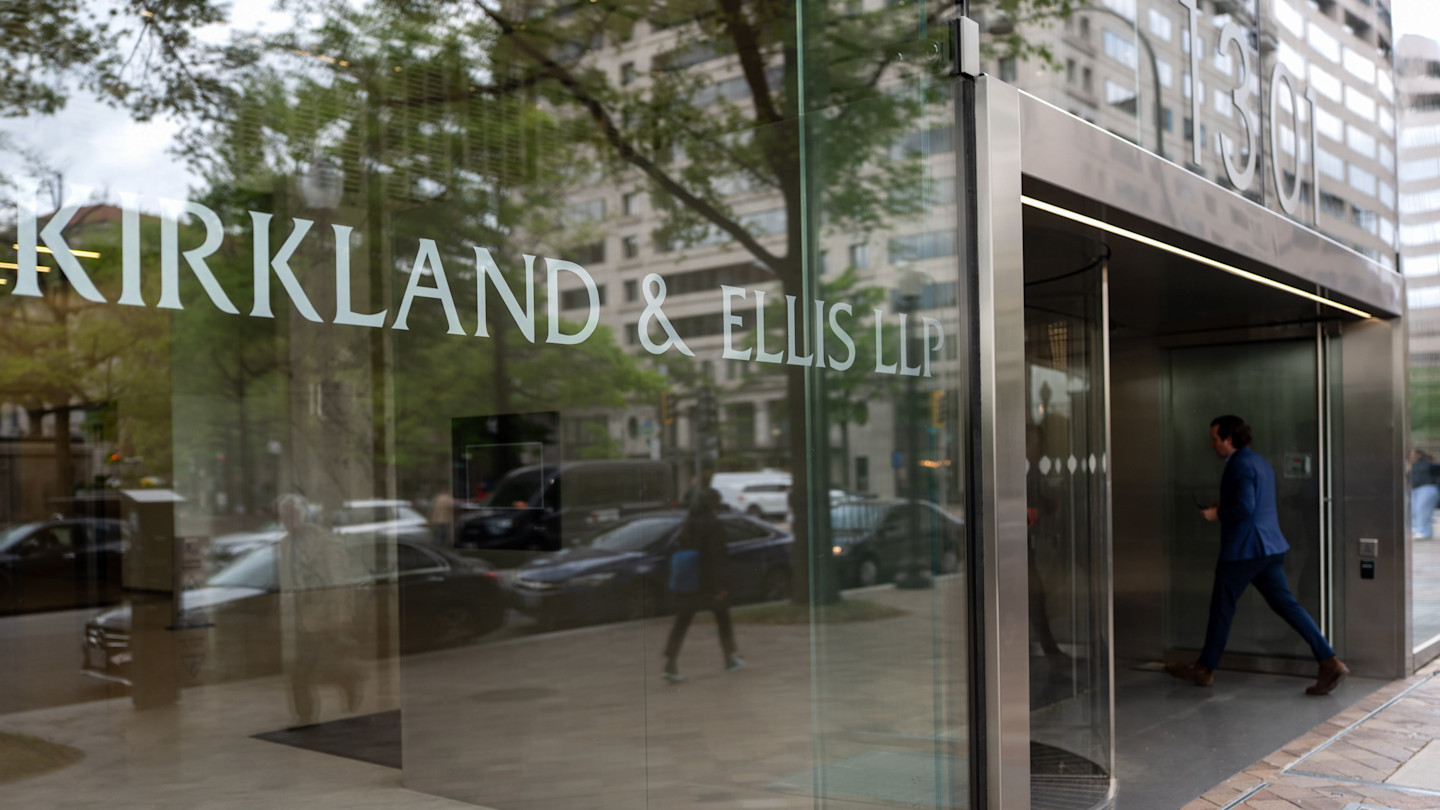
Now the world’s highest-grossing law firm, whose equity partners were paid an average of $11.1mn last year, has decided it’s best to stop disclosing its finances. The FT scooped on Wednesday that Kirkland & Ellis will stop sharing its financial figures with the legal industry’s flagship ranking of law firm profits and revenues.
As a US private partnership, Kirkland does not disclose the global figures elsewhere, though its UK business files accounts with Companies House. Kirkland’s disclosures for 2025 showed a record $10.6bn in revenue, up from $8.8bn the previous year.
Kirkland said in a letter to The American Lawyer, which compiles the ranking, that it had concluded it was no longer “appropriate or necessary” to disclose results and that furnishing the information did not provide “meaningful value” to its clients.
While Kirkland has its own reasons for making the move, DD can understand that in an industry built on client relationships, a firm might not want to disclose record-breaking figures year after year.
It’s not just clients that the firms have to worry about. The FT also reports that top lawyers have begun to complain privately about the level of media attention their compensation packages are attracting.
But fiercely competitive lawyers, many of whom obsess over landing on industry rankings of top dealmakers and litigators, may still lament Kirkland quashing an outlet for their competitive spirit.
‘How are we supposed to take that to the IC?’
Less than four months after SpaceX raised more than $110bn from a historic initial public offering and bond sale, Elon Musk is out in the market to raise new capital again.
This time around, the rockets and AI company wants $40bn to buy advanced Nvidia chips, doubling down on its exclusive tie with Jensen Huang’s chipmaker at a time when other semiconductor rivals are developing their own versions of AI chips to counter Nvidia’s dominance.
The company is seeking to raise about $10bn of that in bank loans. More interestingly, the remaining $30bn is going to be funded by private investment-grade debt, a market with only about $100bn in annual issuance currently, according to Wellington Management.
SpaceX’s plan to fund its huge AI capex in the private market is great news to private capital giants such as Apollo, which has been pushing blue-chip companies to sell debt to investors directly, replacing the function of large banks’ debt syndication desks.
Why investment grade? Because the market is much deeper. Many investors, particularly insurance and pension funds, are restricted from taking large positions in junk-rated debt.
Theoretically, if Athene — Apollo’s insurance arm — wants to invest the proceeds from selling annuities, the debt that it purchases needs to have an investment-grade credit rating for the most part.
S&P rated SpaceX two notches above a junk rating. The bond market has a different view. Its bonds maturing in 2056 are now trading at over more than 2.3 percentage points above US Treasuries, a level similar to junk-rated companies.
Musk’s limited financial disclosures have kept some investors away from SpaceX debt in the past.
Investors whom SpaceX has previously approached about financing its multibillion-dollar chip purchase said they only received a short two-page deal memo with pictures of outer space and an arrow pointing out that the company was going to build data centres “somewhere in the universe”.
“How are we supposed to take that to the IC?” one of the people said, referring to the in-house investment committee that approves transactions.
The lengths to go when needing antitrust approval: Ellison edition
What does it take to get a deal done with the Trump administration in power? David Ellison, the son of Oracle billionaire Larry Ellison, suggested this week that being close to the White House is part of the playbook.
Speaking to journalists on the Paramount lot on Tuesday after closing his $111bn takeover of Warner Bros Discovery, David Ellison was pressed as to whether he had politicised the company under his tenure.
His answer: “When you’re operating within a business-friendly administration, you should always have those relationships.”
“We were in a transaction review process,” he added. “But with that said, we are now turning that page, we are operating, we’re moving forward.”
He said he had “a good relationship with this administration”. David Ellison, who now oversees some of the biggest and most influential media properties in the world, had criss-crossed the country this year in his push to win approval for the WBD takeover.
That has included ample time in Washington. Earlier this year he threw a private dinner to celebrate US President Donald Trump, and he was ringside at the UFC cage fight on the White House South Lawn.
It’s a surprisingly candid response from an executive about the lengths companies are willing to go to get their deals blessed by the administration, especially from a man who now controls both the CBS and CNN news operations.
Warner, which is now a part of Skydance, has made the Ellisons one of the country’s most powerful and influential families, with a former lieutenant to Rupert Murdoch saying they may have amassed more power than even his boss.
After speaking to the press, Ellison and his team were whisked off to the restaurant Mother Wolf in Los Angeles to celebrate their first day together, a restaurant frequented by Beyoncé and Jay-Z, people familiar with the matter told DD’s Eric Platt. Now the real work starts.
Job moves
Davis Polk has hired Glen Mastroberte as an M&A partner in Los Angeles. He joins from Skadden.
JPMorgan Chase has hired Rob Sweeney as global chair of investment banking in New York. He joins from Sycamore Partners.
Citi has hired Rogier Pop as head of diversified industrials for the UK, Europe, the Middle East and Africa. He previously worked at JPMorgan.
Smart reads
Foreign assets China’s President Xi Jinping is embarking on what could be the most ambitious global tax hunt in history, the FT reports in a Big Read.
Money matters The US Treasury department under Scott Bessent has seen a wave of departures of senior officials, The Wall Street Journal reports, which some chalk up to the secretary’s tough management style and hot temper.
AI advantage Bank customer deposits won’t be as sticky in the age of agentic AI, Lex writes. That will be costly for banks, though they will gain from AI as well as lose.
News round-up
Billionaire Weston family to buy Boots in $8.9bn deal (FT)
Chrysler Building taken over as New York luxury office market booms· (FT)
SEC warns asset managers against collaborating on activist campaigns· (FT)
Ex-Barclays traders’ rate-rigging convictions quashed (FT)
Paramount’s monster debt deal offers few safeguards to investors (BBG)
Hedge fund Rokos returned 4.2% in turbulent month for trading (BBG)
Due Diligence is written by Arash Massoudi, Ivan Levingston, Ortenca Aliaj, Alexandra Heal, Robert Smith and Aaron Kirchfeld in London, James Fontanella-Khan, Sujeet Indap, Eric Platt, Antoine Gara, Amelia Pollard, Kaye Wiggins, Oliver Barnes and Julia Rock in New York, George Hammond and Tabby Kinder in San Francisco and Arjun Neil Alim in Hong Kong. Please send feedback to [email protected]