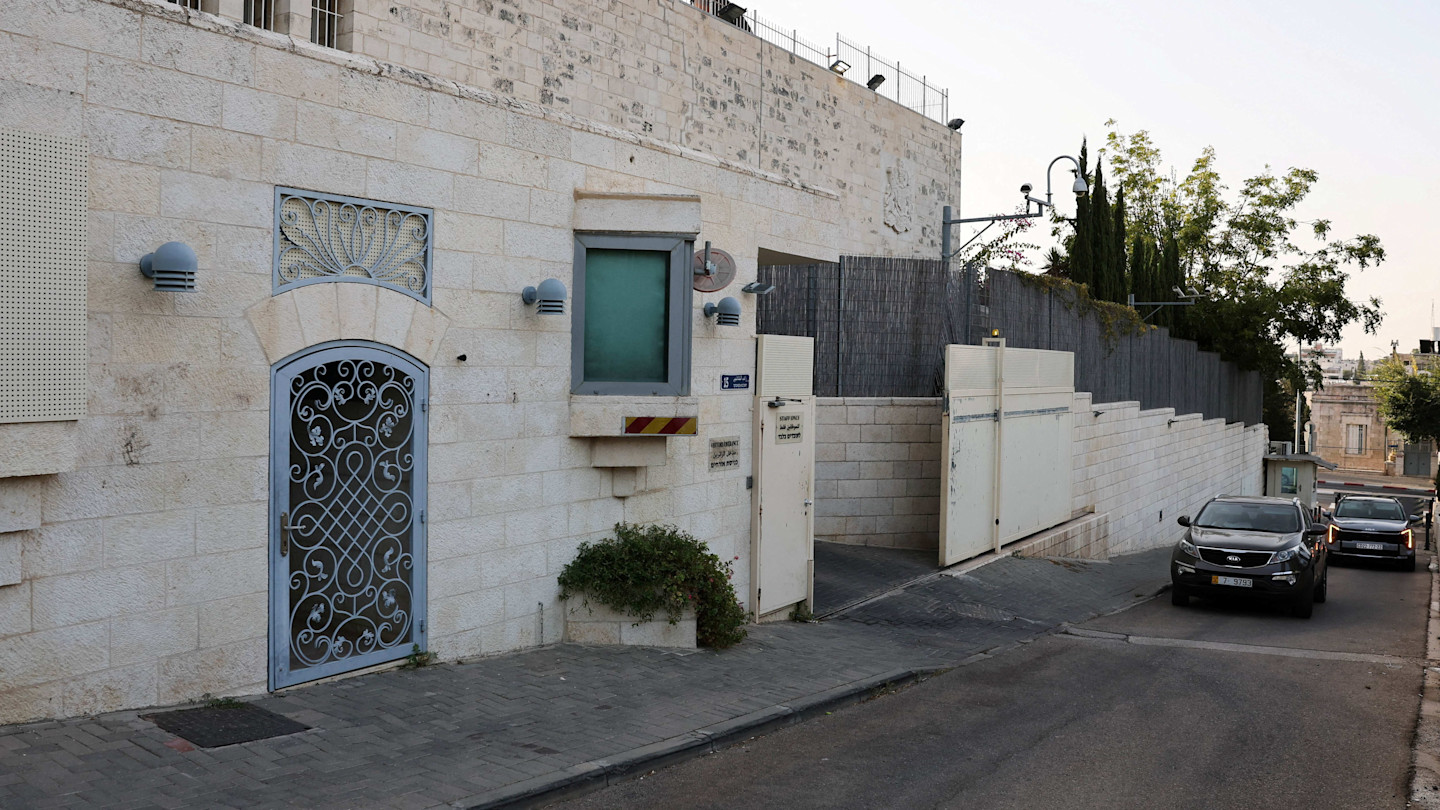
The British Consulate General in East Jerusalem will remain open but its status will be changed, the UK foreign secretary said on Thursday, as part of a deal designed to contain an escalating diplomatic feud between the UK and Israel.
Israel ordered the complete closure of the nearly 200-year-old consulate last month as part of a series of measures in retaliation for the British government’s announcement that it would impose sanctions on illegal Israeli settlements in the occupied West Bank.
However, following weeks of talks between British and Israeli officials, Israeli foreign minister Gideon Sa’ar and his British counterpart Ed Miliband on Thursday announced an agreement under which the consulate would be known as “the UK Mission” and seven of its original 27 diplomats would continue to work there.
Sa’ar said the building had “ceased to function as a consulate today” and that the “scope of activity” of the remaining diplomats would be “very limited”.
He added that the arrangement was aimed at “preventing further deterioration in relations between the countries” and that as part of the deal the UK had agreed not to retaliate against Israel for the steps it had already taken.
Miliband said the UK did not consider that Israel had the legal right to close the consulate. It is located in the Sheikh Jarrah neighbourhood of East Jerusalem, which the UK and most of the international community regard as occupied territory.
However, he said the UK had “temporarily withdrawn a number of staff and families” while discussions with the Israeli government were ongoing.
Miliband added that the UK would not take “reciprocal action” such as expelling Israeli diplomats “while such discussions are under way and credible”.
“This will ensure that we maintain our longstanding British presence and the UK’s role in support of two state solution,” Miliband said, adding that the mission would continue to provide services to the Palestinians.
“We will work in the coming months to build back up our presence.”
A person familiar with the situation said the deal followed intense talks between Israeli and UK officials and represented a “compromise” that allowed Israel to “get what it wants without hurting the Brits too much”.
UK officials defended the deal, pointing out the original Israeli threat had been to close the consulate altogether and that keeping a British presence in Jerusalem would make it easier to build back up in future, potentially after the elections.
British government figures stressed that London retained the right to take reciprocal action but had decided it was not right to do so during Israel’s election campaign.
The order to close the UK consulate was the most dramatic of a series of moves Israeli Prime Minister Benjamin Netanyahu’s far-right government has taken against its international critics in recent years, and follows retaliatory measures against countries such as Ireland, Spain and Norway for their recognition of Palestine.
Last month, it also revoked the accreditation of Dutch diplomats based in the West Bank after the Netherlands began enforcing sanctions on goods from Jewish settlements in the Palestinian territory.
In addition to ordering the UK consulate to close, Israel also announced the expulsion of two teams of British officials from Ramallah and the US-led co-ordination centre for postwar Gaza, as well as banning a dozen British MPs from entering Israel.
Sa’ar said on Thursday that those other measures had been implemented in full.