Samsung Electronics has estimated its operating profit surged nearly ninefold in the third quarter as strong demand for memory chips from AI companies continues to drive industry-wide shortages.
The world’s largest memory-chip maker projected record operating profit of Won107.4tn ($80.2bn) in the July to September period. That compared with Won12.2tn in the same period last year and was above expectations of Won106tn as compiled by LSEG SmartEstimate.
Sales were estimated at Won195tn, up 126.6 per cent year on year.
Samsung issues expected profit and sales figures ahead of releasing its full quarterly results.
The upbeat guidance represents a fourth consecutive quarter of record performance and highlights a prolonged shortage of memory chips as AI companies swoop up supplies and drive up prices.
Samsung said it became the world’s first tech company to report more than Won100tn in quarterly operating profit.
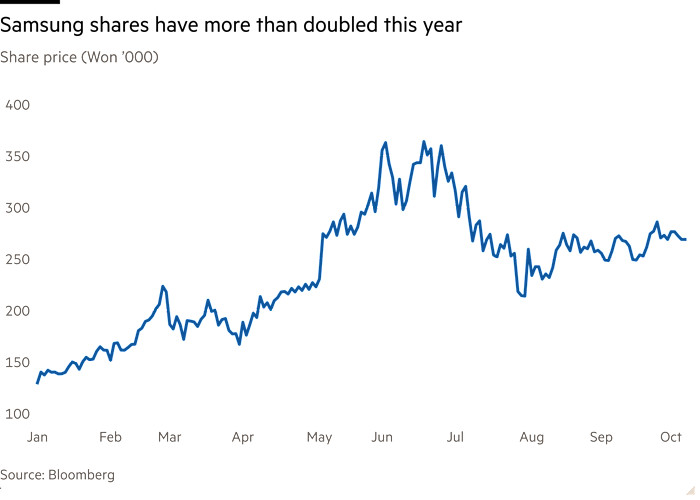
High demand for memory chips — a crucial component in the data centres that power AI — has led to record profits and share prices for chipmakers such as Samsung. Its stock has more than doubled this year, valuing the company at about $1.3tn.
The demand has also put pressure on other buyers of memory chips, including makers of smartphones and computers, which have had to grapple with higher prices.
Contract prices for conventional dynamic random-access memory chips, which store short-term memory on devices, are expected to rise by 10 to 15 per cent in the fourth quarter, according to market researcher TrendForce.
Analysts expect the chip squeeze to persist into next year, with margins protected by an increasing proportion of long-term supply contracts with AI companies. US chipmaker Micron said last week the industry could see a tighter market over the next two years.
“We expect memory supply to be tighter next year than this year,” said Kim Young-geon, an analyst at Mirae Asset Securities. “New long-term contracts are being signed at prices higher than those of existing contracts.”
Han Dong-hee, an analyst at SK Securities, said the rise of long-term deals had reduced the industry’s past boom-and-bust nature as well as price volatility.
“Even if the peak in earnings can be somewhat lower, the period during which earnings remain at a high level will be much longer, maximising cumulative cash generation,” he said in a recent report.
In the most cutting-edge AI hardware, Samsung recently gained ground in developing advanced HBM4 chips after years of struggling to narrow its gap with rival SK Hynix.
However, some investors are questioning the longer-term demand for chips amid concerns about AI’s existential risks. Some US tech companies have called for a slowdown in the pace of AI development.
In a sign of investor worries, Samsung shares fell 2.4 per cent on Thursday despite the record profit. They are down more than a quarter from their June peak.
“Investors are looking beyond the company’s quarterly figures and waiting for clearer signals that the upcycle can continue next year and the year after next,” said Albert Yong, managing partner at Seoul-based Petra Capital Management.
“They care more about when the industry will peak out and whether it will repeat the severe boom and bust cycle of the past.”
Compared with its US peers, Samsung is undervalued. Its price-to-earnings ratio is close to 12 versus nearly 40 for the Philadelphia Semiconductor Index, which tracks the biggest American chipmakers.
Analysts expect Samsung’s full results to reveal a negative impact from the won’s sharp appreciation, as the South Korean company makes most of its revenue outside its home country.
The currency gained more than 14 per cent against the dollar in the third quarter, its biggest quarterly rise since early 1998.
Rising chip costs have also hit Samsung’s consumer electronics business, which has struggled to pass on the increases to customers.
Analysts estimate its smartphones and home appliances businesses suffered more than Won1tn in combined operating losses in the third quarter.