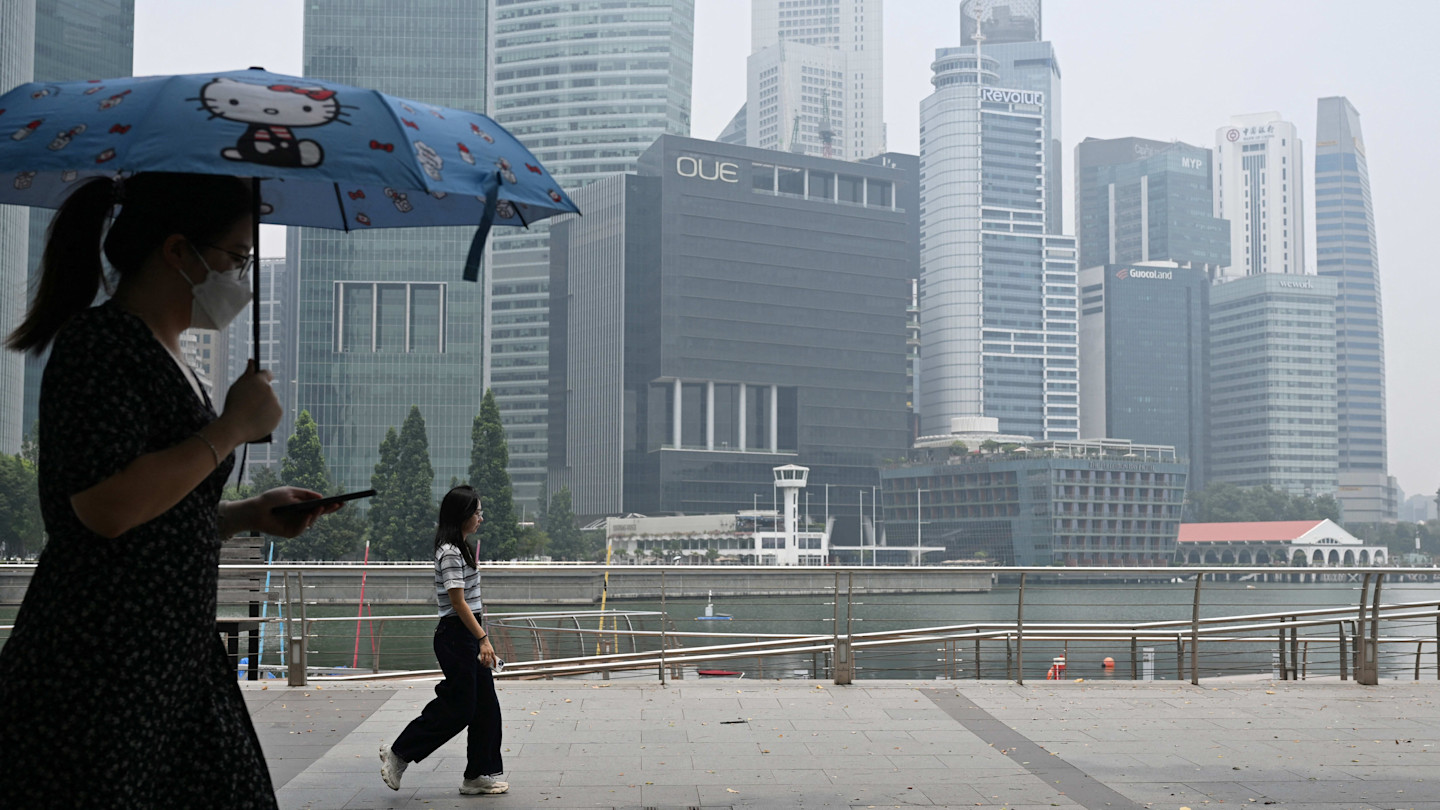
Singapore is stockpiling face masks and preparing medical services as hundreds of thousands of spectators descend for this weekend’s Formula 1 Grand Prix that is set to go ahead under the worst toxic haze in years.
Smoke from Indonesian wildfires has cloaked the city-state, making Singapore the most polluted city in the world this week, according to air quality monitoring company IQAir. Nearby Kuala Lumpur, which has also been affected by the haze, was ranked second.
Air pollution is an annual hazard in Singapore, where outdoor activities are curtailed and hospitals experience a surge in admissions for respiratory complaints during haze-heavy seasons.
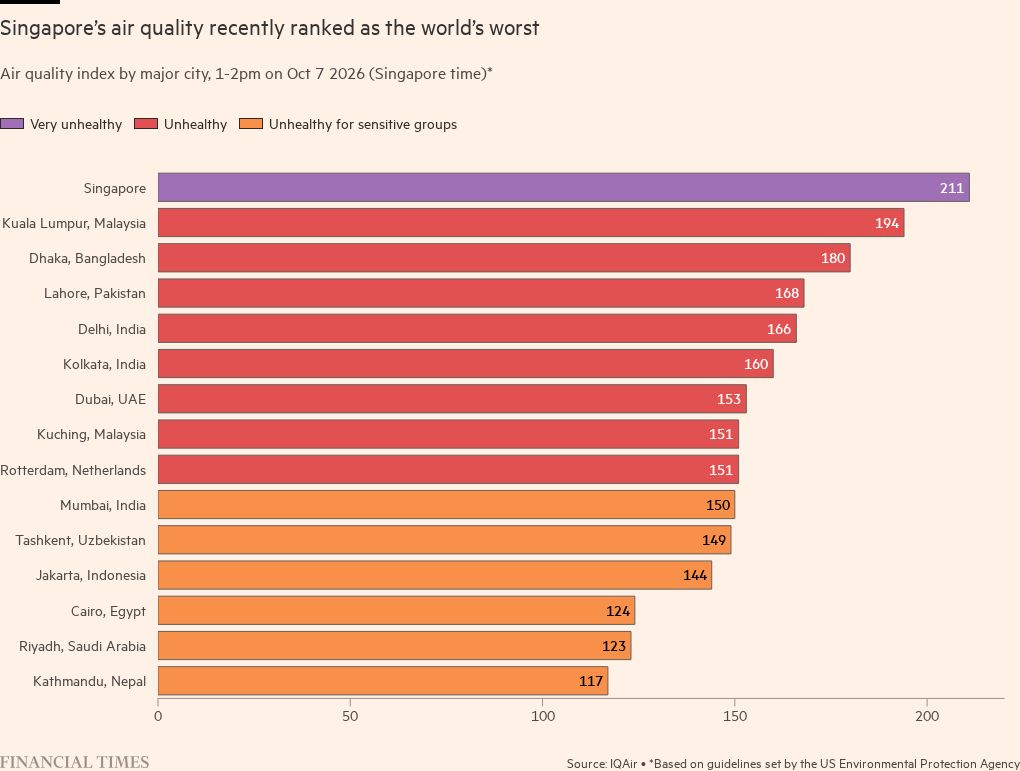
But this weekend, the smog is more than a mere irritant, casting a pall over the city-state’s turn on the global stage and threatening to interfere with festivities including open-air concerts by The Killers, Janet Jackson and Lana Del Rey.
At least 300,000 fans, some of whom spent thousands of dollars, are expected to attend the Grand Prix, while tens of thousands more will watch from rooftop bars and balconies.
In the run-up to the Grand Prix, Singapore also hosted a series of corporate events including Token2049, the world’s biggest crypto event. The haze was the biggest topic of discussion.
“It couldn’t have happened at a worse time,” said Margaret Grieve, who had travelled from Melbourne for the race.
“We are used to bushfires back home, but this must be pretty awful for the people who live here,” added her husband Jason.
Video description
A haze covers Singapore ahead of the F1 Grand Prix
The smog in Singapore often blows hundreds of miles in from Indonesia, where vast tracts of land in Sumatra and Kalimantan, on the island of Borneo, are slashed and burned for paper and palm oil production.
This year, that effect has been exacerbated by a “super” El Niño, the natural weather pattern of warming Pacific Ocean temperatures, making it the worst season in at least seven years.
The city-state’s monitoring system has shown consistently unhealthy air quality in recent days — levels at which the government advises Singapore’s 6mn residents to avoid prolonged or strenuous outdoor physical activity.
Singapore’s tourism board has said would keep racegoers informed of the risks of poor air quality. It is also reserving face masks and preparing to offer medical assistance to those in need.
“In the event that haze causes visibility, public health or operational issues, the relevant agencies will work closely with the Singapore Grand Prix to assess the situation before making any collective decisions regarding the event,” the tourist board told the FT.
F1 added: “There is absolutely no risk to the event and the conditions where the event is taking place are not at any level of concern.”
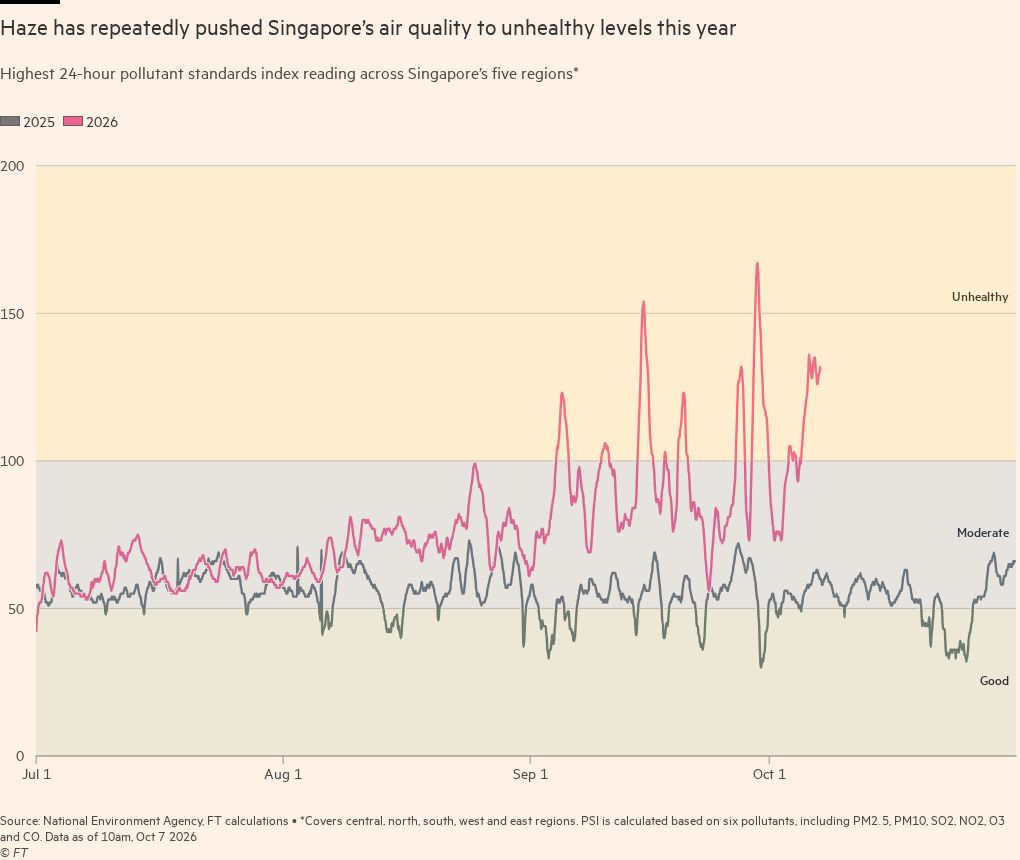
For most of the year, Singapore generally enjoys better air quality than many Asian cities, as it strictly enforces controls on emissions from cars and factories.
But in recent weeks, school trips have been cancelled and children have been forced to play inside, while some health clinics have reported up to 30 per cent increases in patients with smog-related conditions. Over the border in the southern Malaysian state of Johor, more than 200 schools were closed this week.
Singapore was forced to take similar measures in 2015, when El Niño briefly pushed the local pollution standards index to levels regarded as hazardous to health.
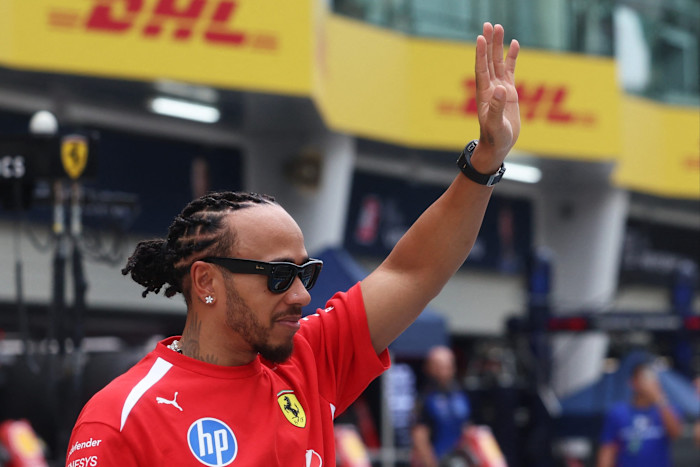
In 2019, meanwhile, seven-time F1 champion Lewis Hamilton said he had been advised not to run outside as part of his usual preparations for the race.
Acting manpower minister Jasmin Lau told parliament this week that “employers should . . . reduce [outdoor] workers’ exposure by adjusting work assignments or rotating jobs, providing sufficient indoor rest breaks and adequate hydration and deferring non-essential work”.
Scientists have warned that severe haze seasons are becoming more frequent as ocean temperatures rise, and could become a permanent feature of life in Singapore.
“If you look at the stats and the direction of travel, this level of haze could be something that Singapore faces every year,” said Graeme Riddell, head of climate and sustainability risk consulting for Asia-Pacific at Marsh Advisory.
That could be a problem for events such as F1. The government has invested heavily in promoting the city-state as a destination for such events, which have buoyed the consumer and hospitality industries.
The race has brought in more than S$2.2bn (US$1.7bn) in tourism receipts for Singapore over the 17 years until 2024.
But not all race fans were put off by the conditions. Lindsey and Emma Bird, a retired couple from Connecticut visiting Singapore for the first time, said they had flown across smoke-covered Malaysia from Kuala Lumpur.
“It’s everywhere and certainly not what we expected before we came here,” said Lindsey. “But it’s just like when we get lots of snow back home — it’s something we will just have to live with.
“I won’t care on Sunday night as long as Ferrari win.”
Data visualisation by Haohsiang Ko in Hong Kong
Singapore is enduring ‘unhealthy’ levels of air pollution as it hosts the Grand Prix this weekend
Where climate change meets business, markets and politics. Explore the FT’s coverage here.
Are you curious about the FT’s environmental sustainability commitments? Find out more about our science-based targets here