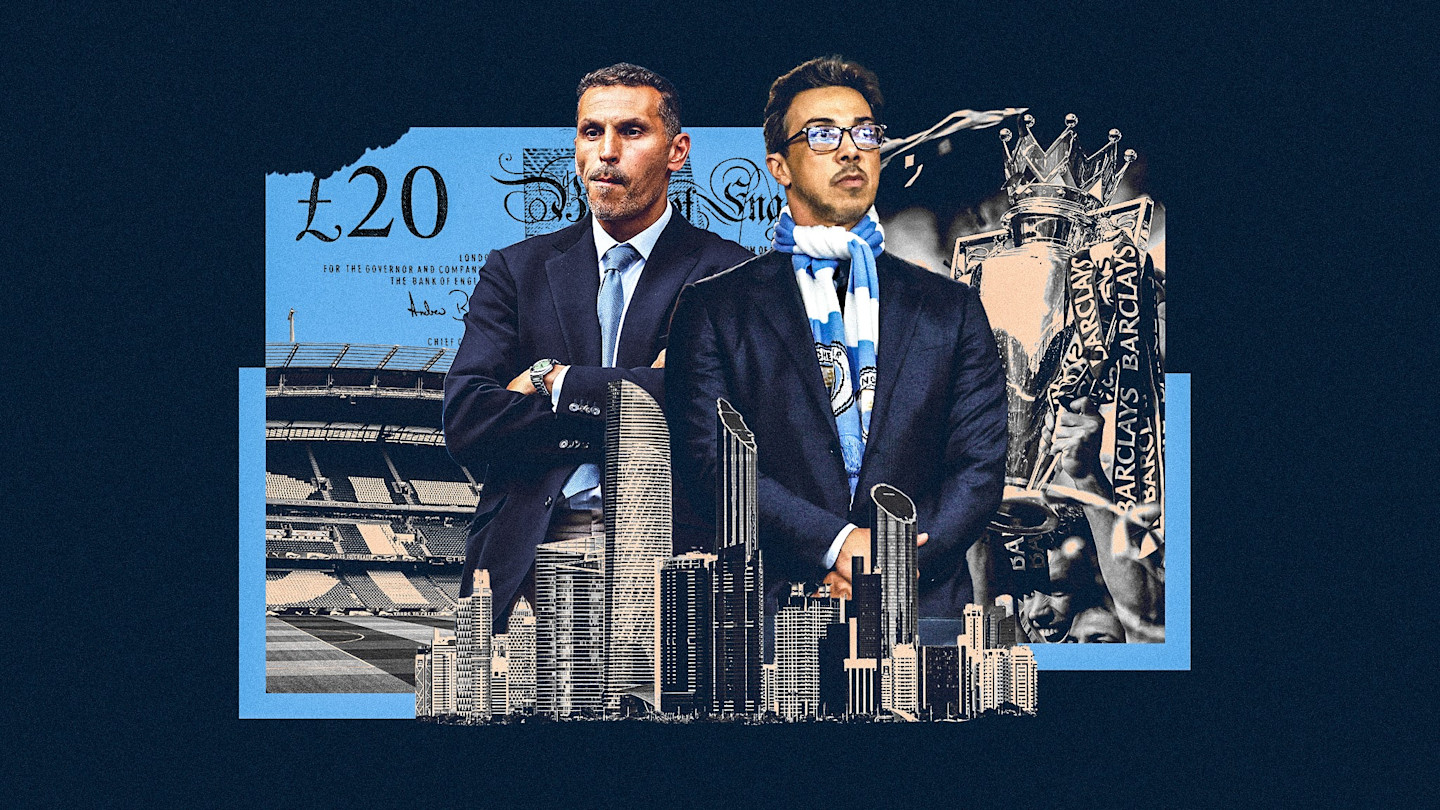
Just hours after the Premier League charged Manchester City with more than 100 breaches of its financial rules in early 2023, the football club’s chair had an important date in his diary.
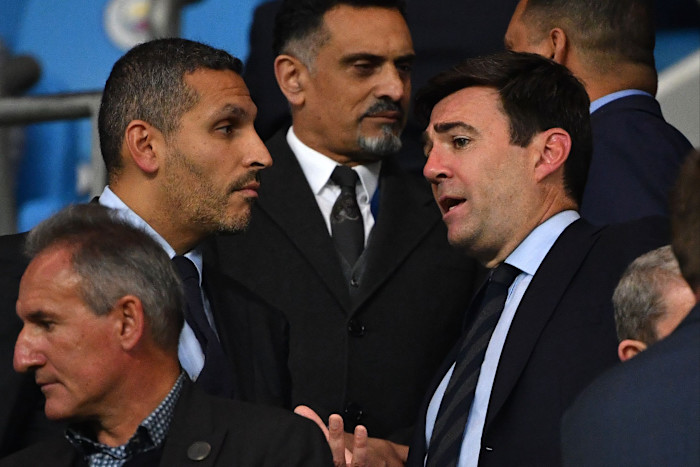
Khaldoon al-Mubarak, who is also chief executive of Mubadala, Abu Dhabi’s sovereign investment fund, was due to see Jeremy Hunt, then the UK’s finance minister.
The meeting was part of a broader effort to rebuild confidence less than five months after the disaster of former prime minister Liz Truss’s unfunded mini-Budget.
Treasury officials noted at the start that the subject of football should be avoided. Upset at the treatment of his club, Mubarak raised the topic anyway, according to two people with knowledge of the meeting.
He described it as an attack on an important Abu Dhabi asset by an unregulated cartel and an affront to some of the emirate’s most respected companies, one of the people added.
Hunt stressed that the Premier League was independent and pivoted the conversation back to investment. But Mubarak’s pointed comments made it clear that the two issues were not easily separated.
The muddying of matters of state with those of a football club shows how much Manchester City’s state-backed ownership has transformed the sport, with implications for international relations and investment as well as the rules of the game.
In the wake of a damning report into the club’s financial practices last week, the UK government is seeking to protect the independence of British institutions while maintaining good relations with one of the country’s most important allies in the Arab world.
“The whole question of ownership and the way the game’s developed over the last 20 years or so is on the table,” said David Bernstein, former chair of City. “Where there’s huge amounts of money, you get huge problems. The question now is: is City too big to fail?”
City has been owned by Sheikh Mansour, a member of the Abu Dhabi royal family, since 2008 and now forms the centrepiece of a football empire with a dozen clubs around the world.
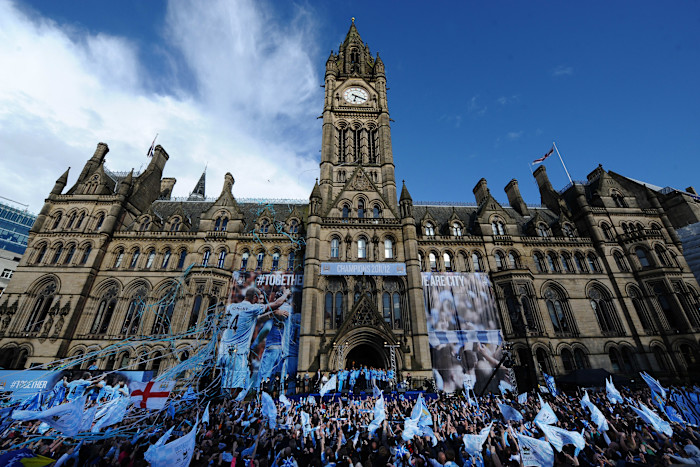
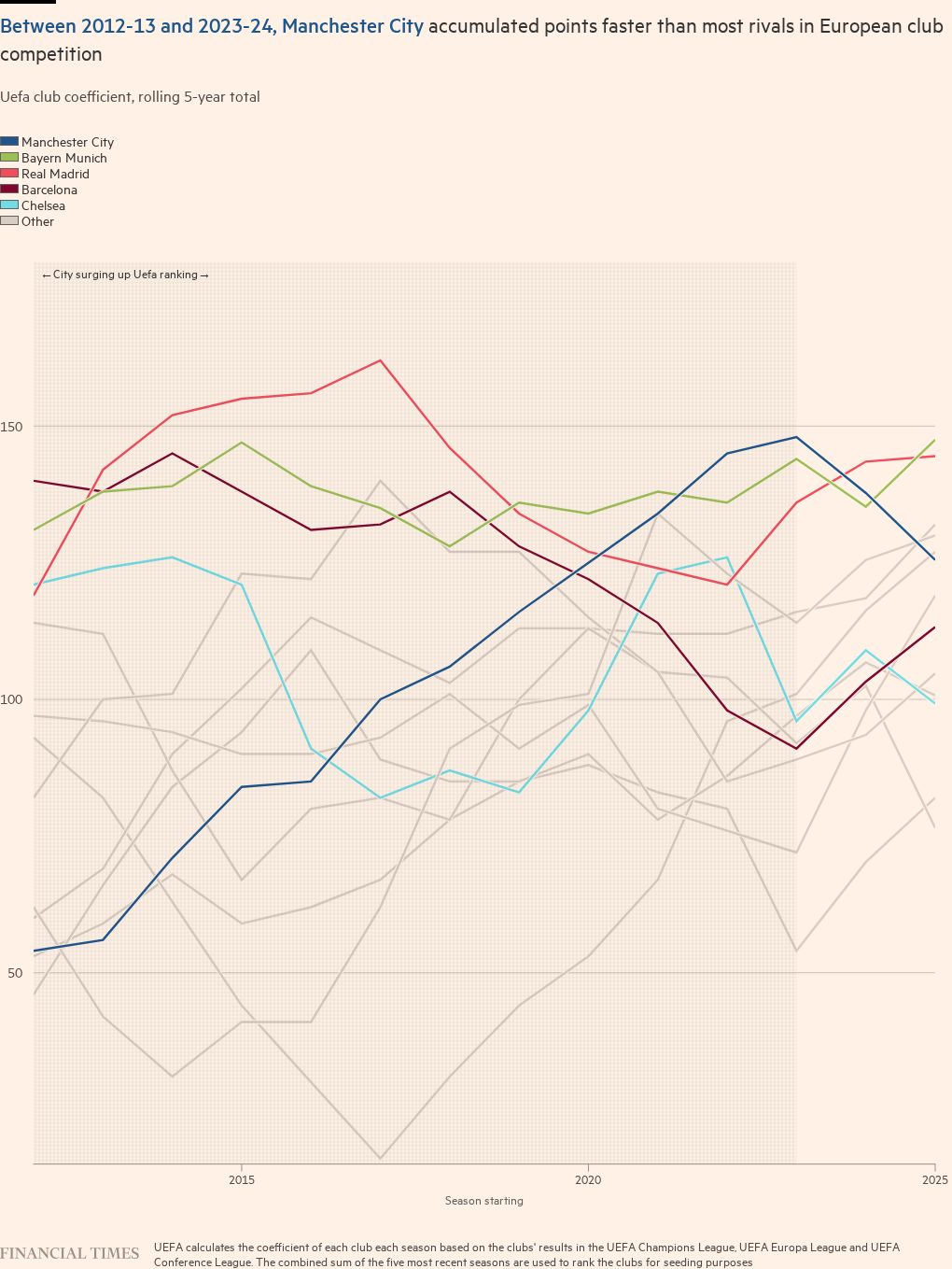
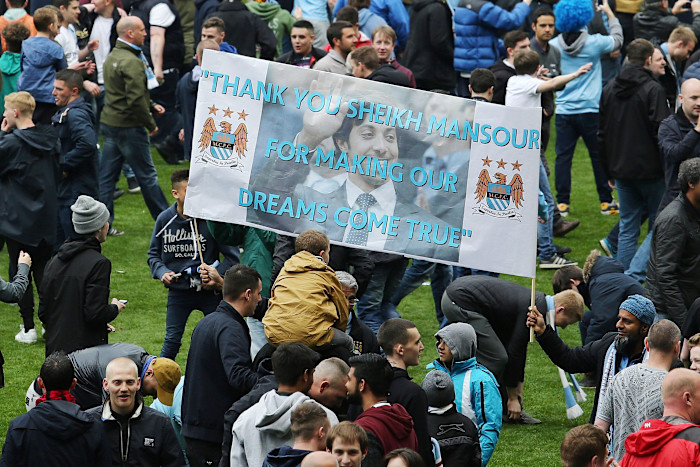
Fuelled by his money, the team has broken the hold of the sport’s established elite and delivered some of English football’s most memorable moments, such as the dramatic close of the 2011-12 season when Argentine striker Sergio Agüero’s last-gasp goal secured City’s first Premier League title.
The club formed the anchor investment for a broader Abu Dhabi-led regeneration project that helped transform an unloved part of Manchester with new housing, office space and entertainment facilities. City was championed as a template for foreign investment, both by central government and the city’s former mayor Andy Burnham, now the UK’s prime minister.
Sheikh Mansour’s purchase of City was also a watershed moment for sport across the world. It heralded a new age in which countries, especially from the Gulf, used sport as a platform for projecting soft power.
In the years that followed, Qatar and Saudi Arabia both bought football clubs, joined Abu Dhabi on the Formula 1 race circuit, signed hundreds of sponsorship deals with teams and leagues, and secured hosting rights for the Fifa World Cup. Three of the past four Champions League finals have been won by teams backed by Gulf money.
But City’s epic victory in 2012 — and the many titles and cup wins that have followed — are now tainted by one of the biggest cheating scandals in sporting history.
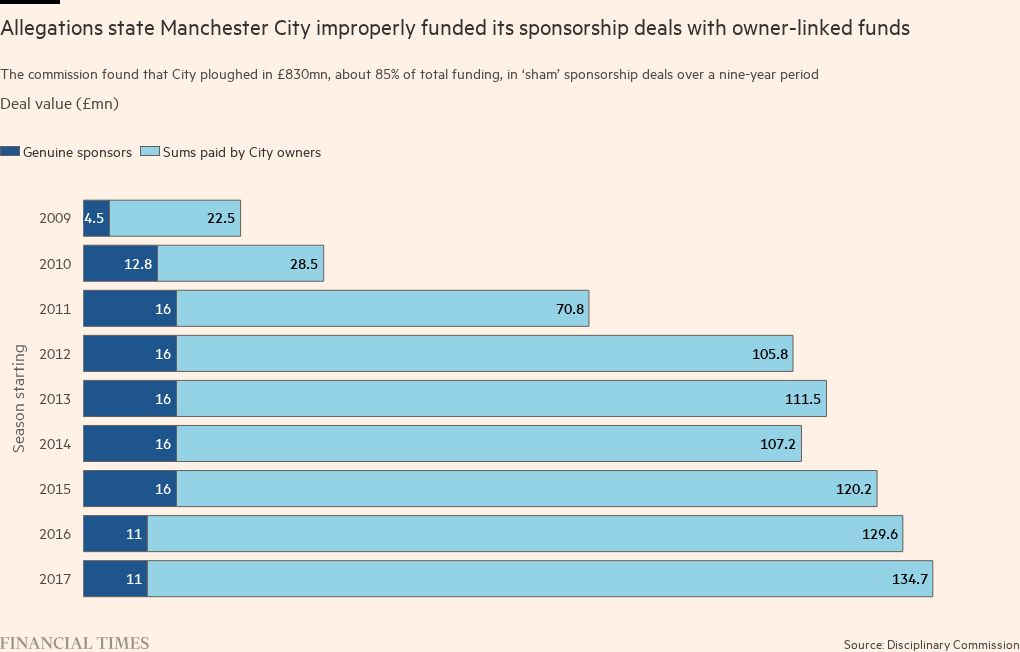
Last week’s report by an independent commission found that City had been using “sham” contracts to inflate its income and reduce its costs by more than £900mn between 2009 and 2018, so as to spend far more on players than allowed.
Had the club stayed within the rules, Agüero might never have been on the pitch and City might never have become champions.
“There was never any debate around the clubs around whether we should let state-backed owners in,” said one senior football executive. “Looking back, did we miss a few things? Definitely.”
The big money takeover
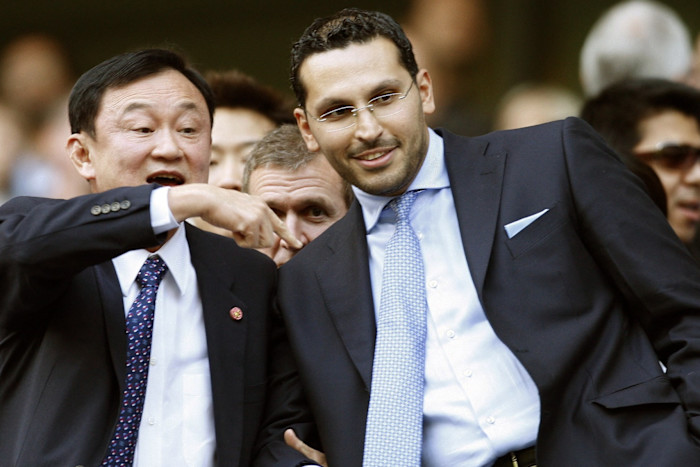
City was traditionally Manchester’s smaller and less fashionable team. Things changed after a military coup in Thailand in 2006, when prime minister Thaksin Shinawatra was ousted and went into exile. In 2007 he bought City. Fans struggling to pronounce his name referred to him affectionately as “Frank Sinatra”.
Thaksin’s legal problems in Thailand escalated, and the club was put up for sale just a year later. Two brokers stepped in, British financier Amanda Staveley and Sulaiman al-Fahim, an Emirati property and media mogul who garnered a reputation for living a playboy lifestyle, driving flashy sports cars and mixing with celebrities such as Pamela Anderson.
The pair arranged to sell the club to Sheikh Mansour, a senior member of Abu Dhabi’s royal family, in a deal finalised just three days after the collapse of Lehman Brothers in September 2008. A month later, Staveley was busy negotiating a far bigger transaction that would result in Abu Dhabi investors putting more than £3bn into Barclays as the British bank rushed to avoid a taxpayer bailout.
As the global financial crisis raged, Gulf sovereign funds were in the ascendant, pouring money into stricken banks and other entities.
The Premier League’s process of approving new owners began with calls to the UK Foreign Office and business department to ask whether a prospective buyer could get the go-ahead to invest in the country, according to those involved at the time.
In the case of Sheikh Mansour, the answer from the Labour government led by Gordon Brown, which included business secretary Peter Mandelson and Burnham, then the young secretary for culture, media and sport, was a firm yes.
The UK had become a hot destination for global capital. Qatar’s sovereign wealth fund, which also joined the Barclays rescue, had built a significant stake in supermarket chain Sainsbury’s a year earlier, and was investing in showpiece assets such as The Shard, the city’s tallest building.
Football was proving attractive too, with Russian oligarch Roman Abramovich buying Chelsea in 2003 and the Glazer family acquiring Manchester United in 2005.
“The Premier League’s approach was that anybody who’s got money is welcome. Oligarchs, sovereign wealth, countries — come on in,” said the senior football executive. “The culture of the country was to welcome them with open arms, and football mirrors the nation.”
Abu Dhabi, the UAE capital, which manages almost $2tn in sovereign investment funds, has always insisted the City deal was a private transaction.
But as Sheikh Mansour’s ownership of the club drew more scrutiny on the traditionally conservative, image-conscious emirate, much of it unwelcome, Fahim was pushed aside and Mubarak, one of Abu Dhabi’s most senior officials, was brought in to oversee the project.
Fahim was later jailed in the UAE for stealing £5mn from his wife to fund the purchase of Portsmouth FC. He owned the club for just six weeks in the summer of 2009. In early 2010, it went into administration.
Despite being in his early thirties when he became chair, Mubarak was already a rising star and one of Abu Dhabi’s most powerful non-royals, managing multibillion-dollar investment portfolios. He was also a trusted lieutenant of Sheikh Mohamed bin Zayed al-Nahyan, then the emirate’s crown prince, who is known as MBZ and was driving the statelet’s ambitious development plans.
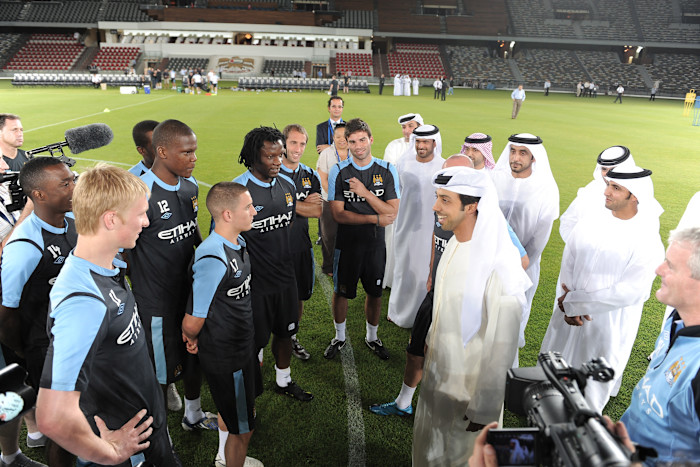
Football opened a new chapter. In an open letter announcing the City takeover — and the record signing of Brazilian midfielder Robinho for more than £30mn — Sheikh Mansour outlined his “ambitious” vision for the club.
“We understand it takes time to build a team capable of sustaining a presence in the top four of the Premier League and winning European honours,” he wrote. “We see this as a sound business investment. That being said, we understand that we need to put money in to get the club to where we believe it can be.”
City’s new owners had a template to follow. Under Abramovich, Chelsea had become back-to-back Premier League title winners just two years after he bought the club and spent big on players. At the time of the takeover, City ranked 20th in Europe by revenue, according to Deloitte.
“There is an opportunity we have identified and taken hold of,” Mubarak told journalist David Conn in an interview for his book Richer Than God. “A mid-tier club will move to become a big club because of the financial resources we are able to make available.”
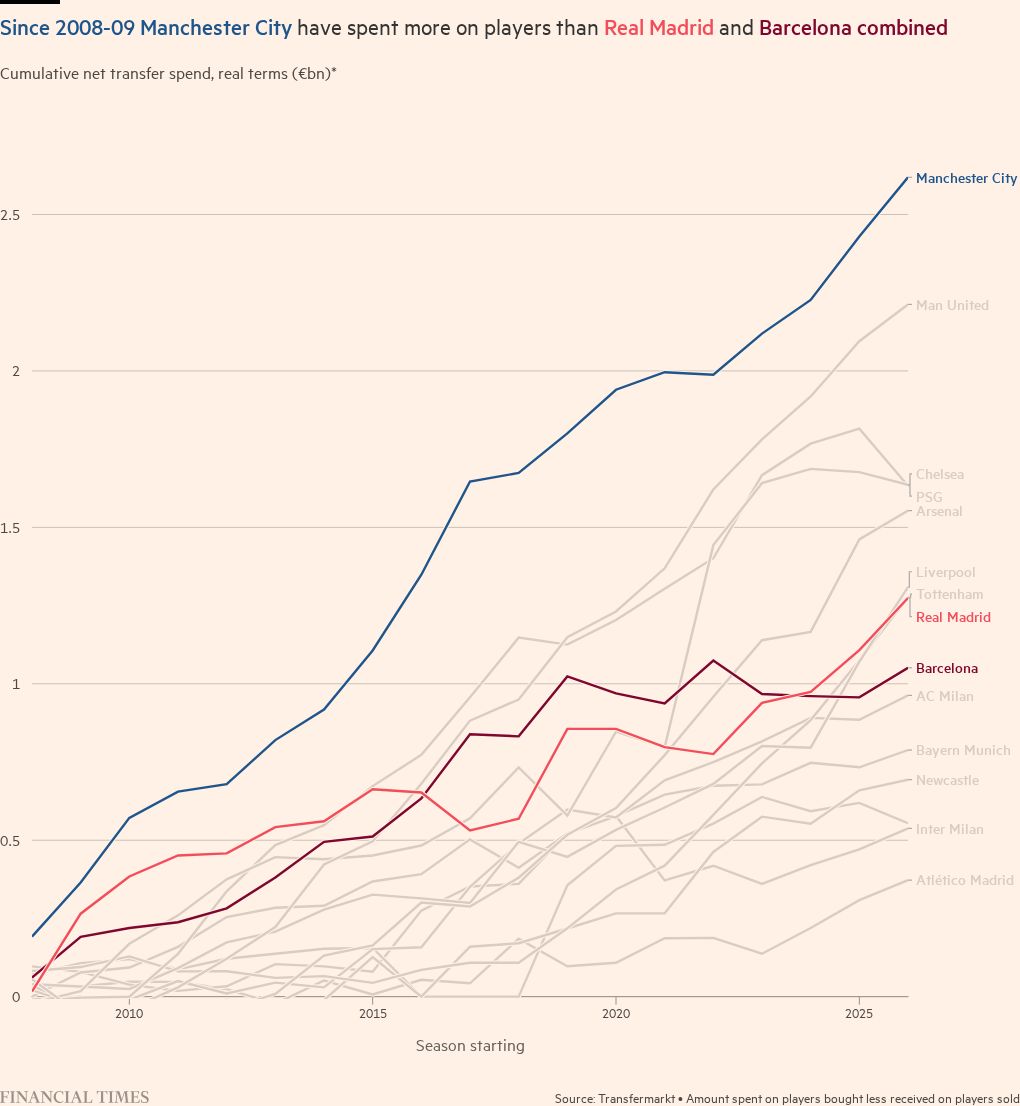
The money began to flow, with big-name signings such as £41mn striker Carlos Tévez, and City started to move up the league table. Since the takeover, the club has spent €4.5bn on player signings, according to estimates from data site Transfermarkt, while recouping about €1.9bn from sales when adjusted for inflation. In that time, City’s transfer deficit — the difference between its expenditure on new players and its receipts from player sales — has been greater than any other club’s.
City swiftly became a project integral to managing the carefully crafted Abu Dhabi brand. The deal coincided with MBZ rolling out multibillion-dollar development plans that included a Formula 1 grand prix and outposts of the Louvre and Guggenheim museums. Many of City’s sponsors, including airline Etihad and telecoms company Etisalat, are either state-owned or held by state funds chaired by members of the royal family.
Investment also started to arrive in east Manchester, helping the city become the UK’s top destination for foreign direct investment outside London. Since the takeover, City’s parent company says it has poured more than £1bn into the area, building apartment blocks, office space and a new live music arena. Last weekend, a new 401-bed hotel opened its doors.
That investment helped feed into the image of Manchester as an economic dynamo and a template that could be copied around the country — an idea that helped propel Burnham all the way to Downing Street.
Cheating begins
Behind the scenes, those running City had realised early on that the project would require more money than anticipated. Last week’s report by the independent commission noted that by late 2009 the club was finding it “more challenging” than expected to generate income from sponsorship and was now expecting to make significant losses for several years to come.
There were specific concerns about reporting the biggest annual loss in English football history. The club would need its owner to provide “very significant sums” if it were to stick to its spending plans, but that would fall foul of Uefa’s incoming spending rules.
In early 2010, the commission found, club executives devised the “disguised funding scheme” that would make equity payments from the club’s owner appear in the accounts as revenue from sponsors. The commission found that between 2009 and 2018, City reported commercial income of £950mn. But of that, just £119.25mn was actually paid by sponsors.
City executives have always vehemently denied any wrongdoing. The club filed an appeal last week against the commission’s findings and has vowed to pursue all legal avenues to clear its name. “The club’s firm position is that, on multiple grounds, the opinion contains clear material errors, of law, principle and fact and is unsafe,” it said.
Questions about its finances had dogged the club since soon after the takeover. In 2009, then Arsenal manager Arsène Wenger first accused City of “financial doping”, and in 2011 he called on Uefa to investigate the club’s sponsorship deals.
Yet the City project had been embraced by the British government. Speaking at the opening of the club’s new academy, then chancellor George Osborne described the relationship between Manchester City Council and Abu Dhabi United Group, Sheikh Mansour’s investment vehicle, as a “benchmark for public-private partnership”.
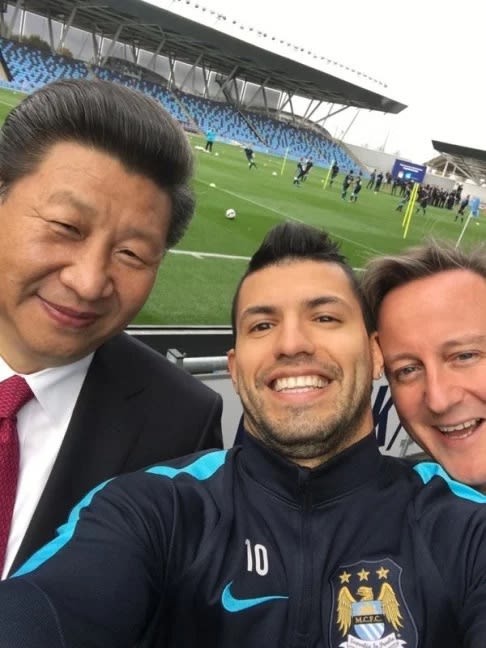
The following year, Prime Minister David Cameron and Mubarak took Chinese President Xi Jinping on a tour around the club during a state visit, culminating in a “selfie” picture alongside Agüero. In 2015, a consortium of Chinese investors took a stake in City, but sold a few years later.
City’s owners also began to expand across the sport, buying up teams in Spain, Australia and the US to form what would become City Football Group, with investments in more than a dozen clubs.
Keen to project themselves on the world stage, Abu Dhabi’s neighbours were taking notice. In 2010, Qatar secured the rights to host the 2022 World Cup, a decision that shocked the world of football and sparked a US corruption probe that nearly brought down Fifa, the sport’s governing body.
A few months after winning the bid, Qatar’s sovereign wealth fund acquired French football team Paris Saint-Germain and went on an aggressive spending spree to transform the team’s fortunes on the pitch. In the 15 years since the takeover, PSG has won the French league 12 times.
In 2018, the rumours that had swirled around City finally blew up after Portuguese hacker Rui Pinto accessed documents including emails sent by Simon Pearce, a board member at the club and adviser to Mubarak.
Pinto shared them with German magazine Der Spiegel, which went on to publish a series of articles alleging that the club had inflated sponsorship incomes and hidden payments. The emails between executives also suggested a culture of impunity and a sense that the rules did not apply.
Uefa opened another investigation, and in 2020 banned City from the Champions League for two years. However, the club appealed to the Court of Arbitration for Sport and had the ban overturned.
Last week Javier Tebas, president of the Spanish football league, described the court’s 2020 ruling as “deeply misguided” and “extraordinarily damaging to the credibility of European football’s economic control system”. He has long warned of the dangers to European football from a failure to control “state-owned clubs”.
In the years since the verdict, the Gulf’s influence in sport has grown.
Qatar and Saudi Arabia both joined the F1 race calendar in 2021, the same year the Saudi Public Investment Fund acquired Newcastle United. Saudi entities now have more than 300 sponsorship agreements across sport, according to a 2023 report from research group Play the Game, spanning boxing, tennis and beyond.
While some spending on sport has been cut back since the start of the war in the Middle East, notably Riyadh’s investment in the now-bankrupt LIV Golf tour, the region’s importance to global sport is set to endure. Saudi Arabia will follow in Qatar’s footsteps when it hosts the World Cup in 2034, and has weighed up the possibility of an Olympic bid. The International Olympic Committee confirmed Qatar’s candidacy for the 2036 Games this week.
‘The right side of Daddy’
The Premier League’s own investigation into City’s finances began in 2018. But progress was achingly slow: it took until February 2023 to charge City with 115 breaches of its financial rule book and refer the club to an independent commission.
The verdict took another three and a half years to land but was unequivocal when it did: the commission found the club guilty of virtually all the charges.
Richard Masters, who became Premier League chief executive shortly before the investigation began, said the case had been “long and difficult” but also vital to protect the competition’s integrity.
The findings throw City’s future into uncertainty. Possible sanctions range from fines and points deductions to expulsion from the Premier League. Based on the damning tone of the report, many legal experts expect the punishment to be severe.
Some question whether those currently running City can survive. The UK’s new football regulator last week promised to use its powers to assess the suitability of owners, directors and executives “where there is clear evidence of wrongdoing by individuals”.
One person close to City said the owners had been initially determined to stay on but noted that fan reaction to the verdict had been more mixed than expected.
“You’ve got to ask the question, would the owners want to continue?” says Bernstein, whose stint as City’s chair ended in 2003. “This had been great PR for them, but now it’s a disaster.”
Burnham, a passionate football fan himself, told the BBC last week he would be “really concerned” if City’s owners were to sell or be forced out, describing them a “huge partner in the building of modern Manchester”. Downing Street later backtracked.
One international executive at a Premier League club says of the UK’s relationship with the UAE: “At the end of the day, you guys have to stay on the right side of Daddy.”
A UK government figure close to discussions with the owners plays down fears of a wider fallout, adding: “They are serious people and understand our political system.”
A former UK government official also maintains that “the idea the UAE is suddenly going to pull investment from the UK is totally overblown.” Still, successive British governments have sought Gulf investment, particularly since Brexit, and the saga could hang over UK-UAE relations for the foreseeable future.
Following a summer in which global football descended into civil war — over accusations of political interference in World Cup refereeing decisions and a now-failed investment deal — some see the City case as the latest sign of a sport that has become lost in a world of money.
“I’ve never been more depressed about the future of the game,” says the senior football executive. “I think football is vulnerable now in a way it hasn’t been before.”
Additional reporting by Andrew England, Caroline Binham, Lucy Fisher and George Parker