
The kids don’t care about art. Or so the prevailing narrative goes. One unnamed dealer, quoted in the latest Art Basel and UBS market report, found that “interest in art is waning; screens and televisions have replaced pictures in living rooms”.
Not so, says Mazdak Sanii, founder and chief executive of Avant Arte; rather, their priorities are different. His company became an online print platform in 2017 and has become the high-spec publisher of choice for artists including Ai Weiwei, Alex Katz and Cindy Sherman. They have more than 200,000 collectors on their books, of whom 60 per cent are under the age of 45, Sanii says. He finds that, while they are a price-conscious cohort, they are still big spenders, and generally “more serious and more knowledgeable than many give them credit for”.
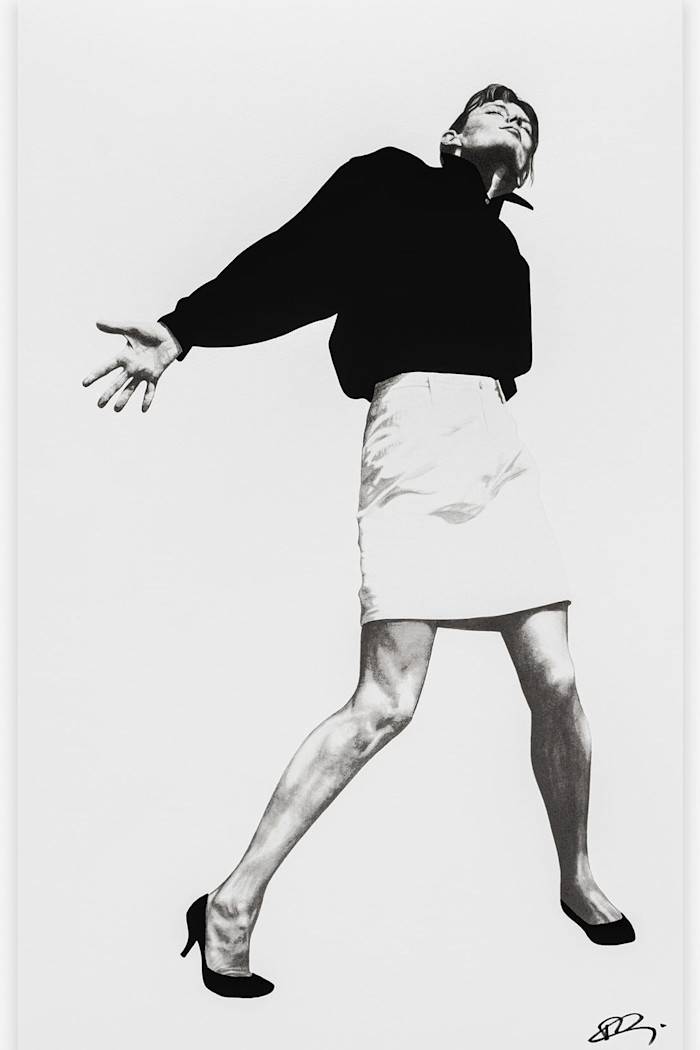
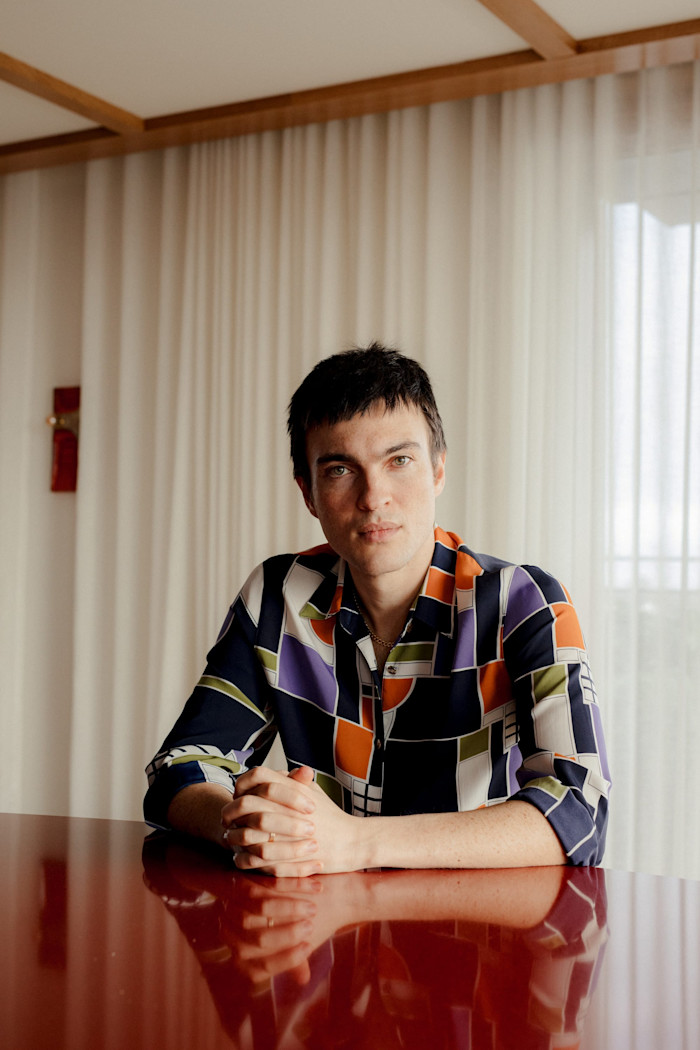
Attitudes have changed, though. “In the past, there was a romantic notion that fetishised the unique,” he says, “but in a more atomised world, people are craving connection. So, the idea of a trophy asset is less extreme, and there is more of a concept around multiplicity” — hence the growing interest in prints, also a cheaper entry into the market. Sanii underlines that this is not cutting corners. “Younger buyers respond to craft, care and the attention of an artist, we’re not talking about Xeroxes.”
The most radical shift, he says, is when it comes to discovery channels. “Instagram reaches such a wide audience. Not everyone on it has $1,000 to start collecting, but they might discover an artist that way, then visit one of their exhibitions, it’s the start.”

This commitment to research is seen throughout the art market, says Zoe Sperling, partner at Hauser & Wirth gallery. “When it comes to millennials and Gen Z, we find that the sale of a work is almost the epilogue.” Buying “comes after doing research and creating their own connections and community around an artist. I’ve had people come in who know an entire exhibition history and everything about their works on show.” Popular among their roster is Avery Singer, whose paintings fuse digital renderings with airbrushed imagery and whose new work will be at Frieze London.
Meanwhile, artists without official gallery representation, such as the South African Werner Bronkhorst, can instead go big via social media, where they sell direct to collectors, as well as hitting auction highs. “From Every Corner” (2026), a painting of miniature football players on a vast pitch, went for $283,800 at Phillips in July.

Older art is simultaneously having a revival, a sign of a generation whose tastes are more broad church than their predecessors’. Recent research by Avant Arte finds that those under 45 are a third more likely than their older counterparts to show an interest in Old Masters and 29 per cent more likely to be drawn to works from artists’ estates. Commercial galleries are leaning into the mash-up: for the Frieze Masters art fair, Hauser & Wirth’s booth will include a new work by Flora Yukhnovich based on an early 17th-century flower painting by the Flemish artist Jan Brueghel the Elder (also on the booth).
Museums are also having a rethink when it comes to bringing in younger visitors and funders. Monica Irani, co-chair of the National Gallery London’s Young Ambassadors, says that, before the programme got going in 2020, “I was told that the average age of their patron circle was 72. They were great people, but it made me a bit concerned about the museum’s future.”
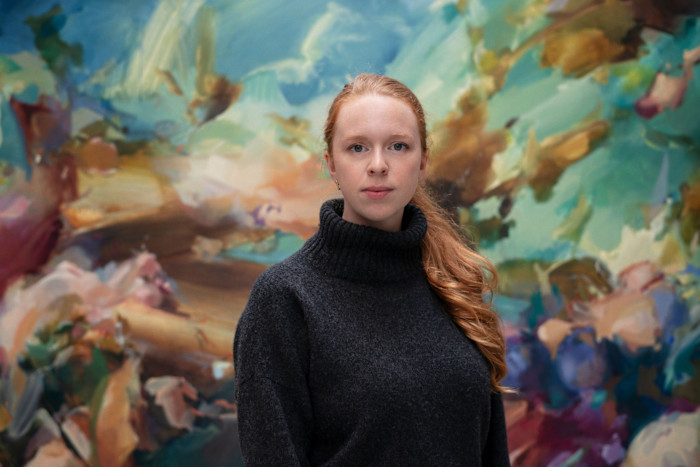
One of Irani’s first decisions was not to use the word “patron” to target under-45s. “It sounds too much like old wealth so seems inaccessible. People expect it to cost millions, whereas it is £1,200 per year,” she says. Using “ambassadors” was not only a better description of the role, she says, but happily ties in with one of the museum’s prized possessions, Hans Holbein’s much-visited “The Ambassadors” (1533).
When it comes to the package for younger funders, “you need to be thoughtful. Professionals can’t go to a talk at 11am midweek, for example,” Irani says. They are also not passive investors. “They want to see that their £1,200 is making a difference,” she says. This year, their support extended to raising a six-figure sum for the group’s first-ever acquisition of a painting for the gallery, she adds (details still under wraps).

For Judy Zhou, a Gen-Z fintech executive who became a Young Ambassador in 2024, the attractions include the “behind-the-scenes aspects, seeing how the museum is growing and what our commitment goes towards”. Plus, she says, “the human angle is very important in all I do and the programme is a people-forward set-up, whether it’s others in the group or the museum’s curators, director, or patrons manager”. Zhou is also on the steering committee for Frieze Connect, the art fair’s membership scheme that launched in 2021.
Museums and the market are also seeking out influential celebrities to spread their word. Last month, Bonhams auction house revealed Kasseem and Alicia Dean (aka Swizz Beatz and Alicia Keys) as the faces of a scheme to give living artists a royalty on their works sold on the secondary market. “As well as more cross-category sales and more digital channels, we are planning collaborations with tastemakers,” says Seth Johnson, Bonhams chief executive.
All could be fruitful, future-proofing exercises. Sanii believes that “there’s a generation of young people who confound the stereotypes we’ve built around them . . . If we can respond to these changes nimbly and with nuance, there’s a huge opportunity for a powerful new chapter in arts patronage.”
October 14-18, frieze.com
Find out about our latest stories first — follow FT Weekend on Instagram, Bluesky and X, and sign up to receive the FT Weekend newsletter every Saturday morning