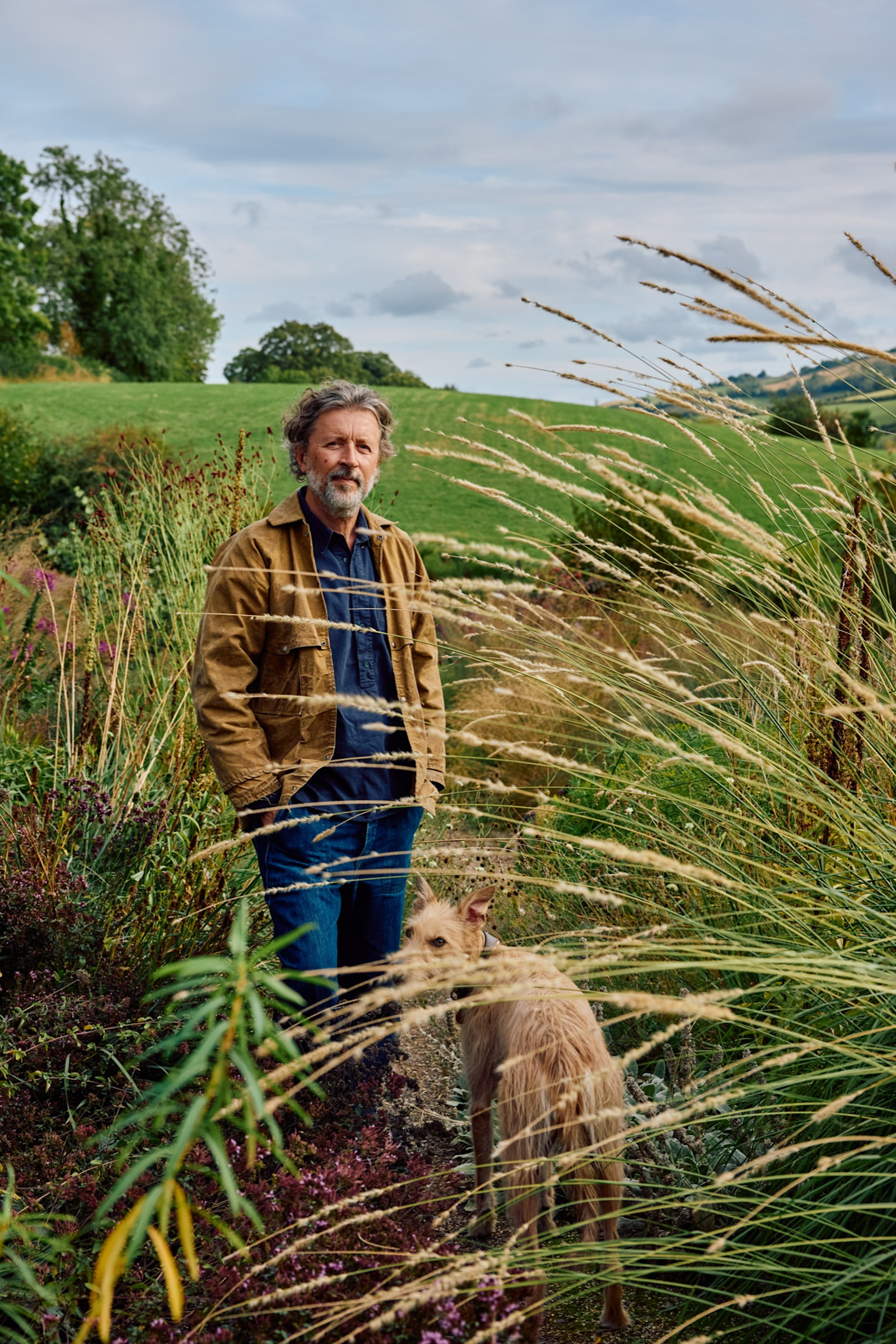
My personal style signifier is workwear – postman’s jackets and things with pockets. Utilitarian, comfortable. Things that wear well, that get better as they get older. I’ve often worn vintage clothing, things that have maybe had more than one life. They’re often beautifully made in fabrics you can’t get any more. So I suppose my day-to-day stuff has been influenced by that.
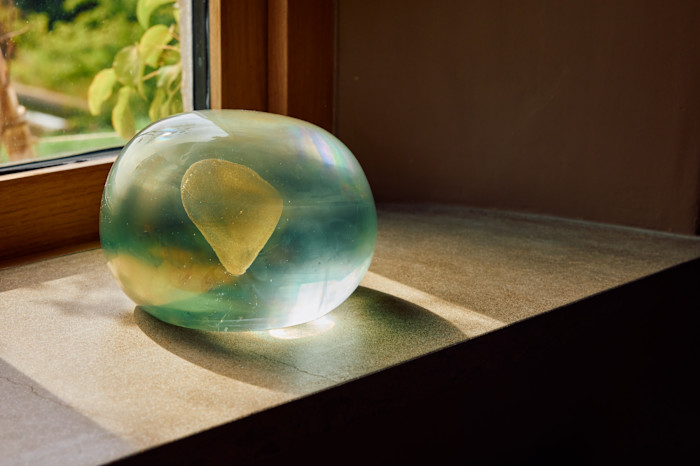
The last thing I bought and loved was a glass sculpture with a piece of gold in the centre by Italian artist Patrizia Molinari, called Secret Stone. It’s from a friend’s gallery in Athens, Gramma_Epsilon, that works exclusively with female artists from the ’60s onwards. I don’t like shopping, but I tend to find things when I’m away working. A shop might have something you’ve never seen before or the merchandise might be produced in a different way.
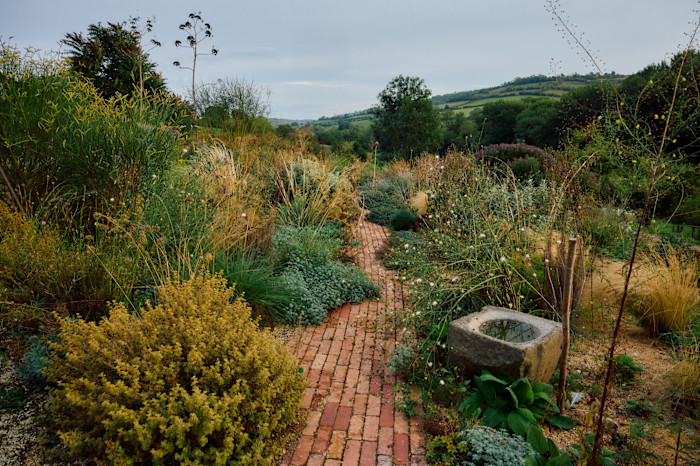
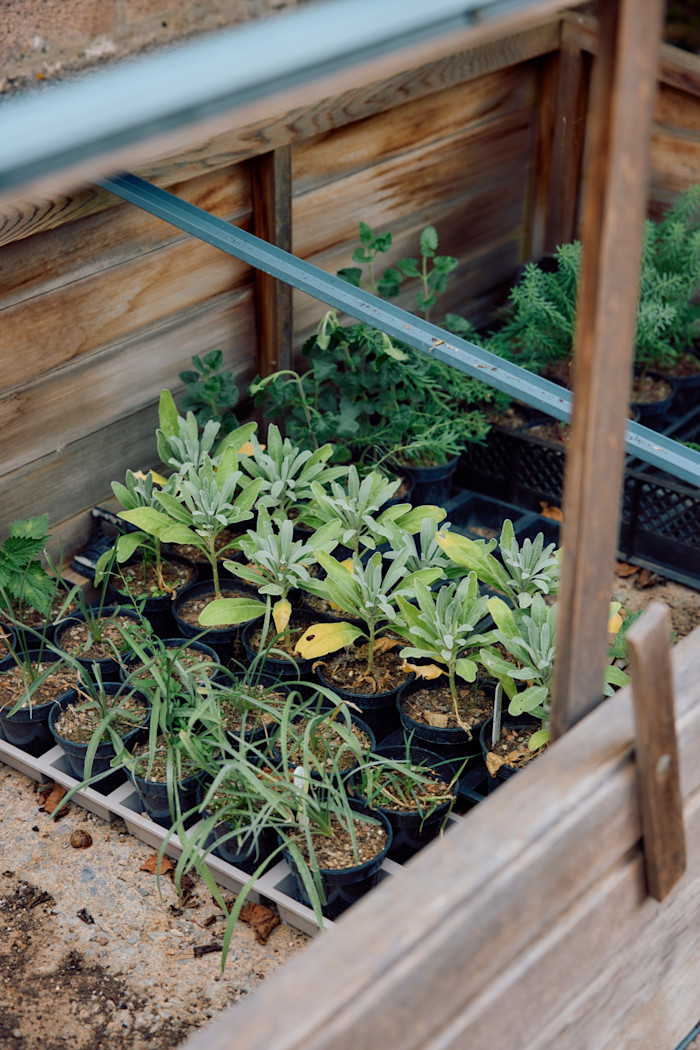
My main expenditure is plants – it always has been. Right now I’m focusing on things that are going to be climate-resistant, that can cope with these long, dry summers but are also adaptable enough to be thrown into a deluge. It’s mostly about finding the right position for them – if you can give them the drainage that they need to get through the winter, you can then get away with there being no water in summer. Most recently I’ve been collecting phlomis, which has a sage-like leaf and whirls of wonderful hooded flowers. I’m growing things in sand at the end of my garden; that’s where most of this experimentation is happening.
The place that means a lot to me is an island in the Dodecanese where we have a tiny little building on the side of a volcano. It’s an old shepherd’s hut, probably 4m by 4m, and it’s a 20-minute walk off the track; there’s no road. It’s the first time I’ve been connected to a piece of land where I’ve not wanted to garden because it’s such a beautiful landscape: old terraces with olive trees and oaks and goats roaming. It’s about being somewhere primitive. You have to really disengage from what makes you tick.
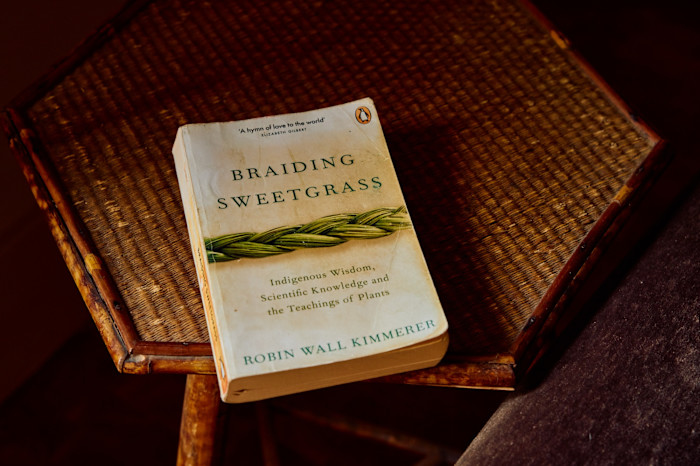
The book that I keep coming back to is Robin Wall Kimmerer’s Braiding Sweetgrass. She’s a professor of ecology, New York State-based, but her roots are Potawatomi [a Native American people originally from the Great Lakes region]. She weaves her work into the ways that her predecessors engaged with the landscape, which have now, tragically, mostly been lost. The whole book is about there being a reciprocity between us and the land. It discusses the ideas of custodianship, land management and only taking as much as we need. It’s not just about taking.
Rewilding is a word that we don’t necessarily understand. I call it “nature recovery” because it has become a bit like the word “sustainable” – overused. We’ve had clients who have said, “I’ve bought a farm and I want to rewild it.” But they don’t [know] that it’s going to be ugly sometimes – it’s going to be covered in nettles or creeping thistle. Once you understand that the creeping thistle that’s taken over has got some worth and beauty, you begin to understand what rewilding really means. You’re a small cog in a big wheel.
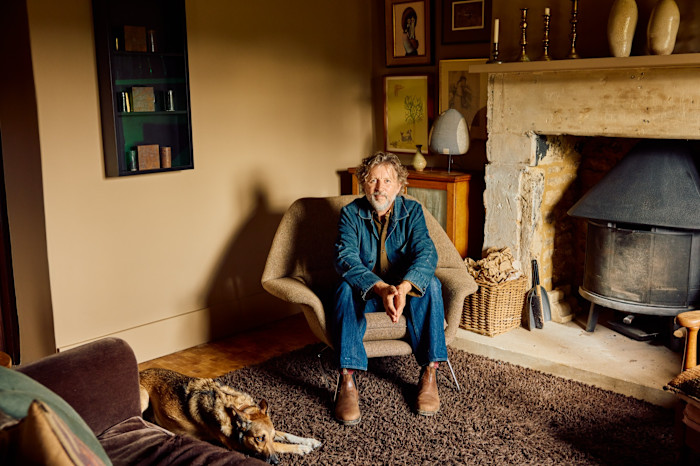
I’ve always worked closely with nature. I was brought up in a garden that had overtaken the previous owner by about 50 years. When we cleared it, we found that the garden would fight back as soon as we disturbed it. Nature had become king. I learned very quickly that you have to work with nature rather than fight it, and I’ve always gone out to look at a landscape first, to inspire the plantings that I do.
My style icon for a long time was David Bowie in that Low era – the Station to Station, Young Americans era. It’s refined – pushed-back hair, very thin and willowy. I love the way he inhabited so fantastically whichever era he was in. People who have got style [can do that].
The best gifts I’ve given are plants. Recently I’ve given somebody an origanum that I got from a nursery in southern France. They’re very difficult to get here and the flowers are kind of veil-like – very fine and airy. They attract the eye that wants to see them. The people who find them in the garden make you think, “OK, they’ve got the eye.” It’s nice to reward those people.
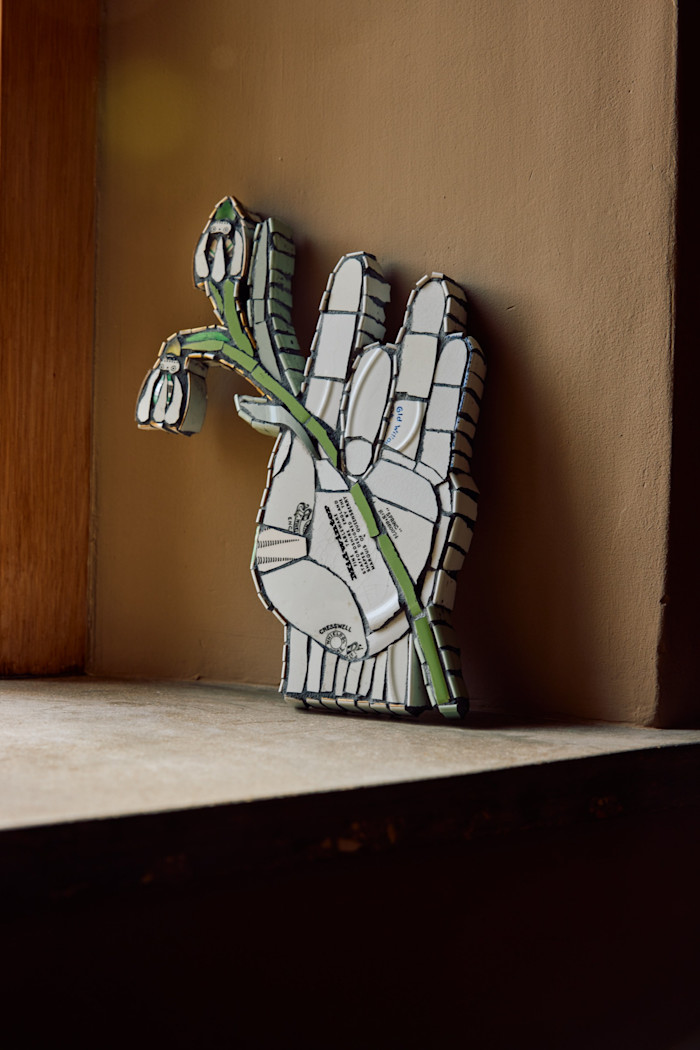
I’m not a collector of one particular thing. However, I have gotten bitten by the snowdrop bug. I’m not interested in them at the moment; the compulsion that you get at that time of year has gone away. But as soon as they start [growing], they make you think, “OK, winter is not a period of dormancy.” There’s all this celebration of things that are going to happen. I probably have about 180 varieties, but I do not call myself a galanthophile. I don’t think I’m that.
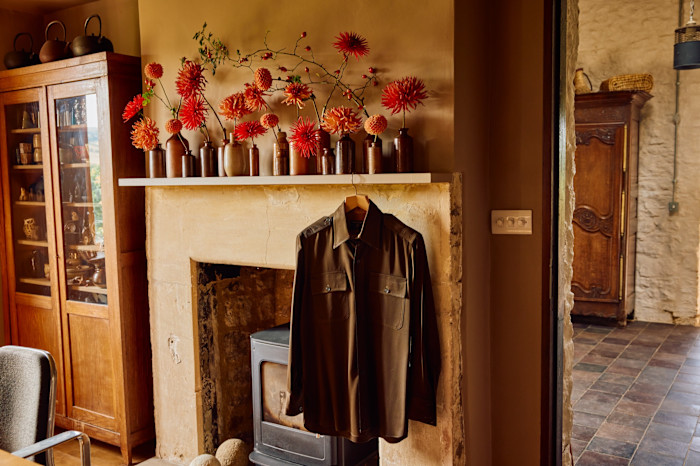
The last item of clothing I added to my wardrobe was probably a shirt that Huw [Pearson’s partner] gave me; I’m not a fashion person. My mother taught fashion and textiles at Winchester School of Art, so we always had the stuff she made around us. I was so embarrassed being picked up from school by her as a kid. She dyed her hair pink and blue and made her own clothes; she looked different. I went to Paris with her and some students when I was a teenager and she let me roam around. To be let loose in Paris at age 15 and have students tell you about their escapades! It was a world that was interesting, but never one I wanted to be in.
The last music I downloaded was by Fela Kuti. I’ve got back into him through a number of posts on Instagram; you know how algorithms get you.
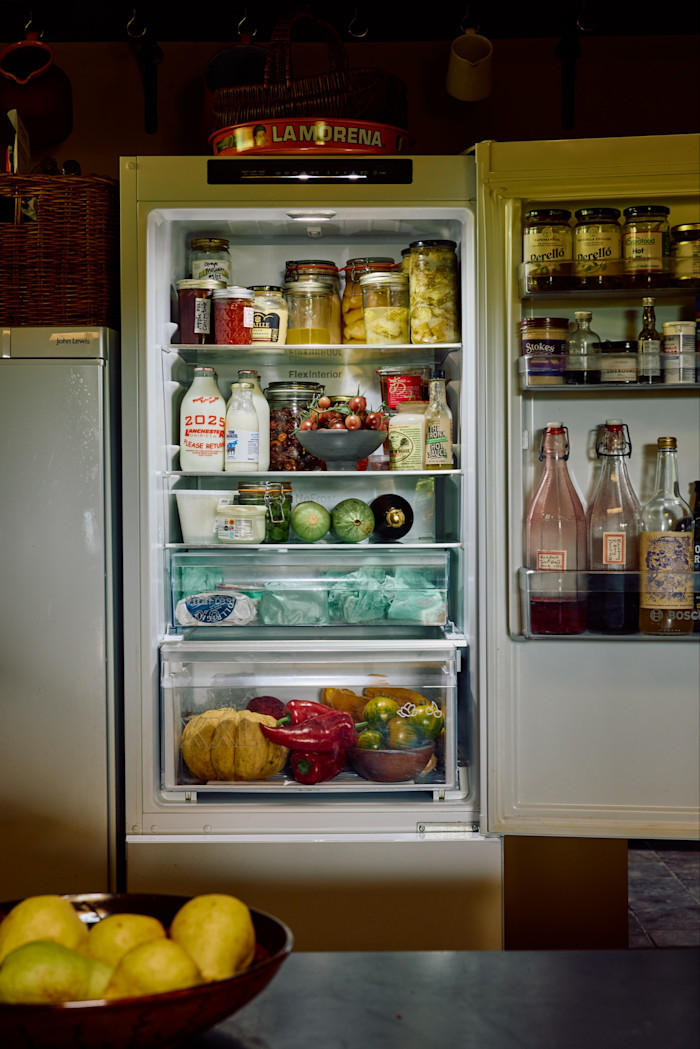
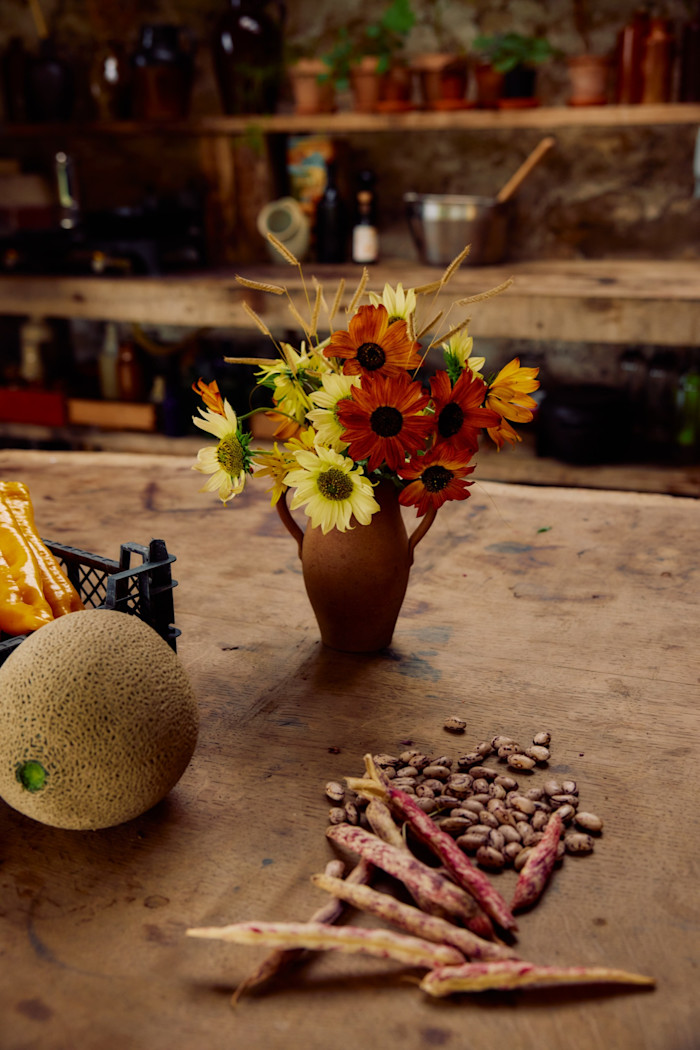
In my fridge you’ll always find good cheese and kefir – Chuckling Goat is a great brand. Huw is a fantastic cook and I bow to his superior knowledge. We grow to eat here so there’s always something that we’ve made: preserves or passata. We have a plum orchard and the greengages have been amazing this year – really tasty and plentiful – as have the pears. We have about six varieties that come on, one after the other, all the way through to November. In Somerset, lots of the orchards have been taken out, so we also have an orchard of West Country apples – 15 now. They’re really beautiful trees.
The best way to spend £20 is on something delicious. There’s a wonderful little bakery near us in London called Little Bread Pedlar where I can have a really good coffee and a pastry. I go for something cheesy.
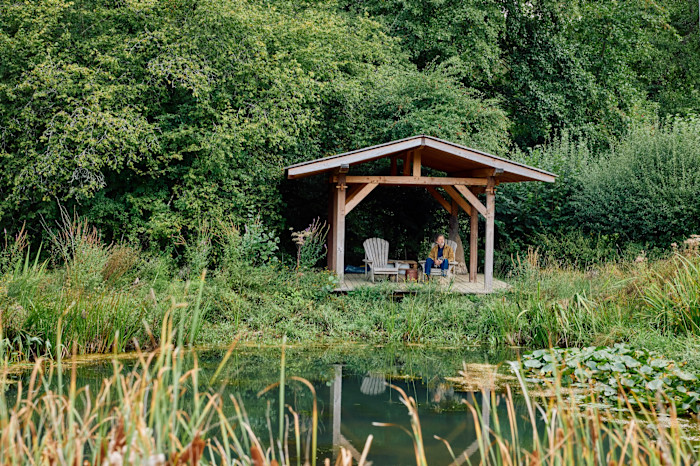
I’ve recently rediscovered, via transcendental meditation, a mental space I probably lost when I was a kid, when I was in a world that was untouched by anything else. There are moments, just moments, with TM where you lose touch with time. And there’s an immediate aftermath when you open your eyes and feel like you’re a baby looking at everything; it’s all new. It’s almost imperceptible, but it alters your reaction to things. You become a bit more measured in your responses.
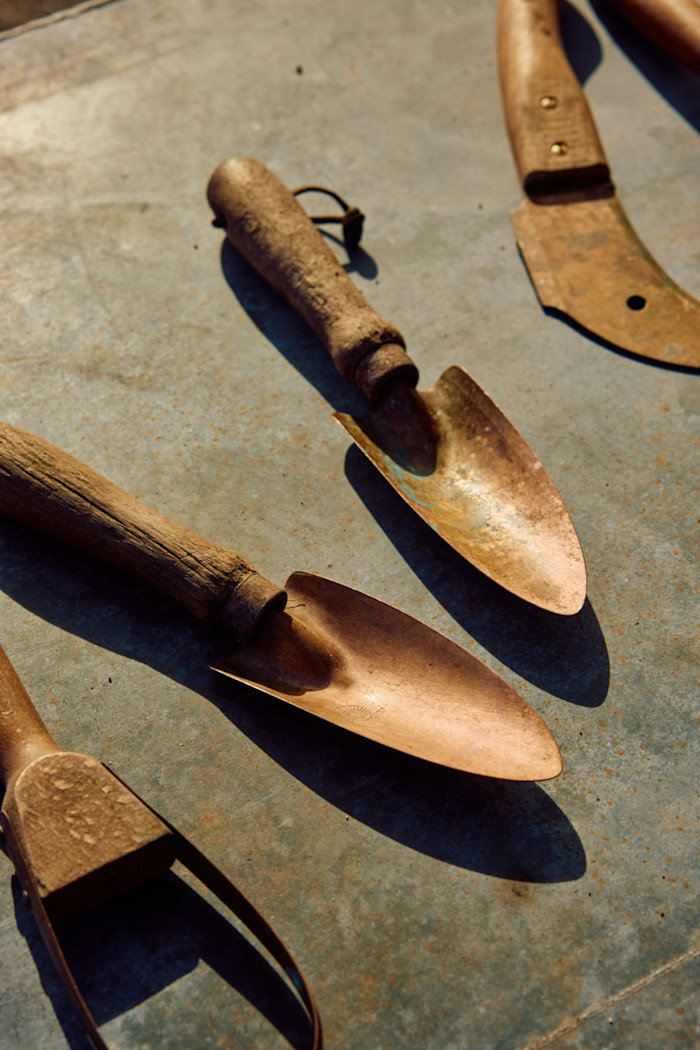
I would never part with a little collection of Hortus Ornamenti hand trowels that are my knife and fork of the garden – they’re like an extension of your arm.
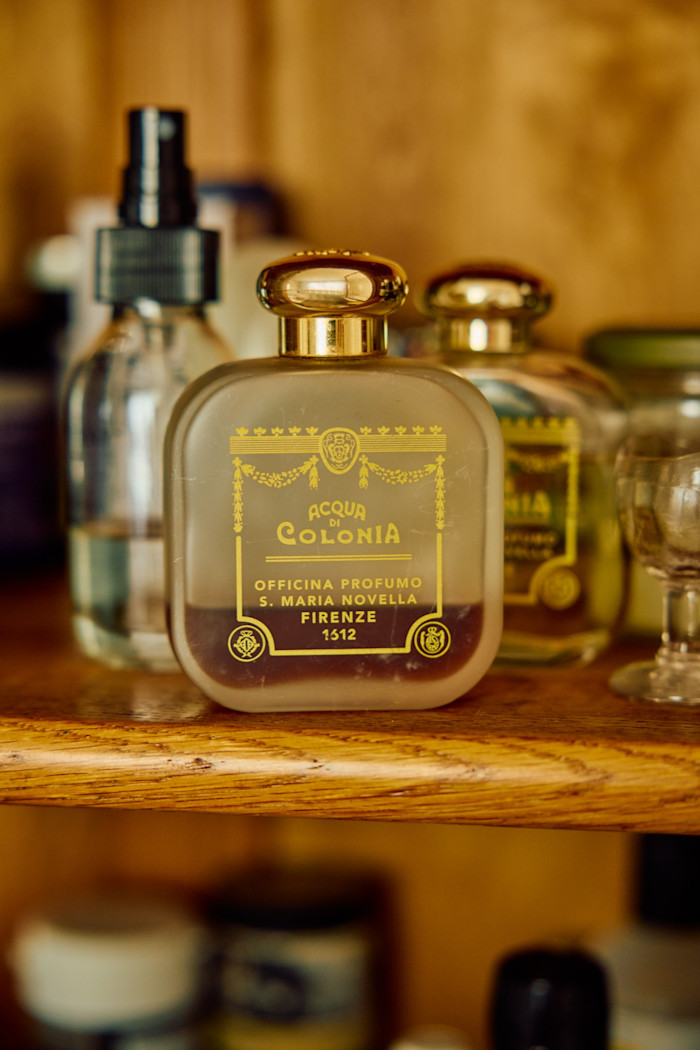
The grooming staple I’m never without is Santa Maria Novella Patchouli. The scents the brand does are fugitive, so they’re not lingering or clawing. I find perfume really difficult because the manufactured ones feel like they interfere with my brain. I can’t stand it when I feel overstimulated. Santa Maria Novella Patchouli, £135 for 100ml EDC
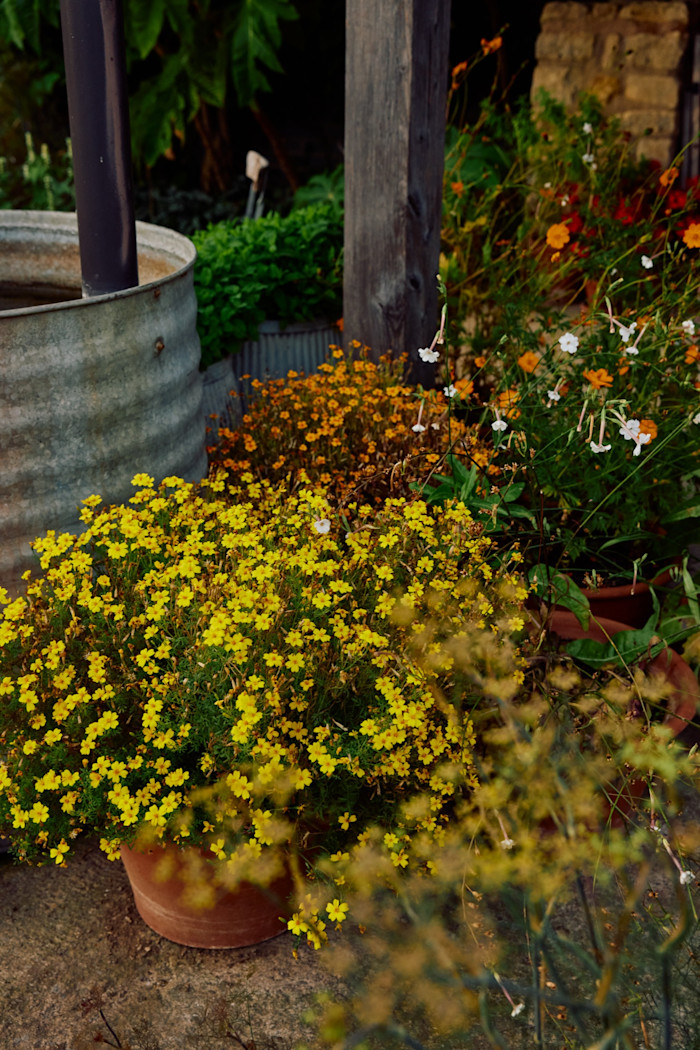
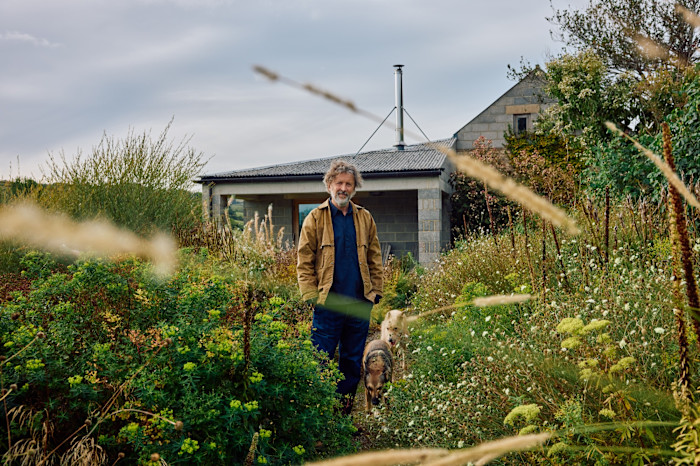
An indulgence I would never forgo – and I know I’m sounding like a stuck record – is the garden. It’s where I’m antisocial. I often think about how I would have managed if I’d had kids. They would be so tired of me always being in the garden. But I’m not as solitary as I think I am. It’s nice to be gardening with somebody when they’re in earshot, but just far enough away to be able to get on with your own thing. Last month I closed my design studio to embark on a new, more reflective period of working with the land. I’m going to refine my practice and just work with a smaller number of clients. If you spread yourself too thinly, you’re not able to go as deeply as you need to with each project. I see this next chapter about being one of refinement – honing the best of what I’ve learned to date. And that whole idea of going back to less is more, only doing as much as you need and finding a way into a place that’s nimble and light and resonant.
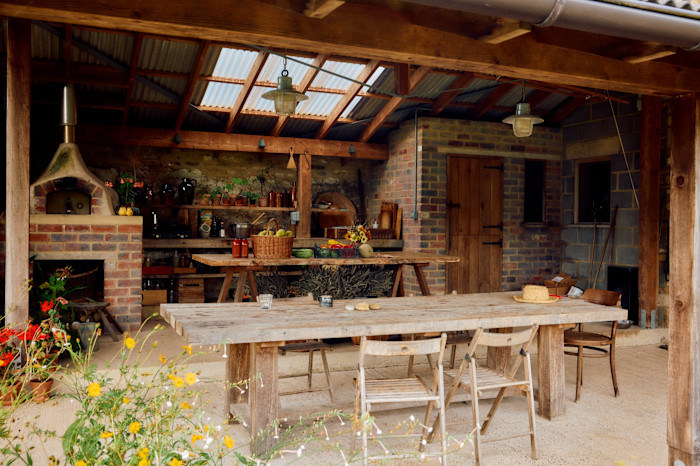
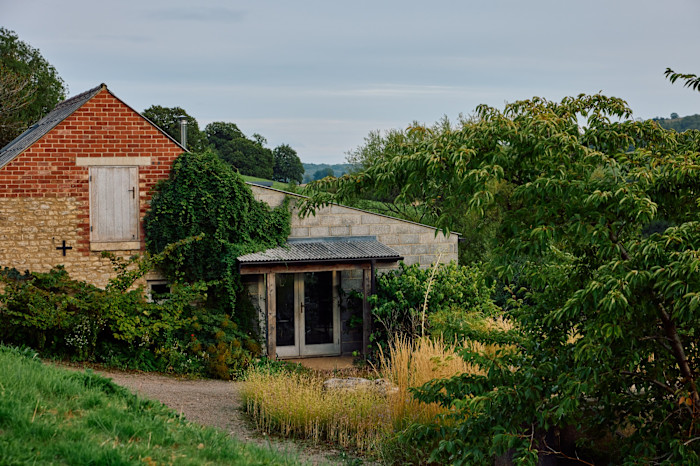
My favourite room in my house is my outside kitchen, which is open on two sides. When we were doing work on the house, we got waylaid by the idea of an extension and it all got too much – it all goes back to that idea of, how much do you really need? So we did an outside kitchen instead. We’ve got a wood-fired oven, a sink, a little gas burner and a loo and a shower – we live out here in summer.
The best gift I’ve received is a verbascum that was given to me by Fergus Garrett, the head gardener at Great Dixter. He’d thrown some seed down at his mother’s garden in Turkey, but his mother had died and the person who’d looked after the garden had stripped everything out because it looked like weeds. Fergus had got this seed, gave me a couple of little plants and said, “Grow these for me and I’ll have some seed back at some point.” They flowered this year and now I’m going to give him some seed back. It’s a circle that I can help to complete.
I laugh at irony and irreverence. My dad was very funny. He was a very quiet man, a Geordie, but he had his own little words for things; people wouldn’t know what we were laughing about. He was a painter, so we were a making household; there was always something being made on the kitchen table.
The one artist whose work I would collect if I could is Peter Doig. Wouldn’t that be wonderful? We’ve done a garden for him – he’s lovely. And the exhibition he did at the Serpentine [last year] was amazing. The way he included music in that made it a whole environment. It’s like looking at sculpture in landscape – if you’re in a landscape that resonates, that allows you to feel sensually connected – the piece is easier to look at somehow.
My favourite building is Chapelle Le Corbusier in Ronchamp, France. It’s monumental. It’s on top of a hill that you have to walk up, which is part of the amazing experience. It was a cloudy day when I went, so we were in the clouds. There was moisture pouring out of a huge gargoyle, and the west end of the south wall inside was more than 3m thick with stained glass throwing light onto these reveals on either side. It feels like it’s grown out of the hill, like a hat or a piece of quilt. There’s something fat about it; it’s absolutely wonderful.
One of the garden sounds I enjoy most is the rustle of the trembling poplars we have here. Sometimes you think it’s raining but it’s just their folio. It’s very soothing, and what’s beautiful is that it unlocks an invisible thing, which is the wind. We’ve also got these big Tetrapanax papyrifer “Rex” and the pitter-patter of the rain on those leaves... they’re like drums. It’s nice when you remember what [plants] can do for you.
My guru is old friend Frances [Mossman], one of my original clients. She helped to set up Next in the early days and taught with my mum at Winchester for a while. I did my first garden for her at age 17, when she was 32, and she’s been my mentor throughout. She’s always thought outside the box. She doesn’t follow trends. And she’s just very good at seeing beyond where you’re at. When we went to her 75th-birthday party, everybody had a story that was similar to mine, about how they wouldn’t be the same if they’d not met Frances. I feel incredibly fortunate.
In another life, I would have always grown things, but maybe I would have worked with music. I tried piano first, guitar second and then saxophone; I just always got distracted by gardening. But I really enjoy listening to music, and I see it in a very three-dimensional way – I can see the shapes it’s making. It feels most similar to the process I go through when I’m making spaces.
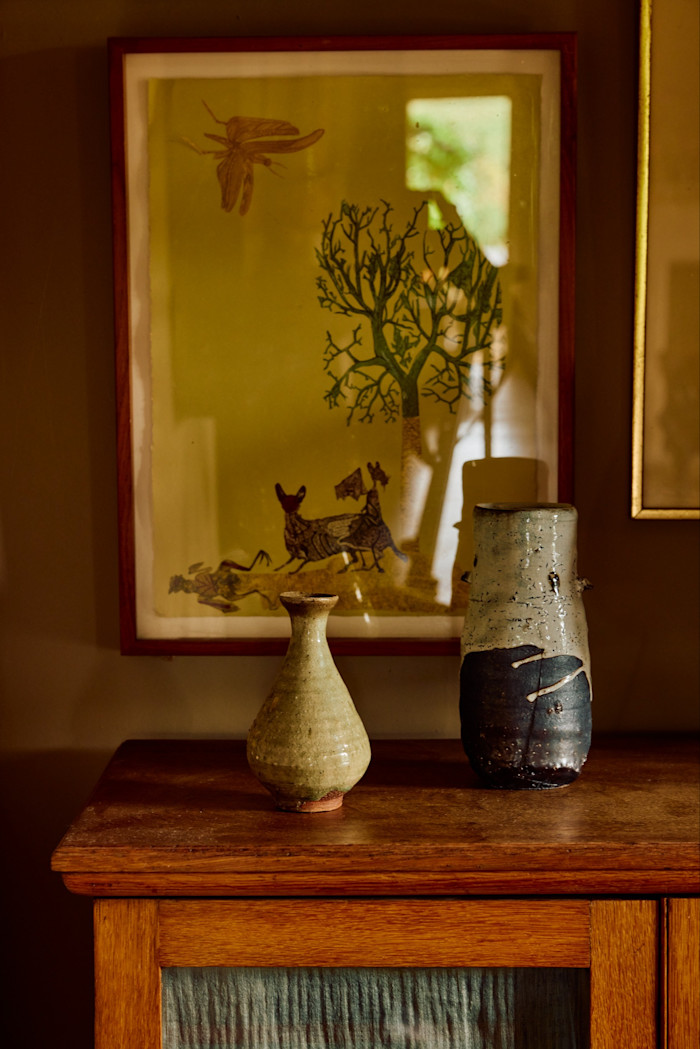
The best souvenir I’ve brought home is from Japan. I go once or twice a year and have a good friend there, Midori Shintani, who is the head gardener of a project I did in Shimizu called the Tokachi Millennium Forest. Every time I go out, we try and take a couple of days to do something different to mark the trip. Once we went to see a potter, Masatake Fukumori, who prepared this great big meal and invited his whole family. There was a beautiful sake jar with a golden mend where it had broken, and I asked him if I could buy it. Eventually, he said he’d be happy to sell it to me.
The work of art that changed everything for me was a Chagall synagogue [at Hadassah Medical Centre]. I went to when I was living in Jerusalem for a year. I was 23, it was spring – and I’d had to walk through incredible rocky meadows of spring flowers to get there. You went inside the space and the light was incandescent. I thought, if I can do this with planting, if I could inhabit colour like this or I could make it inhabit a garden… that was quite a pivotal moment
The best bit of advice I ever received was “follow your heart”, which is what my mother told me when she suggested that I study horticulture instead of going to art college. She told me that I could always come back to art through gardening, which is what has happened, to a degree. That was what was great about mum and dad; they’d always find the most interesting way to do something.