If the EU wants to get geopolitical, Ukraine is its chance to prove it. A European country invaded by its belligerent neighbour is desperate to anchor itself in the EU sphere of influence. The shortage of grain consequent to the Russian invasion is driving up global food prices. The EU could expand its reach, show that bloc membership means security as well as prosperity and help head off the threat of widespread hunger in developing countries. But standing in its way is the most consistent block on EU reform down the decades: its recalcitrant farmers.
For months after the US started attacking Iran in February, the widely feared increase in global food prices largely failed to arrive. But they have risen sharply since July, as they did after Russia’s invasion of Ukraine in 2022. Russian and Ukrainian attacks on each other’s Black Sea shipping have reduced world food supply: the two account for about a quarter of global wheat exports.
Ukrainian grain is stuck inside the country and on railways to the Black Sea ports. Alternative road and rail routes go through Poland and Romania, but those governments are refusing to expedite Ukraine’s exports, citing their own farmers’ interests. They claim supply routes are at full capacity, but it seems unlikely they are acting in good faith.
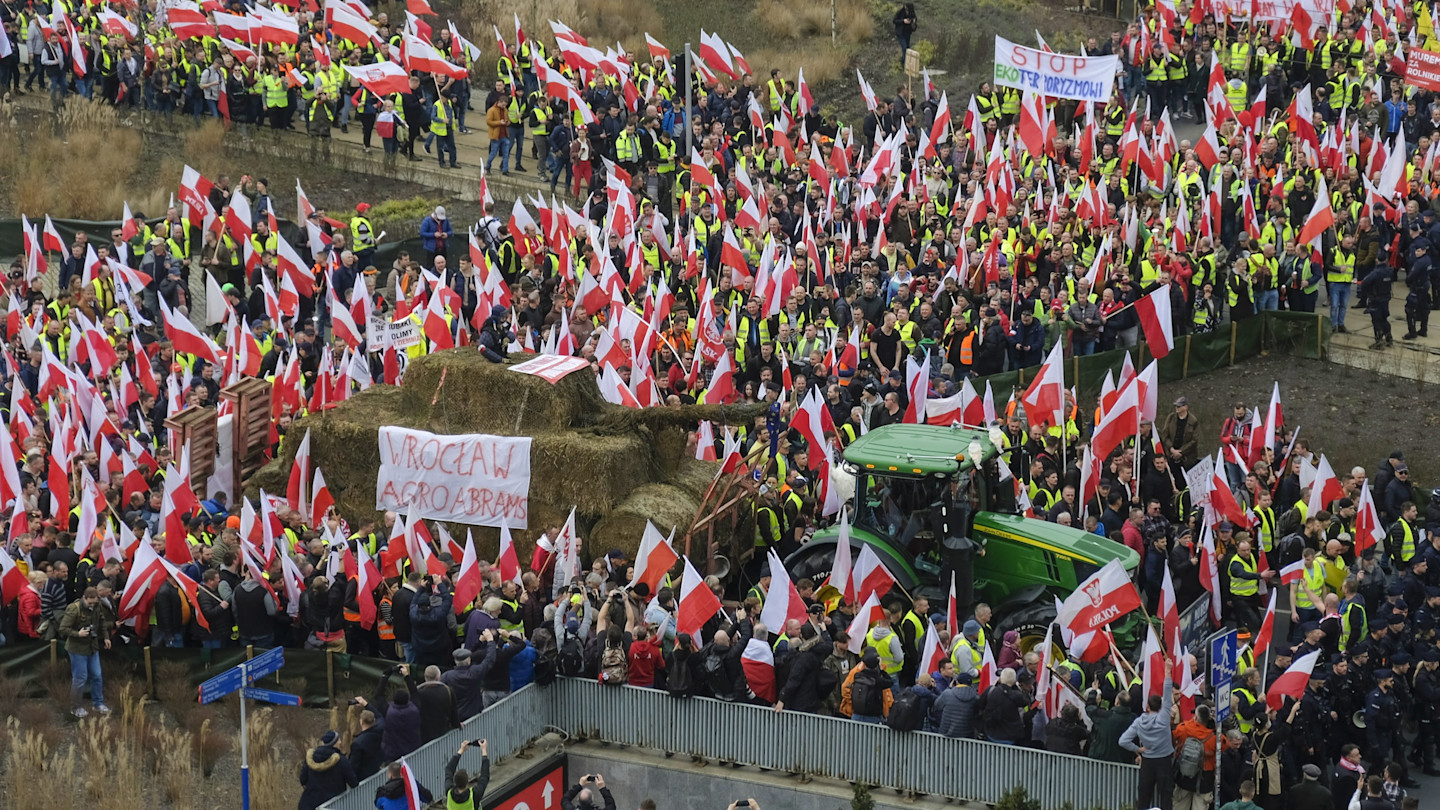
In 2023, Poland, Hungary and Slovakia essentially went rogue and declared that they would simply ignore EU rules and block food imports from Ukraine, claiming they would leak into local markets and undercut their farmers. Poland went so far as to threaten to cut off military help to Ukraine.
There is something of an irony here. The EU has traditionally exercised soft power through trade and diplomacy much better than hard power through defence and security. In the early 2010s, it sought to bring Ukraine into its orbit with a trade agreement offering generous market access — but without the military assistance that might have deterred Vladimir Putin from annexing Crimea.
By contrast, EU member states and the Commission have substantially taken on the burden of financing the Ukrainian military after the US withdrew, but have found it politically hard to offer access to the EU market. Their difficulties have clear implications for Ukraine’s accession to the EU, which started just after the 2022 Russian invasion and which its government says is critical to the country’s security.
The Commission now suggests restricting some access for Ukraine to the EU’s food markets and farm subsidies even after accession and potentially indefinitely. It’s only a proposal at this stage, but an extraordinary signal nonetheless. The EU promises it will help Ukrainian exporters regain access to their traditional third-country markets, but it is not taking the chance to display that political will right now. Raising the stakes, Ukraine says it cannot join the EU if such restrictions are in place.
Agriculture is one of the EU’s most important areas of intervention: about a third of its permanent budget is agriculture, and it retains high World Trade Organization tariffs and other trade barriers for some sensitive products. Creating a halfway house for Ukraine doesn’t suggest confidence in accession as one of the bloc’s most reliable means of extending influence. Absorbing a country like Ukraine may take a lot of adjustment by EU farmers — and almost certainly more public spending to aid the process — but if the EU can’t take unprecedented action when a bordering country is threatened with obliteration then it’s not a geopolitical power.
The Ukrainians argue that keeping the country’s exports going both now and after it joins will help the EU build the geoeconomic clout it wants. “It is important for the EU that Ukraine keeps exporting to third markets — the country feeds more than 400mn people globally and is a key contributor to global food security,” Oleksandra Avramenko, head of the EU accession committee for Ukraine’s agribusiness association, told me.
“Keeping Ukrainian products competitive on these markets will also help the EU maintain its soft power against producers like Russia, which wants to use food as a weapon,” she said. Avramenko also notes that there are certain long-term import needs, such as Italy buying durum wheat to make pasta, that Ukraine might be able to help supply. It’s a plausible pitch, but it’s not making any headway in the EU at the moment.
It was always going to be hard to absorb Ukraine into the EU. A relatively impoverished and corrupt country with a population bigger than all but five EU countries and super-competitive agricultural exports inevitably sets multiple alarm bells ringing across existing member states. But on trade and the single market, the official attitude is reactive rather than proactive. Geopolitical power begins at home, and the EU has so far failed to come up with a convincing strategy to project it beyond its existing borders.