By all rights, Boots should no longer exist. The UK retailer is 177 years old, and has spent decades fighting to keep its footing on a high street that has killed off countless other retailers. Yet this week the UK chain was bought by Canada’s Weston family for a respectable $8.9bn, suggesting it has a reasonable future. It’s worth pondering why.
One thing that sets it apart from other retailers is its pharmacy licence, and its ability to get customers who come in for prescriptions to buy other things too. This cross-selling has taken various forms: in the 1980s, Boots stretched into other kinds of retail, buying the parent of bike and car parts maker Halfords. At one point it was selling everything from video cameras to toasters.
Supermarkets eventually muscled in on that business, but Boots was saved by a pivot to beauty products. By the mid nineties, non-prescription sales were roughly 85 per cent of revenue, according to archived annual reports.
Boots is now more reliant on its health division than it was. And beauty and wellness are a growing trend: LVMH-owned Sephora, for instance, has increased revenue at an annual rate of 14 per cent over the past five years. Boots has managed about half that pace. Its next opportunity may lie in offering more services, as well as products, such as in-store makeovers and health checks.
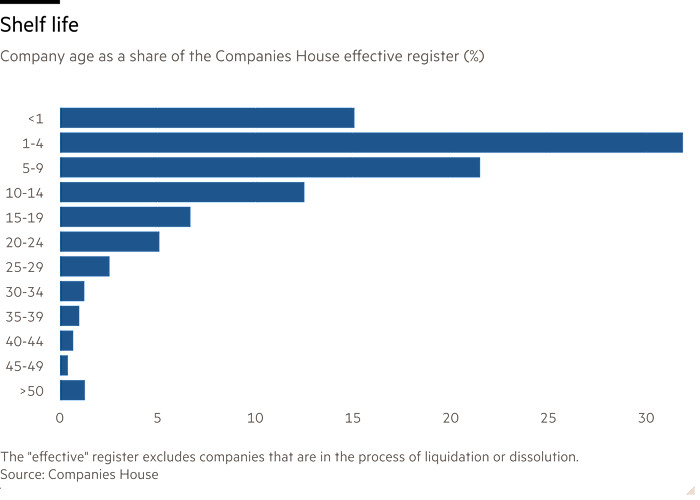
For retailers, old age actually appears to confer some advantages — such as a general sense of affection from customers. It’s rare to find companies as venerable as Boots: fewer than 1 per cent of the active businesses registered with Companies House are over a century old, but a disproportionate share of them are in consumer businesses like retail, leisure and hospitality. Other centenarians include Twinings Tea and fashion brands Barbour and Burberry.
This is analogous to the so-called Lindy effect, named after a New York delicatessen, which theorises that the longer something has existed, the longer it might survive. But there are examples to the contrary too. Department store Debenhams survived the Napoleonic Wars but was doomed by private equity ownership that stripped away its assets and left the retailer saddled with onerous lease liabilities. It closed its final UK stores in 2021.
That points to the third reason for optimism: the Westons, who say they want to improve Boots “for generations to come”, can take a long-term view on the business without the pressures of private investors or public markets. Having come this far, perhaps Boots will see in its third century too.