It’s autumn: the time for coats and curling leaves but also, more excitingly, the now annual renewal of the return-to-office mandate. Over the past few years, bosses have tried all manner of things to get workers to spend more time commuting. Carrots: free coffees, lunches, travel subsidies; and sticks: monitoring, performance-review black marks and pay penalties.
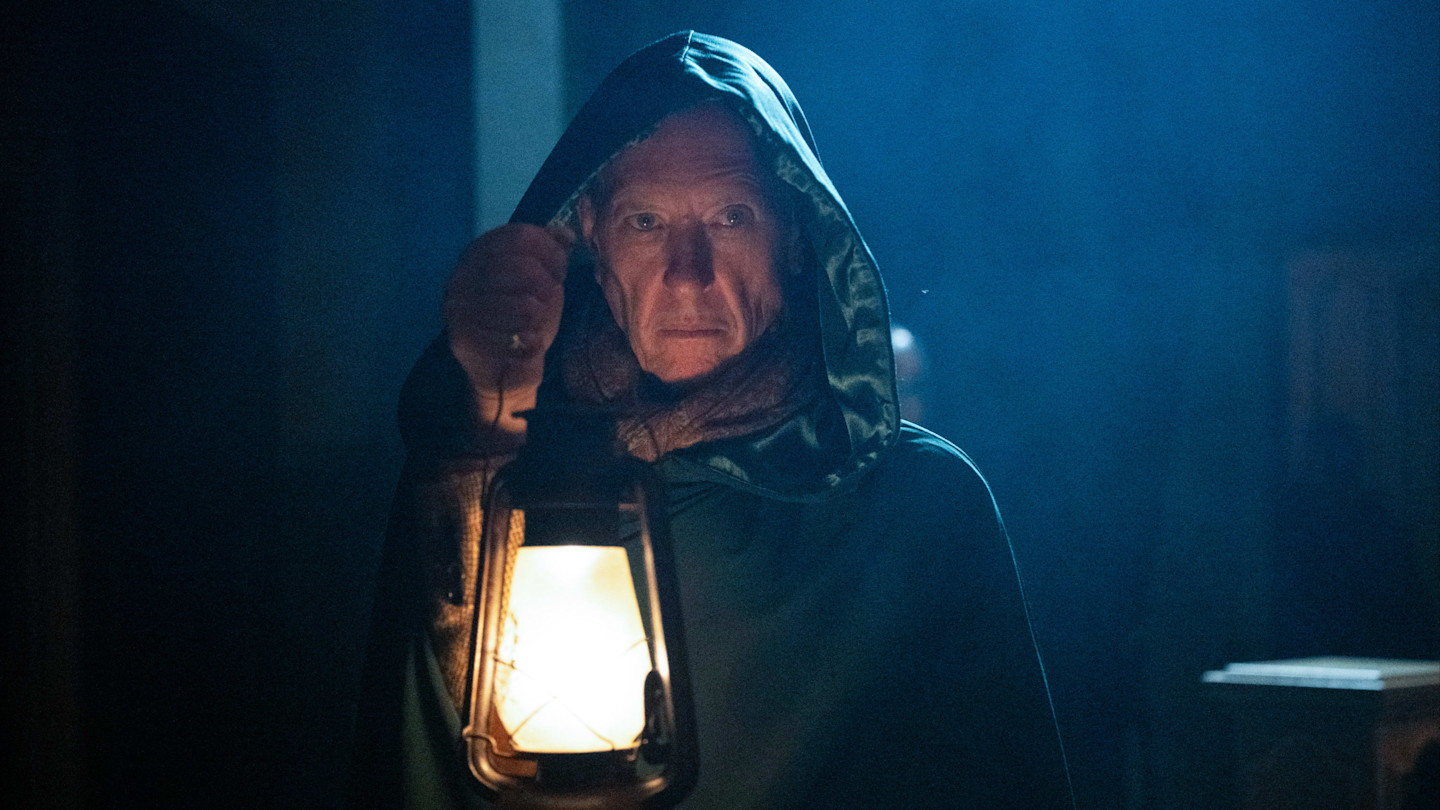
But perhaps they have overlooked one trick: the office water cooler chat. The secret sizzle is surely this season’s Celebrity Traitors, in which participants are divided into a larger group of Faithfuls trying to detect secret Traitors in their midst. When the Withnail and I actor Richard E Grant (who has, as one contestant put it, “unhinged uncle” energy) announced he was a Traitor, he triggered a national debate: is he an idiot or Machiavellian? It blazed through social media — and workplaces.
The test is the rhythm. The show is broadcast on Thursdays and Fridays. Is it enough to lure TWaTs (Tuesdays, Wednesdays and Thursdays) into the office on either side of the weekend? Or can they do just as well discussing Amol Rajan’s coffin-lid-slamming departure on Teams?
In a fragmented media landscape where television vies with YouTube and TikTok for eyeballs, appointment viewing is rare. It has been 40 years since millions of us tuned in for Bobby Ewing’s shower-scene return to Dallas. More recently, national conversations have been sparked by dramas including Netflix’s Adolescence, about the manosphere, and ITV’s Mr Bates vs The Post Office, which dealt with postmasters’ miscarriage of justice.
But those trod politically and culturally fraught terrain — unlike the BBC’s reality-TV contest set in a castle in the Scottish Highlands, which is very low stakes (except, seemingly, for the paranoid “hard man”, Ross Kemp). It also has broad age appeal, which is useful in a workplace that can span up to five generations. One colleague only got into it because his young daughter wanted to watch and now happily finds himself part of the zeitgeist and office chat. As Beth Johnson, professor of television and media studies at the University of Leeds, puts it, there is a strong social incentive to watch promptly, “because being part of the conversation is part of the pleasure”. (I have to confess to weaning myself on to it to participate.)
Isn’t this ultimately what separates us from the chatbots? Analytical skills, certainly. Empathy, definitely. But also, the ability to get in a lather over a programme that will most certainly not feature on a carousel of life’s highlights as we take our last breath.
Despite its bad reputation, small talk is useful. Jean Fox Tree, professor of psychology at the University of California, Santa Cruz, says: “Non-work conversations improve people’s willingness to work with each other on a task in the future.” All the better if this is a two- or five-way chat, rather than a monologue on presenter Maya Jama’s poker face, or model Jerry Hall’s unwillingness to dish the dirt on ex-husband Rupert Murdoch (or Mick Jagger, let’s face it). People who were invited to participate in such conversations rather than listen in silence were more likely to engage in small talk the next time colleagues were chatting, says Fox Tree.
And it is far more constructive to discuss Claudia Winkleman’s tartan trousers than grouse about a colleague.
This was reinforced for me after posting on LinkedIn recommendations for shows and films I’ve watched, books I’ve read and podcasts and music I’ve listened to. It started as a way to just be normal on a platform heavy on AI-created careerist chat, thoughtfluencers and 10-point work lessons from putting a nappy on a baby. It turned into a fun way to forge connections as people have reciprocated with tips or discussed plays and hidden gems.
Johnson observes that “social platforms expose viewers to a much wider interpretative community through memes, theories, clips, reactions. [They] amplify the sense that you are participating in a much larger collective audience.”
While Fox Tree’s experiments were virtual rather than face-to-face — as with my ongoing LinkedIn experiment — in-person small talk matters too.
Nick Bloom, economics professor at Stanford, points to a number of primarily remote-working Silicon Valley companies having regular — typically monthly — face-to-face meetups, not just for work conversations but also to connect over sport, hobbies and kids. A paper he co-authored found that such office days increased workplace communication. In the week after an office visit, staff spent “36 additional minutes communicating with colleagues . . . were more likely to report receiving manager feedback, and employee pairs randomly assigned as desk neighbours were 11 percentage points more likely to communicate afterward. In addition, monthly office days reduced attrition by a third”.
So how about it? See you in the office kitchen on Monday?