Putting the band back together is surely a great feeling, but a dubious corporate strategy. Starbucks chief Brian Niccol has considered a merger with Chipotle, his $41bn rival — and former employer — the FT reported on Thursday. However neat the match might seem from Starbucks’ corner office, it makes little sense for shareholders.
Niccol knows Chipotle very well indeed. He ran the Mexican-themed restaurant chain for six years before decamping in 2024 to the world’s biggest coffee chain, which was then in a state of considerable disarray. Seen from afar, the two do faintly similar things, serving comestibles to customers who are in a hurry. Both have large, sometimes restive workforces.
Moreover, the ways in which they differ might seem from a distance like opportunities. Chipotle’s balance sheet is free of debt; gearing it up a little could provide low-hanging fruit. And while Starbucks has a sprawling global network, Chipotle has yet to venture outside the US, apart from a smattering of international stores.
But do these companies really belong together? Not really. For one, the overlap is unlikely to be enough to justify a takeover premium. Imagine Niccol could shave 10 per cent off Chipotle’s food, drink and packaging costs and halve its general overheads. That would save $770mn a year, Lex reckons using Royal Bank of Canada forecasts, giving an after-tax return on investment of just 6 per cent. Anything below 10 per cent should make investors nervous.
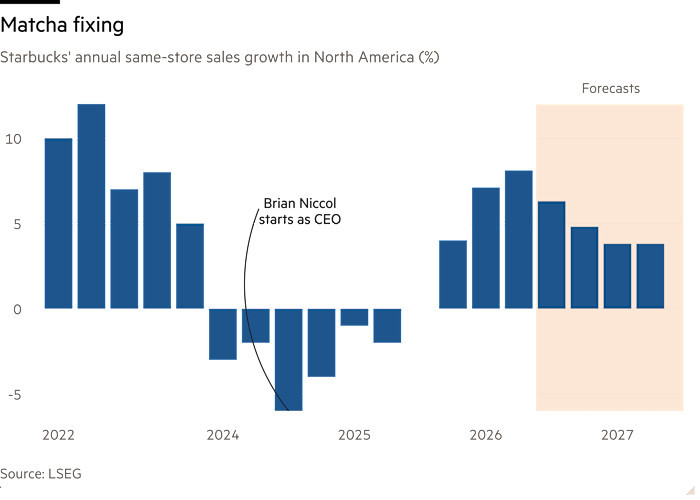
More importantly, Niccol hasn’t finished fixing up his present employer, making this a poor time to take on his old one. Starbucks shares have gone sideways since the day his appointment was announced. Profitability isn’t yet where it used to be. Same-store sales growth of 8 per cent in the latest quarter suggests the company has turned a corner, but recent numbers are still flattered by the previous year’s decline.
Chipotle has fared much worse, as has most of the US restaurant sector. But for Niccol to argue he can do a better job than its current leadership might be somewhat problematic, since Chipotle chief Scott Boatwright was his direct report for six years. Conversely, keeping the brand separate and its leaders in place — the Starbucks boss spent more than a decade at multi-brand restaurant group Yum Brands — would further trim the potential cost savings.
Perhaps it’s just that Niccol could use some more motivation. After all, the generous $100mn-plus package he received in 2024, linked to the company’s share price, has mostly failed to pay out. Worse, having started his role in sunny California, he now spends significant time in rainy Seattle. Starbucks should want to keep Niccol engaged, but buying Chipotle is too high a price.