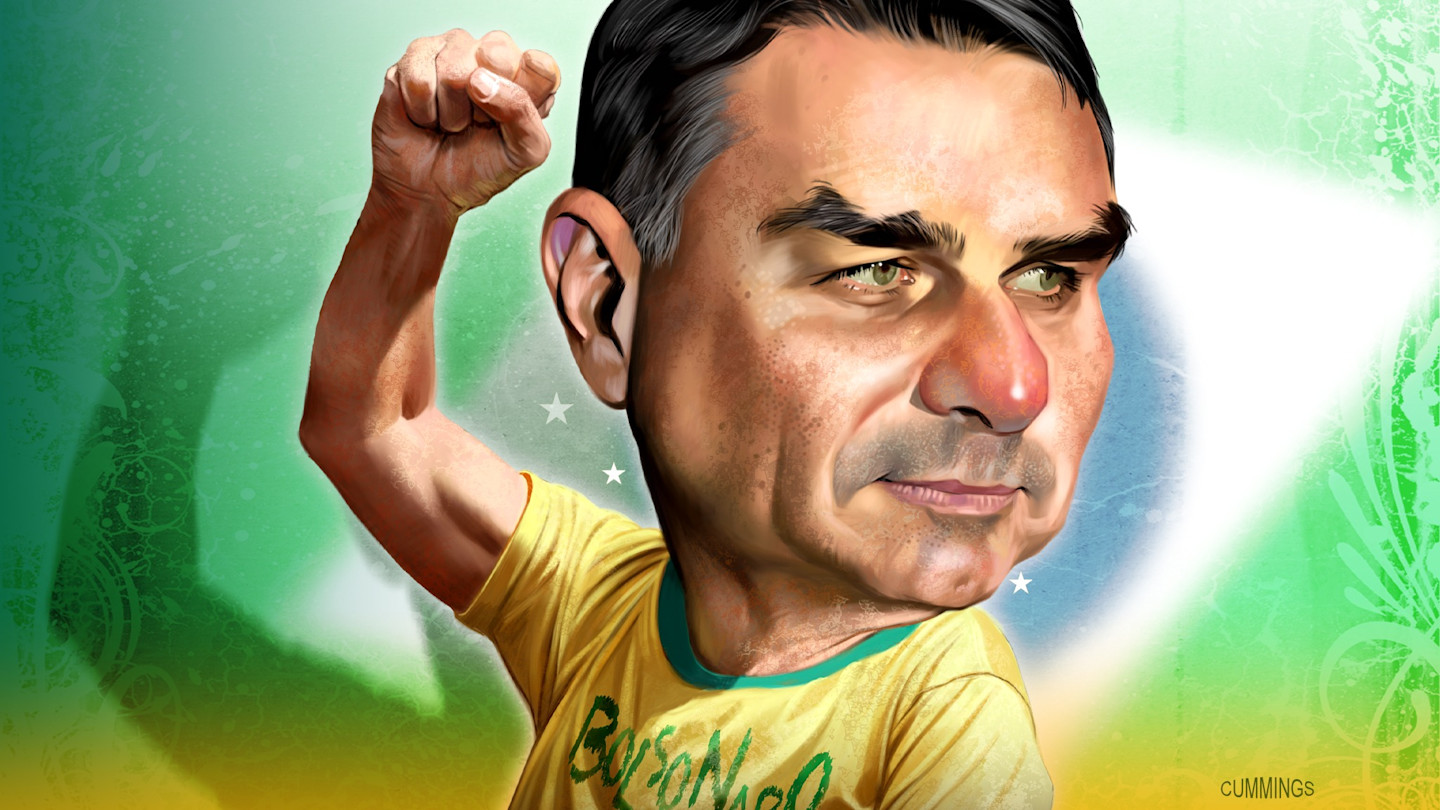
In the early days of his presidential bid, Flávio Bolsonaro worked from the same Brasília office his father once used. The room is dominated by a portrait of Jair Bolsonaro wearing the presidential sash and another of him praying to God, hands outstretched to the sky.
Flávio took meetings on the sofa and chairs, but was reluctant to sit at his father’s old desk. “President Bolsonaro is a person without parallel,” he told the FT earlier this year. “He will always be my north star.”
There is now a good chance that the younger Bolsonaro, 45, will occupy another office once occupied by his father, this time in the presidential palace. After leading in Sunday’s first round of voting, he is the favourite to beat the incumbent Luiz Inácio Lula da Silva in the run-off on October 25 — although there are still two weeks of fierce campaigning to come.
While analysts do not rule out a Lula recovery and note a hint of premature triumphalism in the Bolsonaro camp, they also say Bolsonaro has a clear advantage. The scion of the family business has already demonstrated the durability of Bolsonarismo as a political movement, a tropical analogue to Maga.
When his father was elected in 2018, some put it down to the way his brusque, illiberal charisma appealed to voters at a unique moment when scandal had discredited much of the elite. But this election has shown the movement has much deeper roots.
Just as Donald Trump has done in the US, so the Bolsonaros have refashioned Brazilian politics around their radical right instincts. These combine conservative social views tinged with evangelical Christianity, hardline policies against drug gangs and a rhetorical bent towards entrepreneurs, all wrapped in an anti-system rhetoric that drips with disdain for progressives.
And as Trump did in 2024, they could orchestrate a remarkable comeback. Only a year ago, the dynasty’s political future seemed doomed after Jair Bolsonaro was jailed for 27 years for plotting a coup after losing the 2022 election.
But with the family seemingly on the verge of a return to power, what is less clear is who will be calling the shots this time around. Aware that his surname is his chief political asset, Flávio has gone out of his way to praise his father and has shown few signs over the course of his career of taking an independent path.
A presidential pardon would run the risk of a legal challenge. But even before the second round has been held, allies are openly discussing other ways to get Jair’s conviction overturned before the January 5 inauguration, so that father and son could walk up the ramp to the Planalto Palace together with the rest of the family.
Thaís Oyama, author of Tormenta, a book about Jair Bolsonaro, says Flávio’s temperament makes him unlikely to stand up to his father in the event of disagreement. While Jair is “full of certainties, obsessions and fixations”, Flávio “is different, he listens”.
“That can be a good thing or a very bad thing,” she says. “He’s not a very firm person. He’s easily swayed.”
The oldest of five children, Flávio was born in Rio de Janeiro and has been in politics for much of his adult life, first in the Rio state assembly and since 2019 as a senator. A lawyer, his main private sector experience was as part-owner of a franchise of Kopenhagen, a popular chain of chocolate shops, in a Rio shopping mall.
In 2019, Rio prosecutors accused him of skimming funds from his state legislature office and of using the chocolate shop to launder money. The case ended up being dismissed in 2022 after the Supreme Court ruled much of the evidence inadmissible. Flávio consistently denied the accusations and said they were politically motivated.
An evangelical, he has been baptised several times, including once in the Jordan River in Israel. Unlike his father, a former army captain who surrounded himself in office with retired generals, Flávio has no direct connection to the military.
If he wins, he will be joined in Brasília by his stepmother Michelle and brother Carlos, now both in the Senate, while brother Jair Renan and an uncle will be in the House of Representatives.
By temperament, Flávio is the most mild-mannered of the Bolsonaros. Senate colleagues say he is conciliatory, a key skill for a president who will have to negotiate complex deals with Congress.
He has made spending cuts an early priority, which he hopes will allow interest rates to fall. Markets have reacted positively to his potential victory, in part because he would have a strong base in Congress. He has also promised to work more closely with the Trump administration.
The first round of voting has already enhanced Flávio’s stature nationally and if he puts together a coherent economic plan, it would help establish his leadership. But his credibility could still be badly damaged if he appears to be taking instructions from his father.
“The main question is just how ideological a Flávio Bolsonaro government would be,” says Oyama. “He doesn’t share his father’s fervour or impulsiveness, but he is very much part of hardcore Bolsonarismo.”
Jair Bolsonaro will be a “key adviser” but will not “want to steal Flávio’s spotlight,” said Gerald Brant, a Miami-based financier who has known Flávio for more than a decade. However, he adds: “Flávio of course realises that Jair is the head of the movement.”