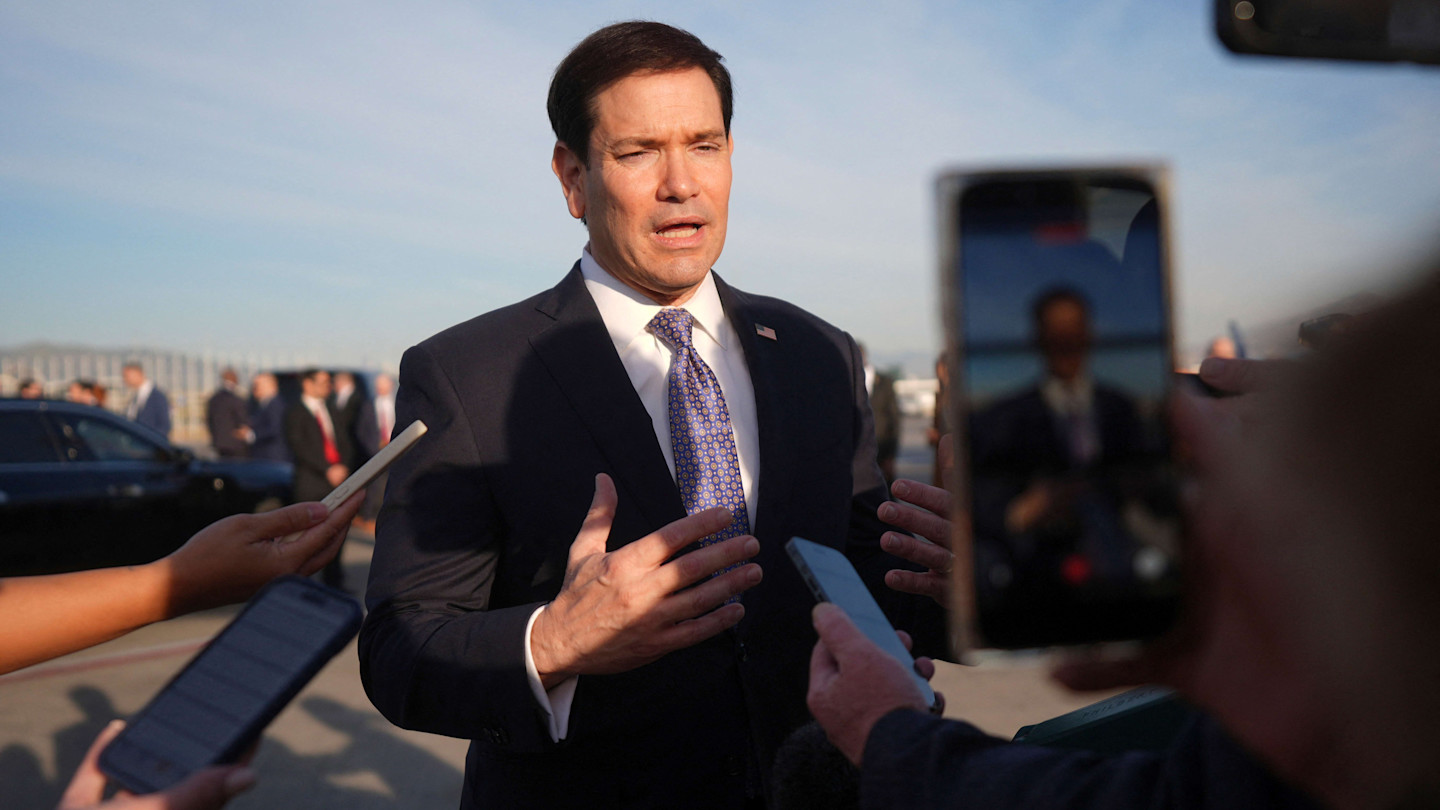
The US has announced sanctions against the entire International Criminal Court in an attempt to hobble its ability to function, stepping up President Donald Trump’s campaign to dismantle what he says is an “anti-American tribunal”.
Under the sanctions order published on Friday, companies have 180 days to stop trading with The Hague-based war tribunal. US secretary of state Marco Rubio said that America was still hoping for “a diplomatic solution” that addresses US “concerns”, without specifying what that would involve.
The court-wide sanctions, which have been threatened for more than a year, come on the same day the Nobel Peace Prize was awarded to Navi Pillay, a South African human rights lawyer and former ICC judge, in an endorsement of the importance of international law.
The award is likely to be seen as a shot across the bows of many autocrats and also democratically elected leaders such as Trump and his ally Israeli Prime Minister Benjamin Netanyahu, against whom the ICC issued an arrest warrant in 2024 over alleged war crimes in Gaza.
“Republicans and Democrats alike rejected the idea that the ICC had the power to prosecute American citizens, military service members or political leaders,” Rubio said. “America never joined the court. We don’t need it. And we don’t want it.”
He added: “Either the ICC will end its threats, or we will end the ICC. We expect our allies, many of whom are part of the ICC and that rely on American service members for their defence, to rein in the court.”
The ICC said in a statement that the sanctions were “an attempt to obstruct the course of justice and to prevent the court from doing what it was created to do”.
“It is an assault on the rule of law and on the very foundations of the international legal order which strikes at the simple principle that no one stands above the law.”
The Trump administration has already imposed sanctions on 13 court officials, including half of the tribunal’s 18 judges, over the past two years. Trump told the UN General Assembly last month that the ICC was “out of control” and an “evil group of people”.
While the US is not a member of the court, it has long criticised the ICC for over-reach. Tensions increased when the ICC started a full investigation of the Afghanistan conflict in 2020, including whether American personnel had committed war crimes there.
This intensified during Trump’s second term in the wake of the court’s decision to issue arrest warrants for Netanyahu and former defence minister Yoav Gallant over alleged war crimes. Israel denies the allegations.
Rubio threatened in July to dismantle the court “brick by brick” and called on its 125 member states to withdraw.
In the face of escalating threats, the ICC has taken steps to better protect itself against fallout from any US sanctions. In an interview last month, deputy prosecutor Nazhat Shameem Khan told the FT that the court had insulated itself against such measures.
Khan — who is running the prosecutor’s office after its former chief Karim Khan was ousted — said the court had been “working on this issue for some time”. The deputy prosecutor was also sanctioned personally by the US last year.
Workarounds have included shifting its office software from Microsoft to Germany’s openDesk and cutting ties with its health insurance provider Axa.
Dutch foreign minister Tom Berendsen said “the Netherlands will continue to stand up for the ICC” and “do everything in our power to ensure that the court can function effectively”.
EU lawmakers have long urged Brussels to employ its “blocking statute” to protect the ICC. This would forbid European companies from implementing US sanctions. At the moment it can be applied only in cases of trade with Iran and Cuba, but the bloc could add the ICC to the list.
The European Commission said: “The EU stands ready to take any necessary measures to enable the court to carry out its work both in investigating and prosecuting war crimes and crimes against humanity, and to protect the interests of EU operators within the single market.”
“No one should be punished for serving the cause of justice,” the ICC added. “History will judge this moment. Future generations, and above all the victims of mass atrocities, will ask how we responded when an institution created to protect them came under attack.”