The EU alongside ministers from more than 30 countries have joined forces in a co-ordinated effort to thwart a push by Saudi Arabia, China and other fossil fuel-reliant nations to delay key scientific reports on the warming of the planet.
The leading scientific authority on climate change, the Intergovernmental Panel on Climate Change, made up of hundreds of international experts, is due to meet next week to resolve a three-year-long deadlock over the next set of reports.
Countries including Saudi Arabia, India and China have pushed for the postponement of some of the reports until 2029, meaning key information on climate change would not be available for the UN COP summit in 2028, when a critical assessment of each nation’s efforts to deal with climate change is due.
Ministers and officials led by EU climate commissioner Wopke Hoekstra, the UK’s Katie White, Canadian minister Julie Dabrusin, France’s Monique Barbut and Germany’s Carsten Schneider, on Friday released a statement arguing that “timely information” from the reports was “critically needed”.
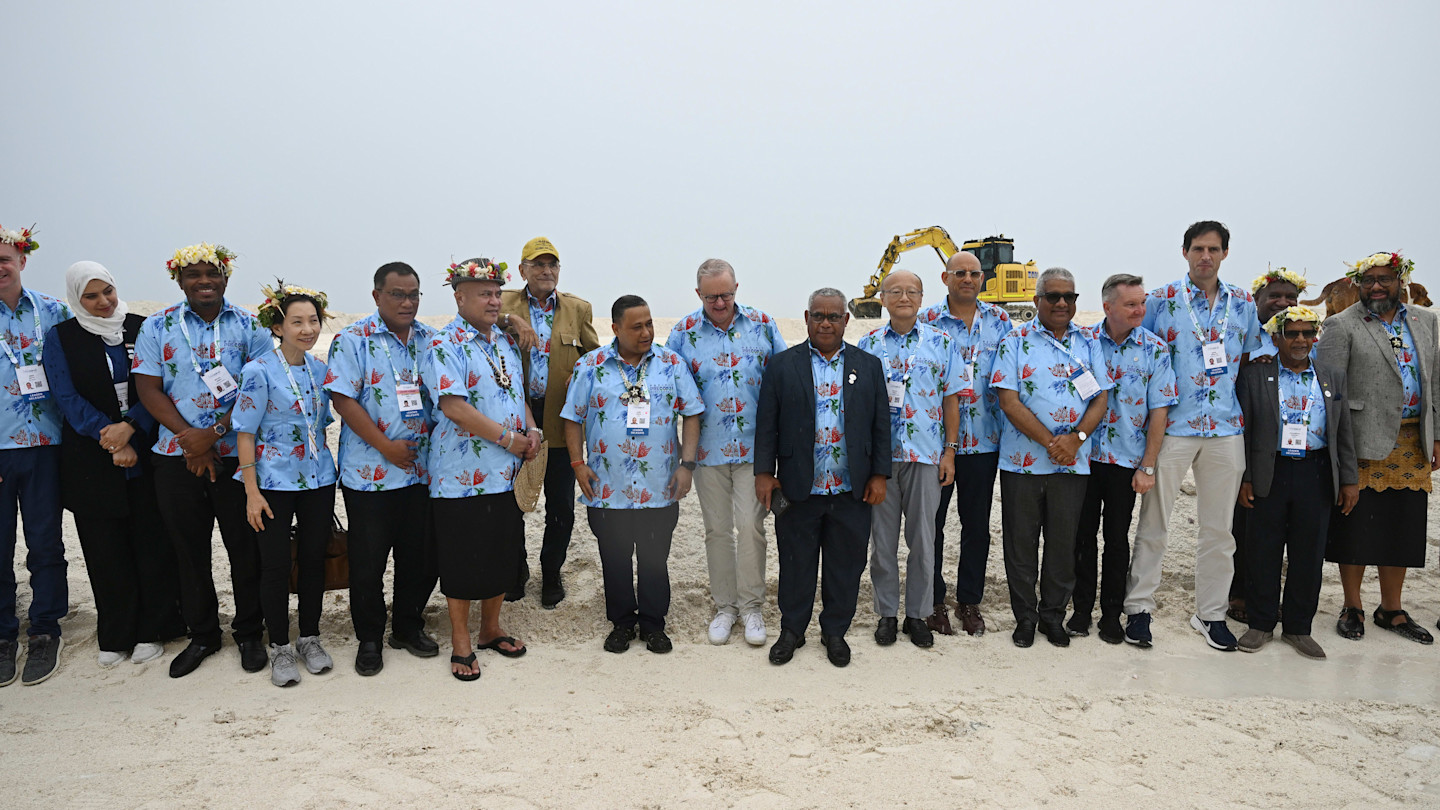
Hoekstra was among about 30 ministers and officials gathered last week in the Pacific islands of Fiji and Tuvalu — where they visited land reclamation projects to combat sea-level rise — to prepare the agenda for the this year’s UN COP summit in Turkey.
The IPCC reports form the backbone of UN climate negotiations and are key to tracking progress of the Paris accord, under which almost 200 countries agreed to limit the global temperature rise to well below 2C or ideally to 1.5C above the pre-industrial level.
The physical science portion of the last IPCC assessment was primarily based on data available up to 2021. Since then, the global temperature is estimated to have risen from about 1.1C above pre-industrial levels to about 1.4C.
“Access to the latest and best available science . . . enables a just, equitable, evidence-based approach to addressing the greatest challenge of our time, rather than one driven by those whose entrenched interests are at odds with reducing greenhouse gases,” the so-called High Ambition Coalition said.
The IPCC is due to publish three reports, including one on the level and causes of climate change, another on how countries can adapt, and a third on options to avoid it worsening. Scientists chairing groups preparing the reports have proposed a work plan that would see all three approved by September 2028.
The nations pushing for a delay in publication are led by the economies most dependent on fossil fuels, including Saudi Arabia, China, India and Russia, which argue that publication any sooner would compromise the quality of the reports and strain developing nations that lack the capacity to rapidly vet thousands of pages of text.
But Denmark’s climate minister Samira Nawa was among those accusing the countries blocking progress of serving their own political interests. “The IPCC process must be safeguarded from political interference,” she said.
Where climate change meets business, markets and politics. Explore the FT’s coverage here.
Are you curious about the FT’s environmental sustainability commitments? Find out more about our science-based targets here