
Chancellor John Healey should avoid damaging business with Budget tax hikes and instead accept an “emergency” cut in his fiscal buffer to deal with the fallout of the Iran war, according to influential economist Lord Jim O’Neill.
O’Neill, who has advised Prime Minister Andy Burnham, said Healey should not “do any harm” to the economy in this month’s Budget by raising taxes on business and the wealthy to fill a fiscal hole, estimated at almost £12bn.
He claimed in a Financial Times interview that big tax rises would undermine confidence just as Britain stood on the verge of a return to healthy growth.
O’Neill said he would be “most disappointed” if Healey put up rates of capital gains tax but feared the chancellor might target banks with what he regards as a futile increase in their taxes.
“I can imagine if they need to find a few bob, that is probably the least evil and most tempting thing to go for, but I don’t really see the point,” he said.
O’Neill said that Healey would be “wise” to allow his so-called Budget “headroom”, which stood at £23.6bn in March, to shrink by £10bn and that markets would understand.
He said that was far preferable to raising taxes to fill a fiscal hole and risk hitting economic confidence. The Iran war has blown a near-£12bn hole in Britain’s public finances because of higher borrowing costs, according to FT estimates.
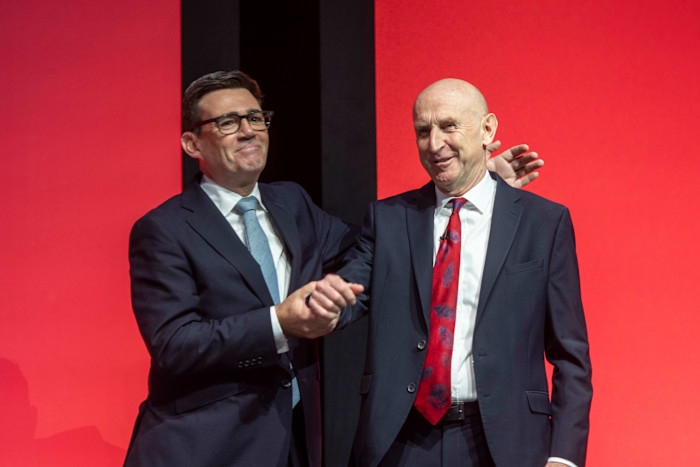
The former Goldman Sachs chief economist believes Britain could be on the brink of annual growth of 2 per cent or more, higher than in recent years, and that Healey’s Budget should have a simple objective: “Don’t do any harm.”
O’Neill, an informal adviser to the prime minister, said Healey should particularly avoid an increase in CGT, as advocated by some Labour MPs, arguing it would be “so stupid” and feed into the idea that Britain was no longer a place for wealth creators.
“The one I would be most disappointed in would be capital gains tax,” he said. “That would pour more fuel on this idea that every other wealthy person is planning to move to Place X.”
Louise Haigh, first secretary of state, and Wes Streeting, defence secretary, are among those who have advocated aligning CGT with income tax rates, but O’Neill said this missed the point that CGT rates were lower because investing was “risky”.
O’Neill believes the bond markets have been reassured by Burnham and Healey since they arrived in Downing Street in July, arguing that the UK has been less badly affected than other G7 countries by the recent rout.
Referring to Burnham’s recent promise to maintain fiscal discipline and his longer-term plan to end the costly pensions “triple lock”, O’Neill said: “That’s much more important than whether he lowers his buffer by £10bn.”
The fiscal buffer could fall to about £14bn without sparking a gilt sell-off, according to the average of eight estimates provided to the FT by market participants.
O’Neill said: “It’s quite reasonable to have a buffer that you use in an emergency. That’s kind of what it is, when you see what’s going on in the Gulf and with bond yields. I think it’s not just legitimate, but wise.”
He said he could not understand why people were not more upbeat about Britain’s economic outlook after the economy grew by 1.1 per cent in the first half of 2026, the fastest growth of any G7 country.
He added that productivity data was looking positive. “If you were to maintain 2 per cent growth and it became the norm, I think people would feel a lot happier about life. Not many people are talking about it. It’s strange. Maybe I’m living in cloud cuckoo land, but we might have started to see the first signs.”
O’Neill, one of the architects of the Northern Powerhouse initiative and a longtime adviser to Burnham from his time as Greater Manchester mayor, said he expected Healey’s Budget to have a heavy focus on devolution, including handing down more powers over local taxes.
But he said it was important to prioritise areas with a strong capacity for faster growth, including focusing on the capital. “You’ve got to do something to stop London growing as weakly as it has,” he said.
O’Neill said he had not been briefed on the Budget but said: “I think they want this to be a low-key thing, with no earth-shattering tax and spend decisions for people to focus on.”