Good morning. Today, our finance correspondent reports on rising nervousness over granting increasing leeway for EU government spending, and our Moscow correspondent reports on Vladimir Putin’s less than warm welcome at a summit of his neighbours.
Have a great weekend.
Danger zone
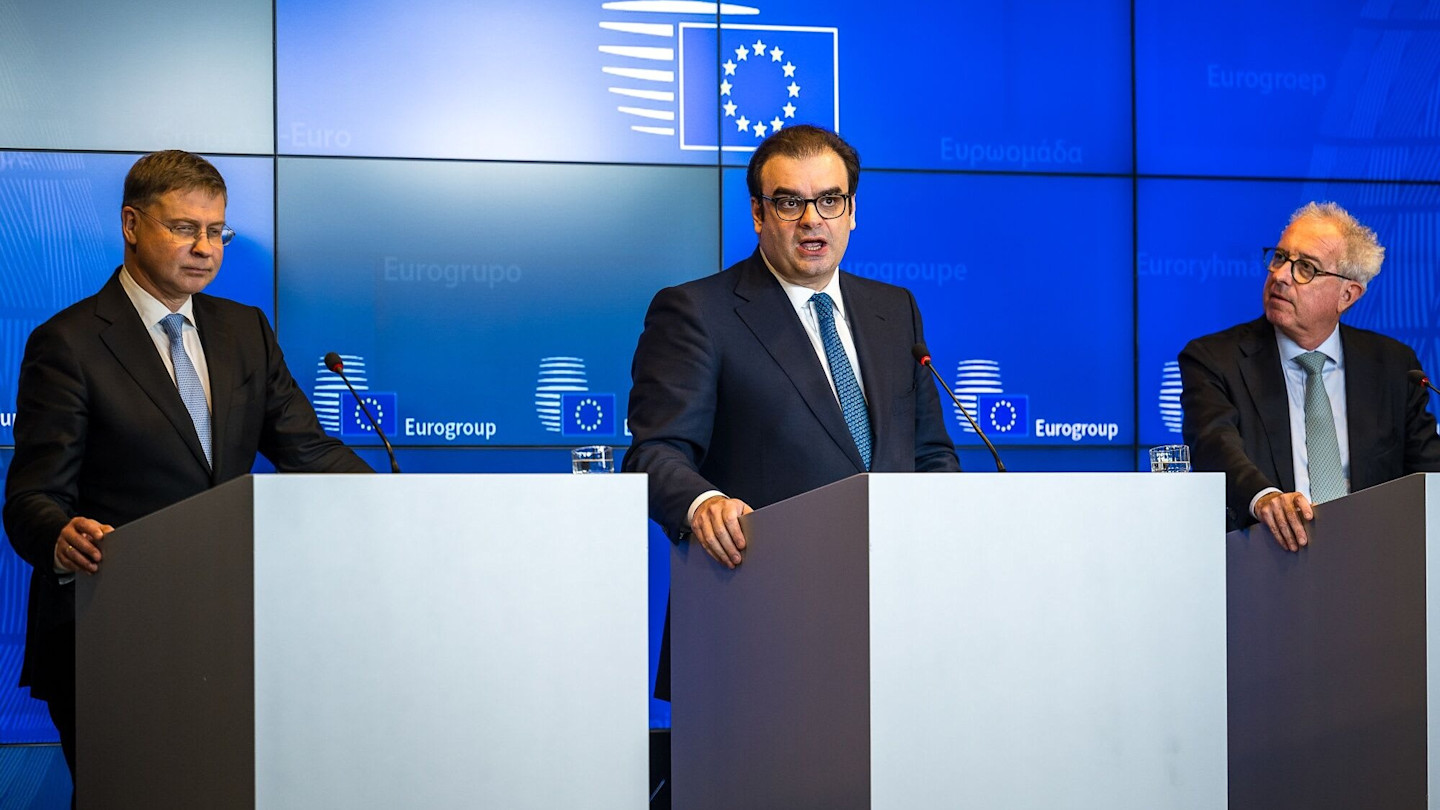
The European Commission is wary of further tweaking its fiscal framework as bond markets test governments’ credibility and borrowing costs reach multiyear highs, writes Paola Tamma.
Context: High energy prices are squeezing governments preparing 2027 budgets, prompting Italy and Greece, the Eurozone’s two most indebted economies, to request more flexibility under EU fiscal rules to spend without risking sanctions.
But the Commission warned against further diluting the rules amid jittery markets.
“We cannot come with new fiscal flexibilities all the time,” said EU economy commissioner Valdis Dombrovskis yesterday, warning this would undermine confidence in governments’ commitment to fiscal sustainability.
The framework already allows for inflation when assessing compliance with spending limits, he added.
Rome and Athens also faced pushback from other EU capitals.
“Piling debt on top of debt makes our problems bigger. We need to spend less and reform,” said Eelco Heinen, Dutch finance minister.
Energy price increases resulting from the US-Israeli war against Iran have driven Eurozone inflation to a higher-than-expected 3.8 per cent in September.
EU governments spent €18bn cushioning households and businesses from higher prices this year, equivalent to 0.1 per cent of EU GDP, according to the Commission.
Higher inflation expectations, interest rates and concerns over mounting public debts have pushed 10-year government bond yields to multi-decade highs in several Eurozone countries, particularly France.
“Investors are becoming more sensitive to fiscal risks,” said Kyriakos Pierrakakis, Greek finance minister and Eurogroup president, warning that neither more borrowing nor indiscriminate spending cuts were the answer.
“We must achieve more with the resources that we already have.”
Chart du jour: UBS’ choice
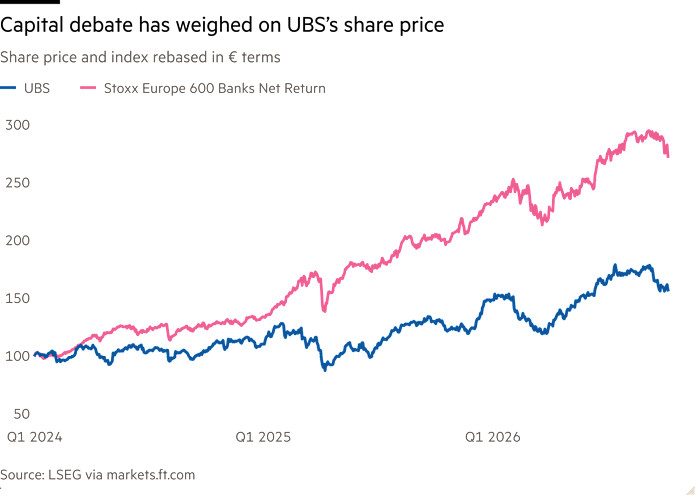
A Swiss regulatory defeat has left UBS facing options ranging from retaining billions of dollars of additional capital to shrinking its international operations or even leaving the country·.
Unhappy family
Vladimir Putin sits down with his supposed regional allies today in an attempt to paper over widening cracks in ties with several of his neighbours strained by disagreements over the Russian president’s war against Ukraine, writes Anastasia Stognei.
Context: The Commonwealth of Independent States (CIS) summit, hosted this year by Turkmenistan, brings together leaders from central Asia, the Caucasus, Russia and Belarus. Founded after the collapse of the Soviet Union, it has spawned loose groupings for economic and security purposes.
Since the last summit a year ago, Putin has faced unusually blunt criticism from Kazakhstan, a key CIS member and central Asia’s largest country, which shares a 7,600km land border with Russia.
In July, Kazakhstan’s President Kassym-Jomart Tokayev publicly urged his Russian counterpart to “freeze” the war, saying he did not understand its origins — his sharpest intervention since Russia’s full-scale invasion of Ukraine in 2022.
Less than two weeks earlier, Azerbaijan’s President Ilham Aliyev, who has repeatedly said his country “respects Ukraine’s territorial integrity”, also toughened his stance, urging Kyiv “not to agree to the occupation” and insisting that the war “must be stopped immediately”.
In both cases, the Kremlin’s response was strikingly restrained, even though Putin visibly struggled to conceal his irritation during Tokayev’s remarks at their televised meeting in Omsk, Siberia. Moscow said only that it considered such views misguided and had explained its own position to its partners.
This underscores how Russia’s war has weakened its influence in central Asia, giving its states greater room for manoeuvre. Yet the muted responses also expose the limits of that independence.
Despite the irritation, Putin cannot afford to alienate the few allies he has left at the gathering on Turkmenistan’s Caspian Sea coast.
And despite their increasingly outspoken criticism, Azerbaijan and especially Kazakhstan, which exports about 80 per cent of its oil through Russian territory, remain heavily dependent on Moscow, leaving them little choice but to maintain friendly relations for the foreseeable future.
What to watch today
EU finance ministers meet in Luxembourg.
French President Emmanuel Macron meets German President Frank-Walter Steinmeier in Paris.
CIS summit in Turkmenistan.
Now read these
Heist in Florence: Italy’s biggest family-owned winery says professional thieves stole· 30,000 bottles of wine worth an estimated €5mn.
Coming for you: Danish Maersk has made a strategic switch· with an aggressive ship-buying programme to fend off CMA CGM of France.
Making friends: The UK is open to Germany joining its new fighter jet programme as premier Andy Burnham bids for deeper ties.
Are you enjoying Europe Express? Sign up here to have it delivered straight to your inbox every workday at 7am CET and on Saturdays at noon CET. Do tell us what you think, we love to hear from you: [email protected]. Keep up with the latest European stories @FT Europe