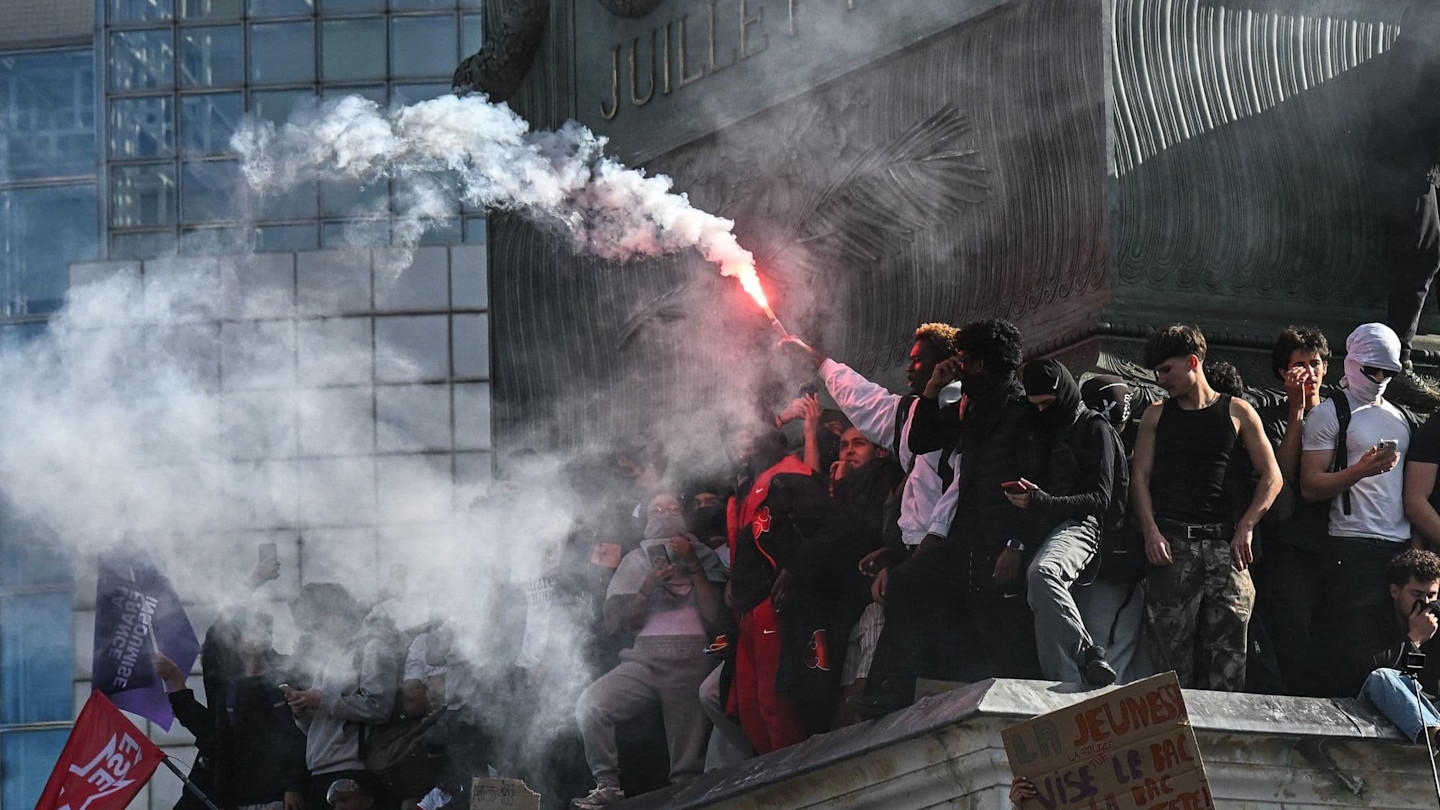
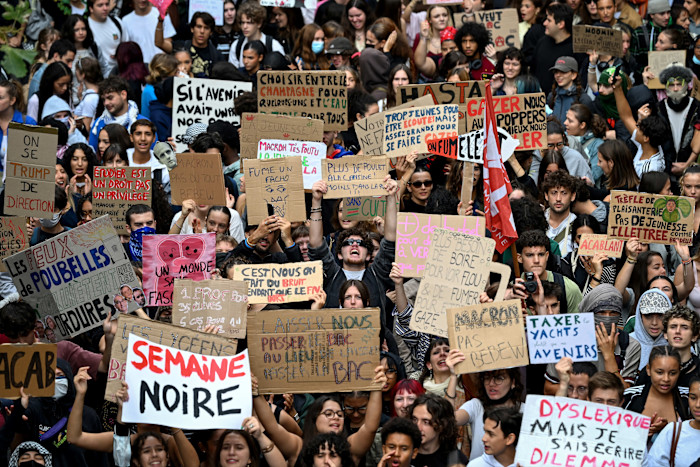
Clouds of tear gas followed the arc of water cannons fired into the crowd in central Paris this week, as student strikes that shut hundreds of schools and led to thousands of arrests in recent weeks culminated in clashes between heavily armed police and protesters.
“Down with the cops, the state and the fascists!” the crowd, mostly young people, chanted on Thursday. “Too young to be listened to, but old enough to be tear-gassed,” read a sign carried by a young woman in a light purple headscarf.
French students are revolting against a school system they say is failing them, just as France faces a fiscal reckoning after years of lavish welfare spending. Students are demanding more teachers, better facilities and smaller classes, and an overhaul of how universities select their students, which they say is stressful and unjust.
The crisis is piling pressure on President Emmanuel Macron’s minority government as it is seeking to push through a belt-tightening budget while investors grow increasingly worried about France’s incapacity to reduce its public deficit. That means the government cannot turn to its usual method of calming protests — taking out the cheque book.
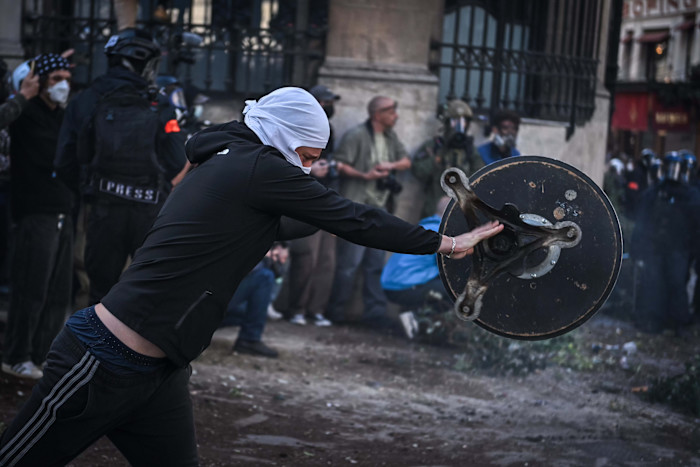
The protests have spread to universities, while labour unions have swung behind them, suggesting the movement may widen further.
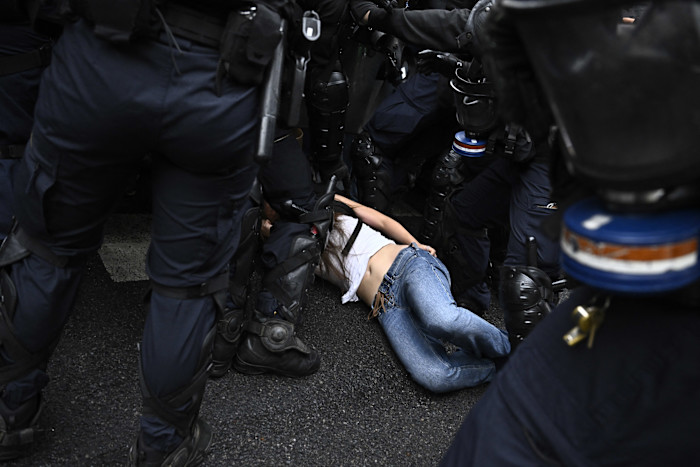
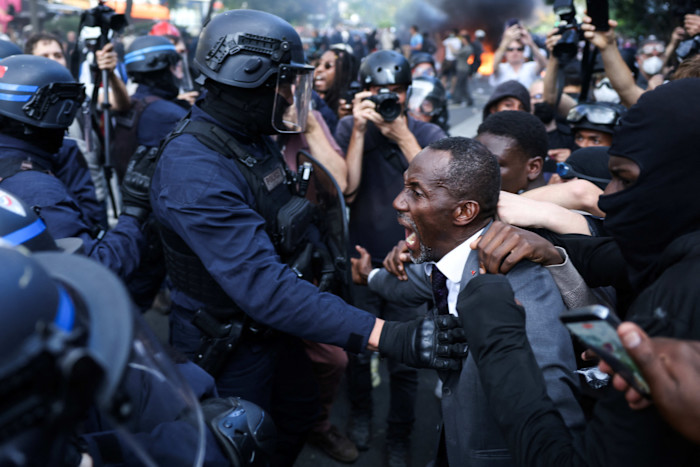
Anger over heavy-handed policing — a chronic issue in France, especially on the left and in poorer neighbourhoods — has also come to the fore as the weeks of protests in some cases turn violent.
Rioters have burned schools and emergency service vehicles. Police suspended the use of stun grenades for the rest of the uprising after a 15-year-old’s hand was blown off in the northern town of Lens.
More than 7,000 people have been detained since the demonstrations began, according to the interior ministry. Hundreds of law enforcement officers have been injured, as have students and school staff.
In Saint-Denis — a working-class, immigrant suburb north of Paris — students outside Lycée Paul-Éluard criticised deteriorating conditions, which they said were making it hard for them to learn.
Zohra, 16, said the school has rats and cockroaches, and that heatwaves over the summer in classrooms without air conditioning were so punishing that some students fainted. “In winter, we freeze, and in summer we boil.”
Saint-Denis is in the country’s poorest department in mainland France, with nearly four in 10 residents in the suburb living below the poverty line, more than twice the national rate, and it has become a focal point for demonstrations. It is hard to recruit experienced teachers and turnover is much higher than elsewhere.
Nationally, about 10 per cent of scheduled classroom hours go untaught largely because absent teachers are not replaced, according to the education ministry, an issue that has become a flashpoint for demonstrators.
“There is no equality in the education system. It is always us in the 93rd who get screwed, not like the nice neighbourhoods of Paris,” said Jamal, 15, using the departmental code for Saint-Denis.
A sharp decline in French maths and literacy scores in the OECD’s transnational Pisa study this year has fuelled the feeling that the public education system is broken.
Salomé, 16, protested about long school hours with poor learning outcomes in Paris’s well-heeled ninth arrondissement. “Increasing class hours won’t make us smarter,” she said.
“The big challenge for France is that those results stand in no relationship to the time that young people spend in school. You have a very long school day and still low results,” said Andreas Schleicher, the architect of the Pisa study.
He said France had never had as many teachers for every hundred students as it has today. “I think it is more a way of how resources are utilised.”
Critical thinking skills were in the most worrying decline in France, he said, in a system that emphasises teacher-student hierarchy and learning arguments by heart. Pisa concluded inequality between rich and poor students strongly determines the educational outcomes — an experience reflected in Saint Denis.
Education is one of the few ministries that is not earmarked for cuts in next year’s budget, with the government proposing a €1.2bn budget increase to €64bn for 2027. Education minister Édouard Geffray announced on Thursday that 3,000 additional substitute teachers would be deployed in the coming days in response to student demands.
Overall, education spending, from pre-school through university, has increased in recent years, albeit unevenly. According to statistics agency Insee, it rose nearly 14 per cent between 2010 and 2024, adjusted for inflation, from €173.3bn to €197.1bn.
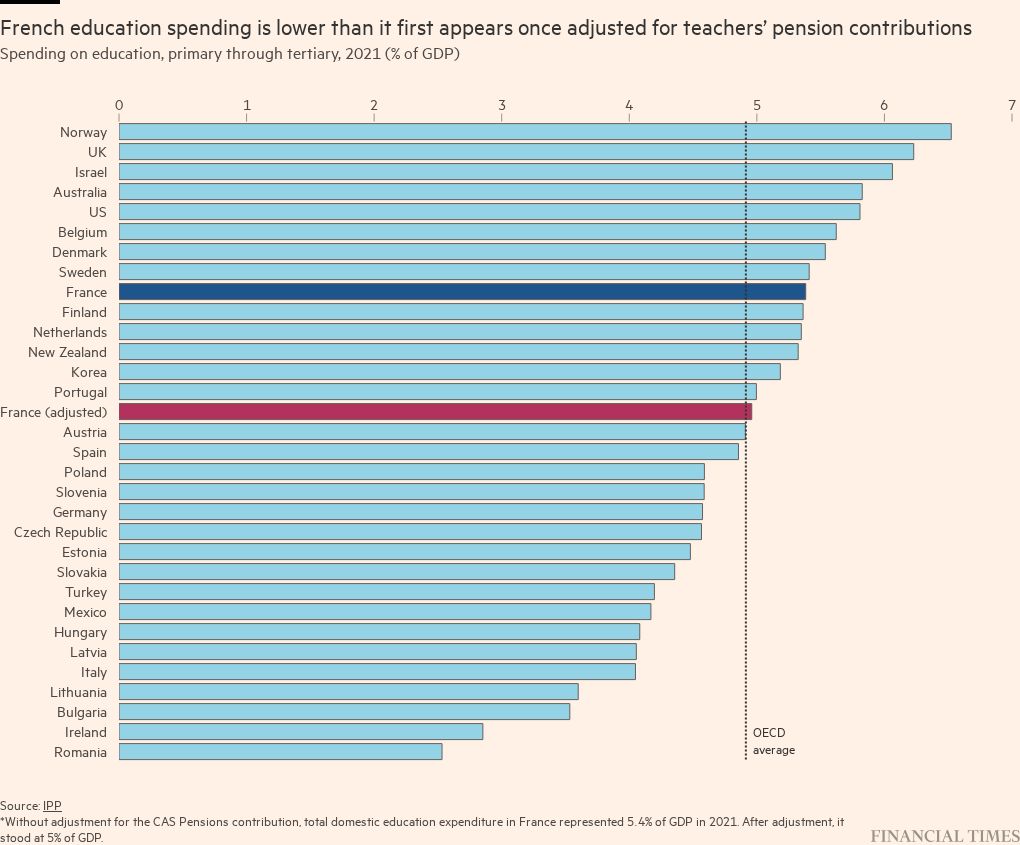
But spending per student in secondary schools such as collèges and lycées fell 2 per cent over the same period. Mid-career teachers still earn less than the OECD average, while education spending as a share of GDP has edged down from 7 per cent in 2010 to 6.8 per cent in 2024.
Successive French administrations have failed to tackle the country’s biggest public spending line item: its huge pensions bill, which takes up nearly 14 per cent of its GDP, according to Insee.
A 2025 study from think-tank IPP shows that about 13 per cent of France’s national public education budget is actually accounting for contributions to teachers’ generous pensions. After stripping those out, France falls into the bottom quarter of OECD countries for spending per primary school student, the study said.
An attempt during Macron’s second term to raise the pension age to 64 in order to manage the system’s costs was met with nationwide protests — including by young people — and the law was ultimately suspended. Education ministry data shows nearly all the increase in the national education budget all but wiped out by inflation last year.
The French government has accused far-left firebrand Jean-Luc Mélenchon of politicising the protests to court voters ahead of next spring’s presidential election.
“Sowing chaos as you have been doing since the beginning of the movement is a scandal . . . [and] it won’t save you electorally,” Prime Minister Sébastien Lecornu said in parliament this week.
Many students’ grievances have broadened into demands for political change. Elwan, an eloquent 17-year-old student from Paris’s ninth arrondissement who has become an overnight social media sensation, called for a “leftist government of change” in a video posted on X. Mélenchon posted footage of the two embracing.
“Youngsters tend to be overwhelmingly on the left to begin with,” said Antoine Marie, a political psychologist at Sciences Po, a Paris university. “They have a propensity to gather and protest, sometimes a bit violently. They don’t need . . . agitators or politicians for that to happen.”
As tensions escalated, Warrys, 19, stood on a dumpster outside the gates of a high school in Lille to appeal to demonstrators for calm.
“There are many who will say my school was shit, therefore I messed shit up,” he said on TikTok this week. “I’m asking for one thing: don’t burn things, don’t break things . . . We can show that even if we are young people from tougher areas, we can all mobilise peacefully and achieve things.”