Some content could not load. Check your internet connection or browser settings.
Five filthy electric guitar chords erupt without preamble, then remorselessly repeat throughout “You Really Got Me”. “Girl, you really got me going / You got me so I don’t know what I’m doing,” Ray Davies sings, consumed by uncontainable lust consummated only in his brother Dave’s wild, climactic guitar solo. Released in August 1964, the record redefined British pop’s parameters with its innovative power chords and violent attitude, a rebellious sound that set a template for heavy metal and punk.
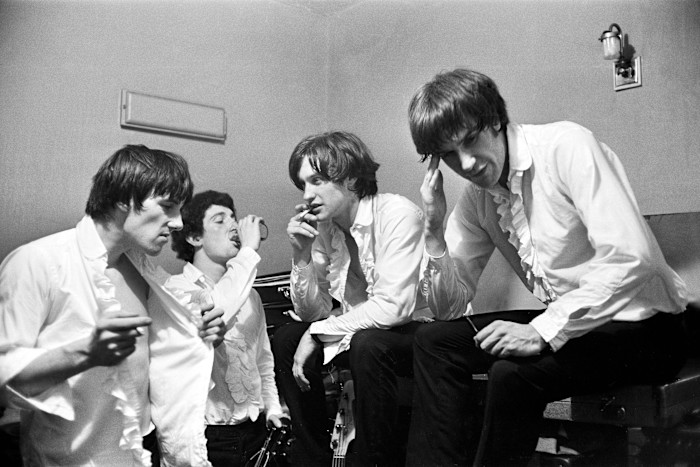
Dave Davies discovered the noise he desired in the front room of his family’s cramped north London terraced home in 1963, aged 16. First he fused the lights and sent his electrocuted body flying by plugging three amps and a radiogram into one overloaded socket. “For a split second I heard fantastic crackling, static distortion,” he recalled in his autobiography, Living on a Thin Line. Plugging his tiny green Elpico 10-watt amp into a Vox AC30 amp and slashing the former’s speaker cones with a bathroom razor achieved a similarly ferocious effect.
Some content could not load. Check your internet connection or browser settings.
Ray, meanwhile, started to write seriously in 1964. Playing on the battered upright piano in the family front room, he developed the defining riff for “You Really Got Me”. Dave plugged in his green amp and added heavy barre chords on his guitar. He led his brother in rising key changes, heightening the excitement. “The energy of that chord shift — from G to A — was really based around a sexual feeling,” Dave wrote in Living on a Thin Line.
The Kinks played their first gig under that name on February 1 1964 and released two singles on Pye Records to little success. “You Really Got Me” would be the last record on their contract, making or breaking their future. The brothers felt an initial recording with producer Shel Talmy sounded sluggish and echo-drenched, fatally burying the riff and perhaps The Kinks along with it. Ray desperately extracted a second session from the unwilling label in July 1964, lasting just three hours at London’s IBC Studios.
Some content could not load. Check your internet connection or browser settings.
The second take realised the song’s thunderous promise. Following the riff’s confrontational statement, session drummer Bobby Graham hammered the snare, soon joined by Arthur Greenslade’s stabbing piano. “See, don’t ever set me free,” Ray sang, the lyric’s slavishness to a woman undercutting the sonic aggro. Ray’s voice and Dave’s guitar achieved a monstrous, sibling unity just before the latter’s solo statement of freedom. “You Really Got Me” topped the UK charts, then hit number seven in America, rescuing The Kinks from obscurity and placing them on a par with The Beatles and The Rolling Stones.
Follow-up chart-topper “All Day and All of the Night” refined the “You Really Got Me” model, but Ray soon tired of the formula, finding his métier with 1965’s acoustic, class-war character study “A Well Respected Man”. The Who took up the heavy riff mantle, with Pete Townshend acknowledging “The Kinks’ obvious influence”. Their initial sound and attitude later helped spark punk fans such as The Clash, and the sheer heaviness of “You Really Got Me” prefigured metal. Jimi Hendrix “said he thought ‘You Really Got Me’ was a landmark record”, Dave recalled.
Some content could not load. Check your internet connection or browser settings.
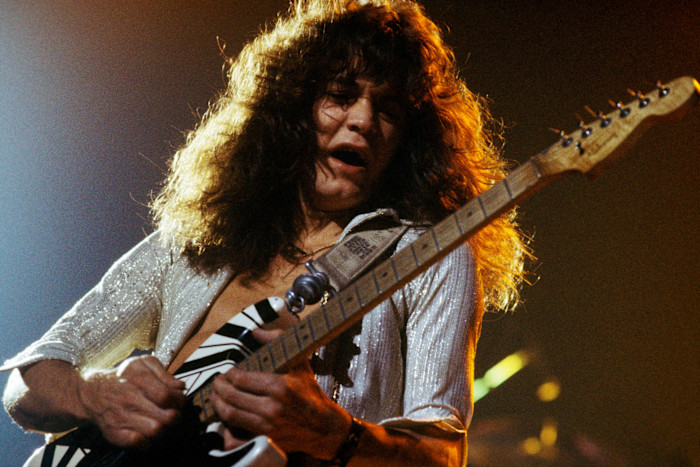
The Kinks’ former US label executive Mo Ostin convinced Van Halen to release “You Really Got Me” as their debut single in 1978. The riff got a technological upgrade, sounding still more resonantly huge. Eddie Van Halen’s solo involved more shredding and singer David Lee Roth was seductive rather than slavish, but the otherwise faithful cover hit number 36 and kick-started their own significant career. The track’s much remarked confluence with punk and metal appeared to influence The Kinks’ version on their live album One for the Road (1980), a punk-paced thrill ride showcasing Dave’s dark, ominous blues-metal solo. Their archive release The Journey, Part 3 (2025) excavates a 1993 Royal Albert Hall performance which hurtles at Clash-speed towards their career’s 1996 conclusion. Ray took these vaunted metal credentials literally when he invited Metallica to collaborate with him on a 2010 take. The speed-metal kings played it straight, finding the prototype unimprovable.
Ray and Dave’s relationship was notoriously volatile, and Dave later wrote of involving lawyers to prevent Ray from taking sole credit for the green amp’s distortion in an early version of the latter’s hit Kinks musical Sunny Afternoon (2014). The song’s subsequent part in the band’s story was more positive. On December 18 2015, Dave played a low-key Christmas gig at London’s Islington Assembly Hall, and invited his brother. Nineteen years after the final Kinks gig, Ray appeared for an encore of “You Really Got Me”, triggering vintage mayhem. “It was like in the beginning,” Dave told me afterwards. “Two kids getting together and playing music . . . It was worth it just to resurrect those feelings again.”
Let us know your memories of ‘You Really Got Me’ in the comments section below. More at ft.com/lifeofasong
The paperback edition of ‘The Life of a Song: The stories behind 100 of the world’s best-loved songs’, edited by David Cheal and Jan Dalley, is published by Chambers
Music credits: