The writer is Professor of Democratic Politics and director of the Constitution Unit at University College London. He is leading a review of the effects of electoral systems to report in spring 2027.
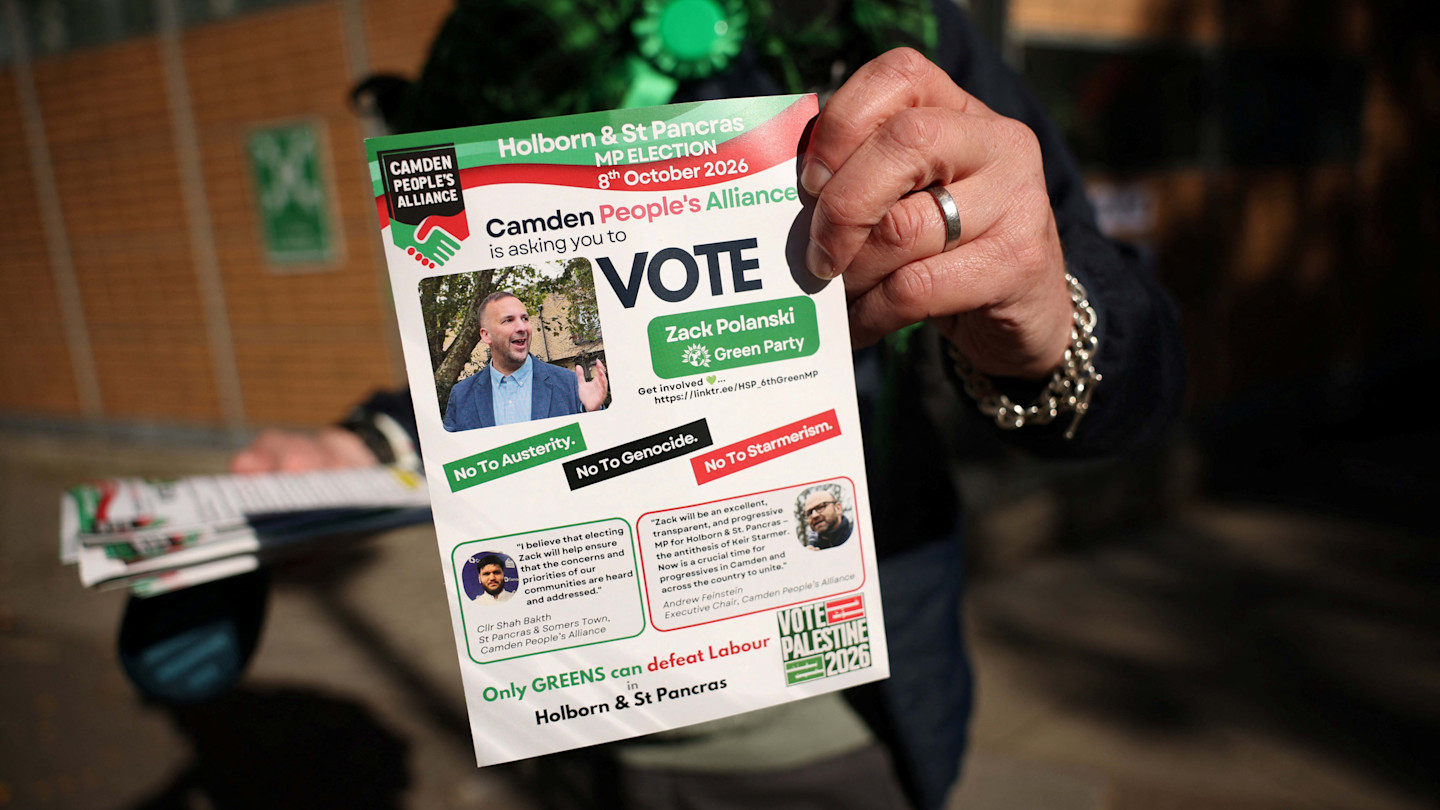
This week’s by-election in Holborn and St Pancras gave us a psephological first: in no previous by-election have Labour and the Green Party shared the top two spots. A minor record, perhaps one only for political aficionados. But this was the seventh parliamentary by-election since the general election, and it delivered the seventh different top-two configuration. We have also had Reform UK and Labour slugging it out, the Greens and Reform, SNP versus the Conservatives, the Conservatives defeating the SNP, Labour defeating a Reform challenger and, famously, Nigel Farage’s face-off with a bin.
All this variety illustrates that Britain has firmly entered an era of multi-party politics. Gone are the days of dominance by the two main parties — indeed, one configuration we have yet to see since 2024 is a straight contest between Labour and the Conservatives.
Into this kaleidoscopic mix, Andy Burnham has thrown a grenade. He is the first modern prime minister to advocate scrapping the first-past-the-post voting system for Westminster elections. Speaking to the Labour conference last month, he pledged that, following a review, the party’s next manifesto would include a commitment to electoral reform.
This is a major step. Elections are the very heart of our democracy. How much would it change if the prime minister made good on his promise, given the new multi-party competition?
Burnham’s commitment to the cause does appear sincere. He wants to change two features of the rules, arguing that two aspects of politics would shift. He believes voters should be able to express multiple preferences rather than just select one candidate or party, arguing this would make politics more collaborative. And he wants a degree of proportionality between support and seats won, so that a party — might he be thinking of Reform? — cannot gain power on less than a third of the vote. He has consistently voiced this analysis over several years.
But change is not inevitable. Our current system benefits the largest party — will Labour MPs back reform if their recent polling bounce gains momentum? It’s not a priority for many voters, so will Burnham really expend political capital pursuing it?
One possible outcome is a more limited reform than ardent supporters would like. Labour has already restored one version of preferential voting — the supplementary vote — for mayoral elections, after the Conservatives scrapped it in 2022. It allows voters to express first and second preferences and would be the simplest change for general elections. A step further would be to adopt the alternative vote, where voters can rank as many candidates as they like. We have already had a referendum on this in 2011 — the proposition was comprehensively defeated.
Both options would consolidate the recent shift towards multi-party politics, but structured into two blocs on left and right. Under FPTP, this pattern requires deft tactical voting from voters. Under a preferential system, it gets much easier.
But neither SV nor AV would satisfy Burnham’s desire for proportionality. They would still leave the national result as the haphazard product of 650 constituency contests, whereas the proportional system seeks to match seats won (at least roughly) to the spread of votes across parties.
A full-fat proportional system that kept Burnham’s desire for preferential voting would be the single transferable vote. Beloved of reform devotees for over a century, this would create constituencies that would each elect maybe five MPs. Voters would rank the candidates, and the outcome would reflect the spread of opinion — the system is already used for some elections in Northern Ireland and Scotland.
Alternatively, Burnham could pursue an intermediate option: an element of proportionality but continuing with one MP per constituency. The last major review of the voting system — the Jenkins commission, set up by Tony Blair in 1997 — came up with exactly such a solution, dubbed “AV+”.
STV really would change our politics. Coalition governments would likely become the norm — a recipe for unstable government and weak accountability, critics say. Advocates counter that it would lead to better policymaking and broader representation. AV+ would leave us somewhere between this new world and the status quo.
What will happen remains highly uncertain. Major reform will be likeliest under a Labour-led coalition after the next election. This by-election may have helped to re-establish Labour as the main vehicle on the progressive wing of politics but an outright majority still looks improbable. Even without a change in the voting system, we are in a new era for party politics.