This week I received a glossary of terms from the managing editor’s office, helping to explain the jargon known as journalese. It was intended for new starters and trainee journalists, but it was still a gripping read.
The glossary was an amalgam of classic Fleet Street favourites — “shoe-leather journalism”, “angle”, “sweep” and “colour” — mixed with terms that reflect more digital times. Several of the terms listed spoke quite generally to the profession, others had evolved according to the whim and personalities of those within. Today’s lingo now includes words such as “computational journalism” and “fastcharts”, to reflect our data-driven dynamism. But even though we think digitally about our stories, old print-media terms such as “drains” and “decks” persist.
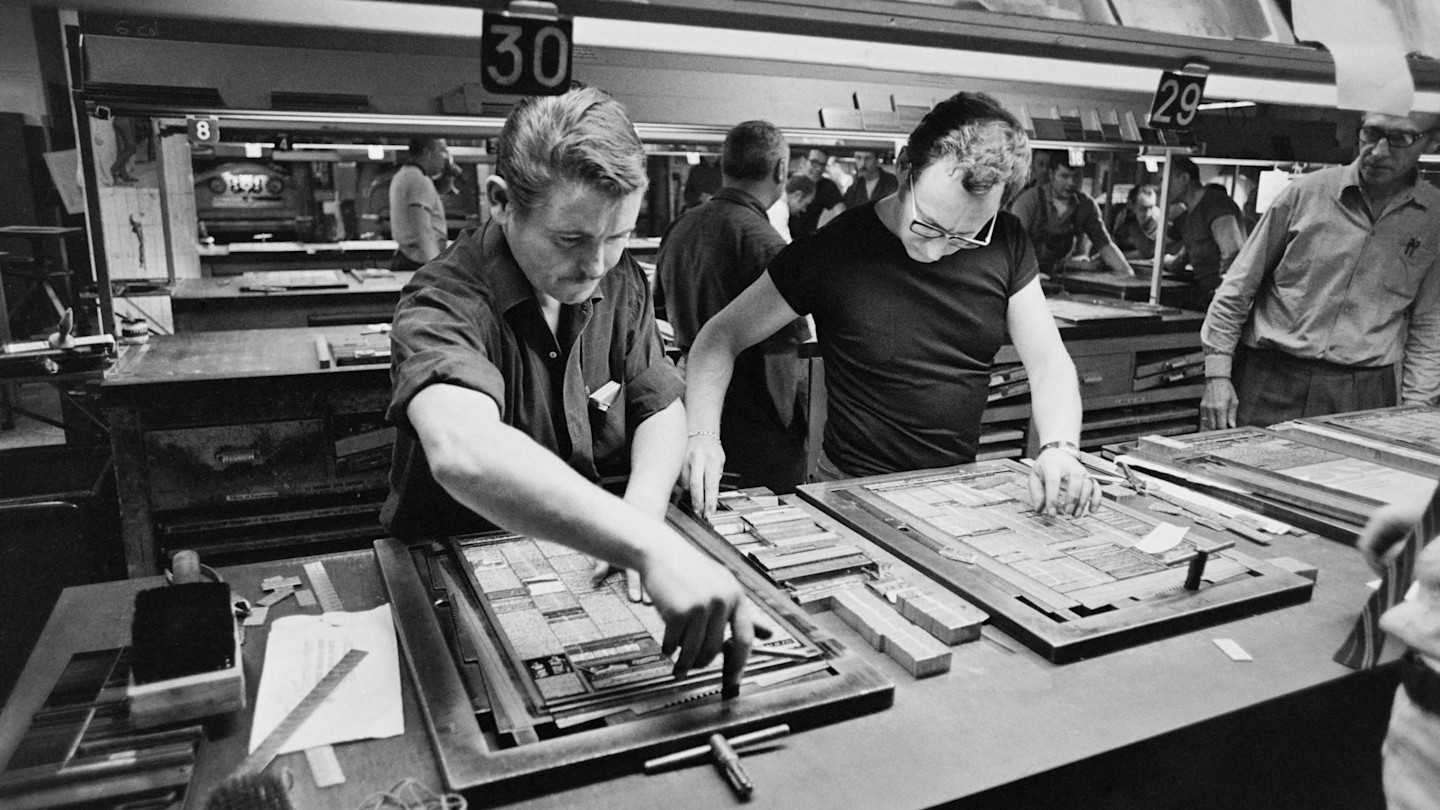
Journalese boasts a long, arcane tradition. When I first started on a paper, at the turn of the millennium, the language of the newsroom was still rooted in the letterpress. It was an era of “busted headlines”, where words wouldn’t fit the allotted type space, “galley proofs” and “copytakers”, which referred to a team of, mostly, women who would type out stories dictated over phones.
One editor would harry us about our deadlines, continually fretting about how we had to be “off stone”. He was referring to the old practice of assembling the letterpress into its final format, after which no one could make any changes and not one comma could be moved. The expression was already deeply anachronistic — the printing site had long been digitised — but I liked to imagine some old dude like Moses at the printers, heaving engraved tablets of rock around the room.
Exclamation marks were known as “screamers” (or, a “dog’s cock” as some liked to call them), and one had to have a “papal dispensation” for their use. One young intern, having been asked to “file his copy”, fretted silently for days afterwards. It meant simply that he had to send his story on an email, but he had legitimately searched vainly for “the file”. Years later, he admitted the clumsy anxiety of the misunderstanding. I told him not to worry: for many decades I had no clue what was meant by “burying the lede”.
Professional jargon is the inevitability of any workplace, as well practised in the City as it is in Hollywood. (My current new discovery is the expression “a hat on a hat”, used among screenwriters to communicate that something superfluous has been added to a scene, or joke, that is already working very well.) Nevertheless, it can be confusing and exclusive: poor communication has long been cited as an issue among recruits. There are few things more unnerving than going to a new job to find a world of doublespeak.
The language of the workplace can serve as a convenient shorthand, but it can make young employees, who aren’t confident enough to ask what a “catflap” is, feel particularly removed. This breakdown is further compounded when one introduces generational linguistic flourishes that are more reflective of one’s age. According to a study of 2,000 UK office workers, commissioned by Instantprint, more than 68 per cent said they regularly hear phrases they do not understand. Nearly a quarter (24 per cent) felt excluded from a workplace conversation because they did not understand the language. Twelve per cent said that miscomprehension had led to them making a mistake.
Boomers’ olde-worlde sayings and Gen Z slang don’t match. The generations are stranded either side of a communications ocean: in fact the Boomer expression “boil the ocean” was one of those expressions that found Gen Z workers most confused.
For the record, I have never in my life heard “boil the ocean”, which according to Google (where 44 per cent of workers “secretly” search for illumination in such matters) means to take on an overly ambitious and unrealistic task. Then again, neither was I familiar with “rage applying” (applying for lots of jobs because you’re pissed off with the one you have already), or “coffee badging” (where an employee turns up, swipes in and gets a coffee before leaving to work remotely) that are well understood by the younger gens. I’m stuck in a linguistic limbo, I don’t seem to understand any slang. Maybe I’m immune to jargon, or I prefer to come up with something more bespoke.
Frankly, I’m surprised we still need language. Why boil the ocean when you can send someone an emoji of an exploding head? And there are few conversations, I find, that can’t be resolved very satisfactorily with a picture of an up- or downturned thumb. Nevertheless, we must keep nourishing the language, and try to evolve linguistically.
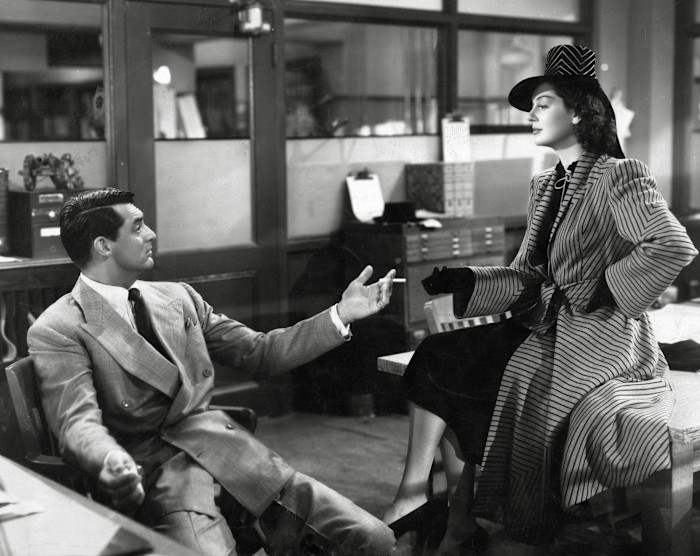
I’m currently using a range of Gen Z expressions: “It’s giving” older woman trying tragically to fit in with younger colleagues. “It’s giving” David Brent. And I still love the slang of our print forefathers, because I like to pretend that I’m His Girl Friday’s Hildy Johnson and my editor is Cary Grant. Am I “coffee badging?” No way, Sir! And yes, you can put a dog’s cock on that.
Find out about our latest stories first — follow FT Weekend on Instagram, Bluesky and X, and sign up to receive the FT Weekend newsletter every Saturday morning