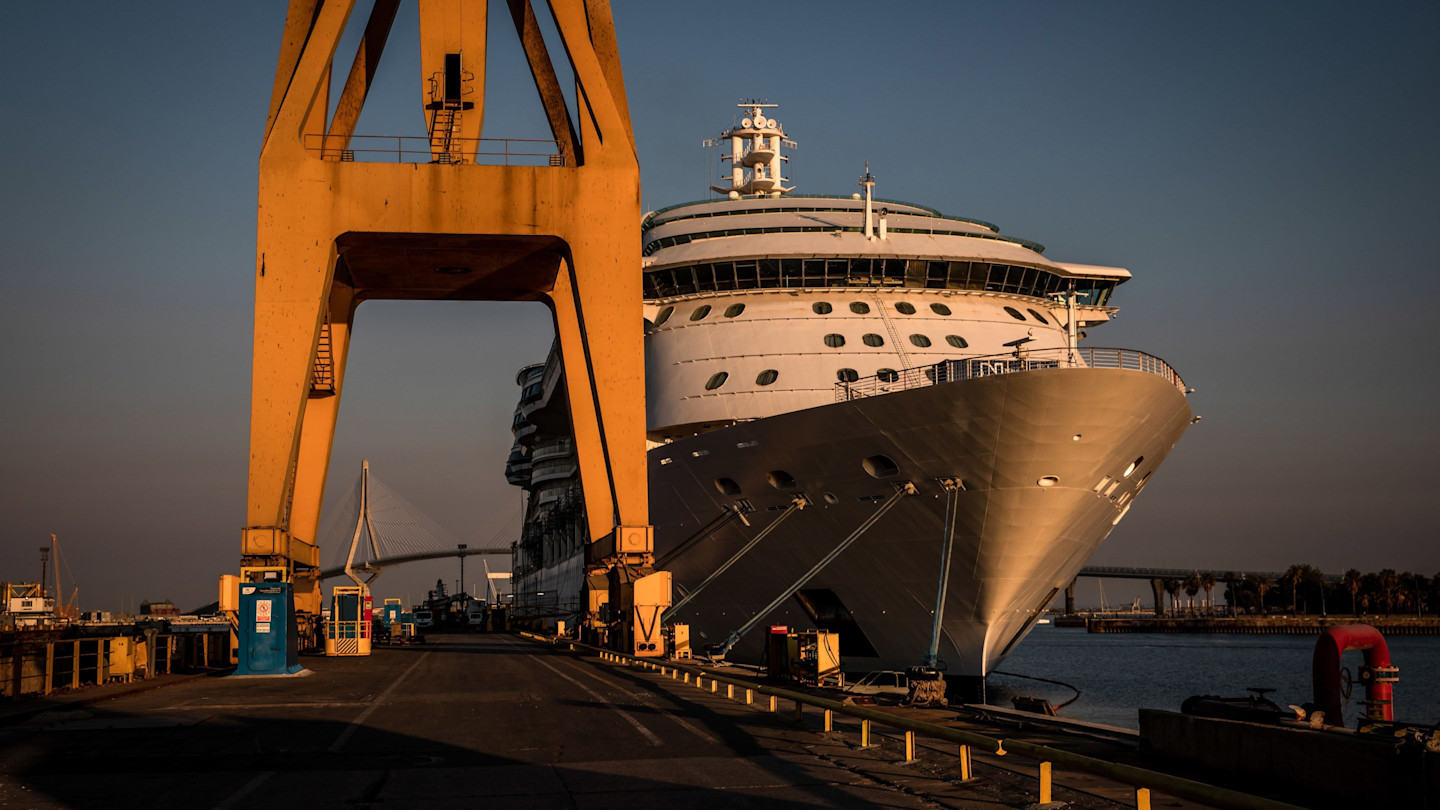
Who wouldn’t dream of wintering in the Caribbean, especially as the northern hemisphere gets chilly? But the glut of cruise ships doing just that has led to a round of fare slashing for these prized destinations.
Caribbean cays attract roughly two-fifths of all cruise passengers, so discounted sailings in the all-important high season of January and February have helped put shares in the big three — Royal Caribbean, Carnival and Norwegian Cruise Line — on course for their weakest year since the pandemic.
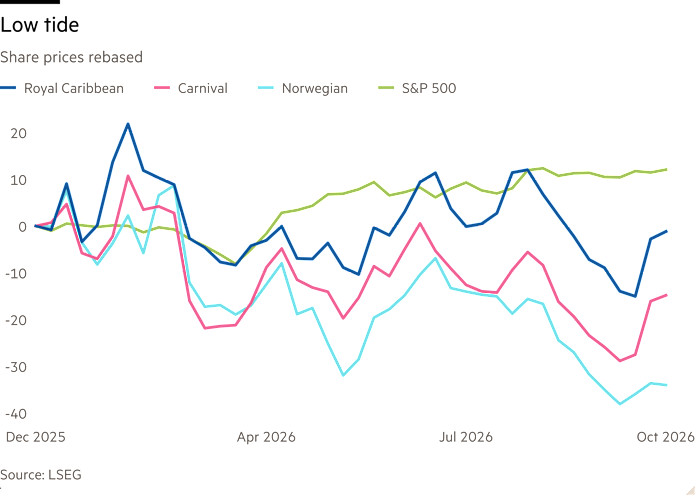
The cut-price holidays reflect the fact that capacity has far outpaced demand. Norwegian has added a whopping 40 per cent more space, while rivals have also redeployed vessels previously intended for the Middle East. All-in, capacity for the region will rise 12 per cent this year, estimate Goldman Sachs analysts — the most in more than a decade.
Strong demand for Caribbean holidays has been the driver of the industry’s post-pandemic recovery, so it isn’t hard to see why signs of overcapacity are leading investors to give it a wide berth. It doesn’t help that the operators have also made big investments onshore: Carnival has spent $600mn developing a private resort on Grand Bahama while, last month, Norwegian opened a water park on its own private island. Carnival boss Joshua Weinstein admitted last week that flat capacity in the region “would make my life easier”.
Like hotels, cruise ships’ high fixed costs leave them high and dry when demand drops. Norwegian has lowered its earnings forecast for this year by more than a third. Carnival’s are expected to remain roughly flat.
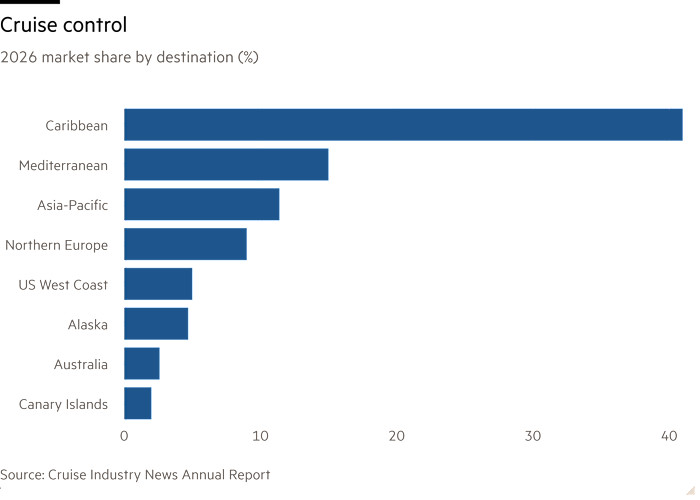
Still, cruise lines are not as risky a bet as other leisure operators. If they fail to forecast market squalls, they can at least move their vessels to more favourable locations. Carnival, for example, is excited about Europe where a series of summer heatwaves has generated fresh interest in Nordic voyages. Seasoned cruise investors have weathered capacity gluts before: a 2014 jump in Caribbean berths pressured prices for a whole year; they recovered late in 2015.
Meanwhile, the industry benefits from long-term trends. About one-third of the roughly 40mn passengers sailing somewhere in the world this year are new to the experience, according to UBS. Studies show a high propensity among cruisers to return to the high seas — and returnees tend to spend about a quarter more than nautical newbies, according to Jason Liberty, boss of Royal Caribbean. This powerfully rising tide should lift most boats.