The UK government was facing a new legal challenge on Saturday after it banned Northern Ireland’s most contentious Protestant parade from marching through a Catholic neighbourhood.
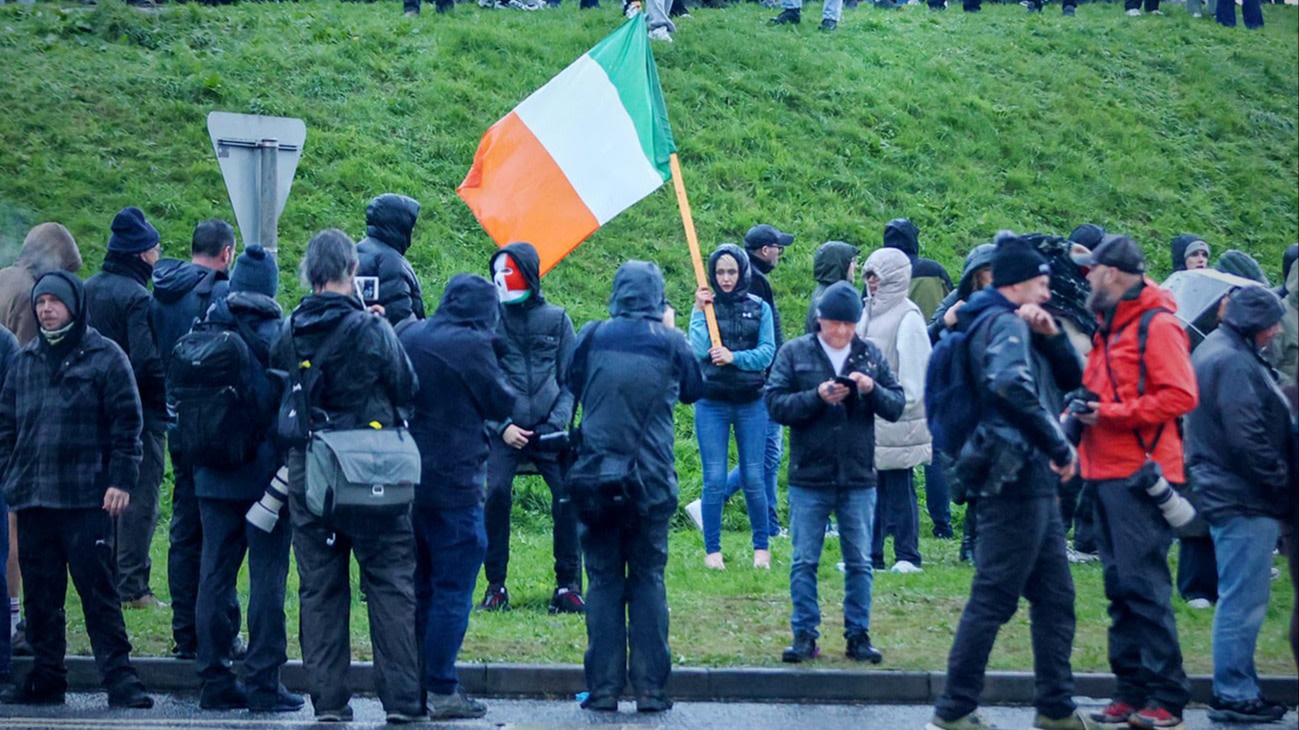
The march on the Garvaghy Road in Portadown had been scheduled for September 27 but was blocked by a huge protest, leading to an uneasy two-week stand-off.
On Friday Northern Ireland secretary Chris Bryant said he would stop the march taking place, citing the region’s police who warned there was an “unacceptable risk of serious injury, disorder and a wider contagion effect” if it went ahead.
On Saturday the pro-British Orange Order launched a legal challenge over Bryant’s decision.
The Grand Orange Lodge of Ireland, which represents Northern Ireland’s various local Orange lodges, slammed Bryant’s intervention as “nothing more than a capitulation to the threat of mob rule and violence”.
The members of the local Orange Order “have complied with the rule of law, exercised restraint and maintained a dignified and resolute stand in the face of intimidation and intolerance”, it said in a statement.
The organisation added that it was urgently seeking meetings with Bryant and the region’s chief constable in which “their decision-making and actions in this matter will be robustly challenged”.
Jamie Bryson, a legal adviser to the Portadown district Orange Order, said Bryant had “surrendered to the mob”.
The High Court in Belfast adjourned the hearing until Monday.
Many once-contentious Protestant marches in Northern Ireland now pass off peacefully every year. But the Garvaghy Road route remains so sensitive that until this year it had not been authorised since 1997.
In the late 1990s police and soldiers forced residents aside to allow the marchers to proceed down the road, igniting violence that included the murder of three young boys.
A showdown between Northern Ireland’s once dominant unionist community and the nationalists now in the majority became inevitable when the region’s Parades Commission last month gave the green light to the route in a surprise decision.
Unionists said refusing the Orange Order’s legal right to march meant the rule of law had broken down. Nationalists said traumatised residents feared being dragged back to the dark days of the Troubles conflict, which ended in 1998.
Bryant spent two weeks trying to broker a solution in talks with all sides, seeking either a “one and done” final Orange Order march down the Garvaghy Road, or a “won and done” solution in which the Order would waive its legal right to parade there in the interests of community harmony.
The stand-off has strained fractious relations between political parties in Northern Ireland’s power-sharing Stormont executive. Unionists on Saturday also warned that faith the police was wearing thin.
“The anger at both the Chief Constable and the Secretary of State is completely justifiable,” said Gavin Robinson, leader of the Democratic Unionist Party, Northern Ireland’s biggest pro-UK political group.
He stopped short of calling for the resignation of Jon Boutcher, chief constable of the Police Service of Northern Ireland, but the dispute has overshadowed next month’s 25th anniversary of the creation of the PSNI, considered one of the successes of the region’s peace process.
Boutcher said he had asked Bryant to intervene in the Drumcree dispute, saying any police operation to push through the parade “would in my view have had not only catastrophic long-term consequences for trust and confidence in policing, but for the Northern Ireland Executive and the peace process”.
Other loyalist groups have said they are re-examining their engagement with the Parades Commission, which was set up after the last Garvaghy Road march, and with the PSNI.
Saturday’s court hearing was just the latest in a series of legal challenges. Last month, residents of the Garvaghy Road secured a court ruling suspending the Parades Commission’s decision before the Portadown district of the Orange Order had that ruling overturned on appeal.
Unionist politicians are angered by how senior figures in the nationalist party Sinn Féin have supported the Garvaghy Road residents’ protests.
Police are investigating First Minister Michelle O’Neill of Sinn Féin and other politicians over their role in blocking the Garvaghy Road.