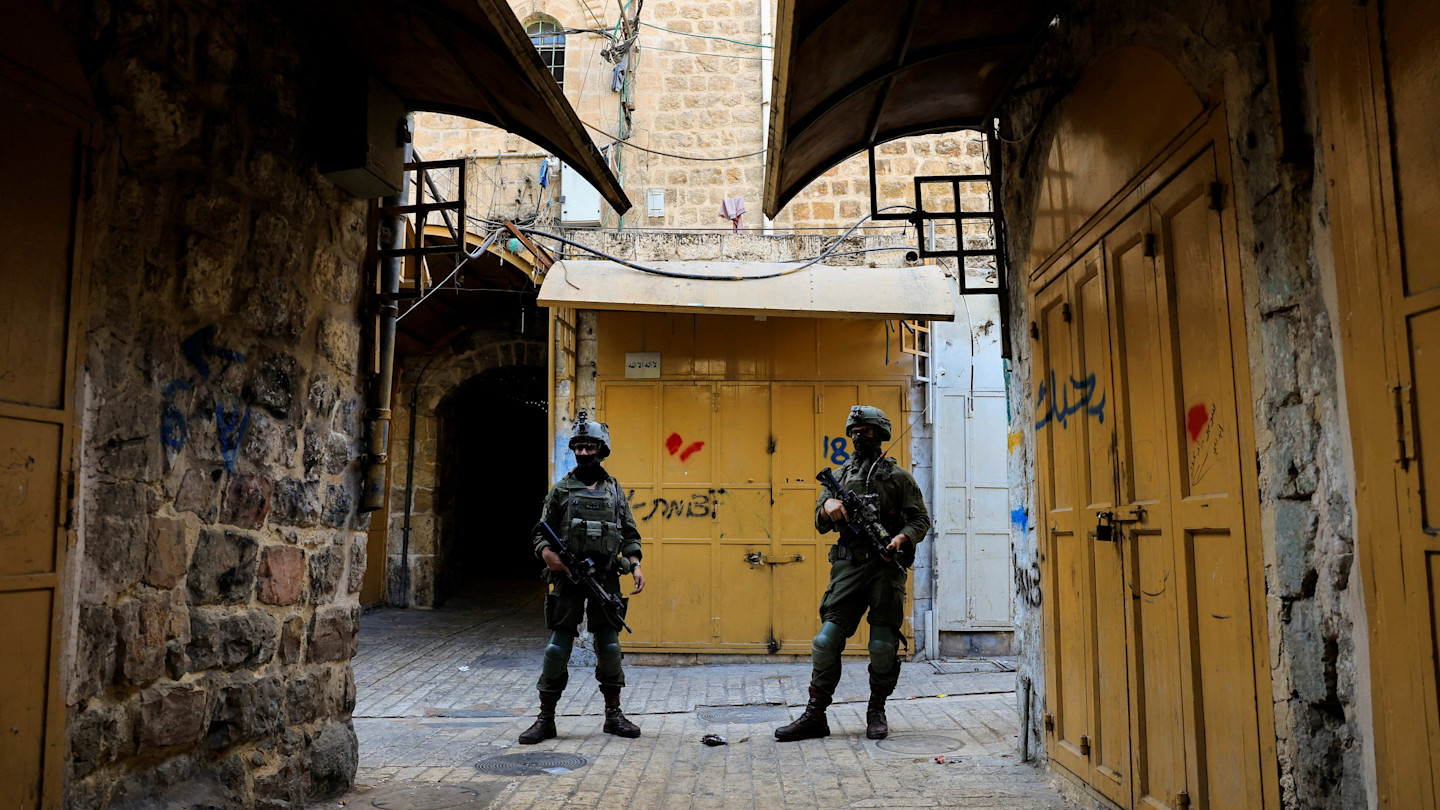
President Mahmoud Abbas has postponed Palestinian legislative elections due to take place in November for almost a year because of “obstacles” imposed by Israel in Gaza, the occupied West Bank and East Jerusalem.
The vote for the Palestinian Legislative Council, which would have been the first national elections in two decades, will now take place on September 11 2027, according to Wafa, the state-run news agency. Presidential elections will take place on the same day.
The delay, which was widely expected, is the latest in a series of presidential and legislative elections to be postponed under the 90-year-old Abbas, and will stoke more domestic criticism of the Palestinian Authority.
The internationally backed organisation exercises limited self-governance in parts of the West Bank but has grown increasingly unpopular among Palestinians during Abbas’s 21-year tenure.
The executive committee of the Palestine Liberation Organization, which is headed by Abbas, said Israeli actions had made it impossible to hold elections in Gaza.
Israel has corralled 2mn Palestinians into a small sliver of land in the enclave, continues to carry out near-daily strikes and has refused entry to election officials or international observers.
The committee also said that the situation in the West Bank and East Jerusalem was not conducive to holding elections. It cited a surge in attacks on Palestinians by Jewish settlers, widespread movement restrictions imposed by the Israeli military, and Israel’s withholding of billions of dollars of PA revenues that have left the organisation desperately short of funds.
“Conditions expected to be in place when the elections were announced several months ago had changed fundamentally,” the committee said in a statement carried by Wafa.
It added that circumstances in Gaza, the West Bank and East Jerusalem “prevent the establishment of an appropriate environment for elections and undermine guarantees for the safety of voters, candidates and electoral workers”.
However, the move was condemned by Abbas’s rival Mohammad Dahlan, who branded it a “catastrophic” decision that amounted to a “violation of democracy [and] the rights of our Palestinian people”.
Abbas had committed to holding elections this year as part of a series of reforms demanded by the international community as the PA sought to restore its international credibility and play a role in postwar Gaza.
The veteran leader last faced the voters when he won a presidential election in 2005, and he has ruled by decree since that term expired in 2009.
The last Palestinian legislative elections took place in 2006, with Hamas defeating Abbas’s Fatah grouping, which dominates the PA.
Those elections were followed by a bout of infighting, during which Hamas seized control of Gaza and ousted the PA from the enclave. The PA was left in control of the West Bank, which created a political rift between the two territories.