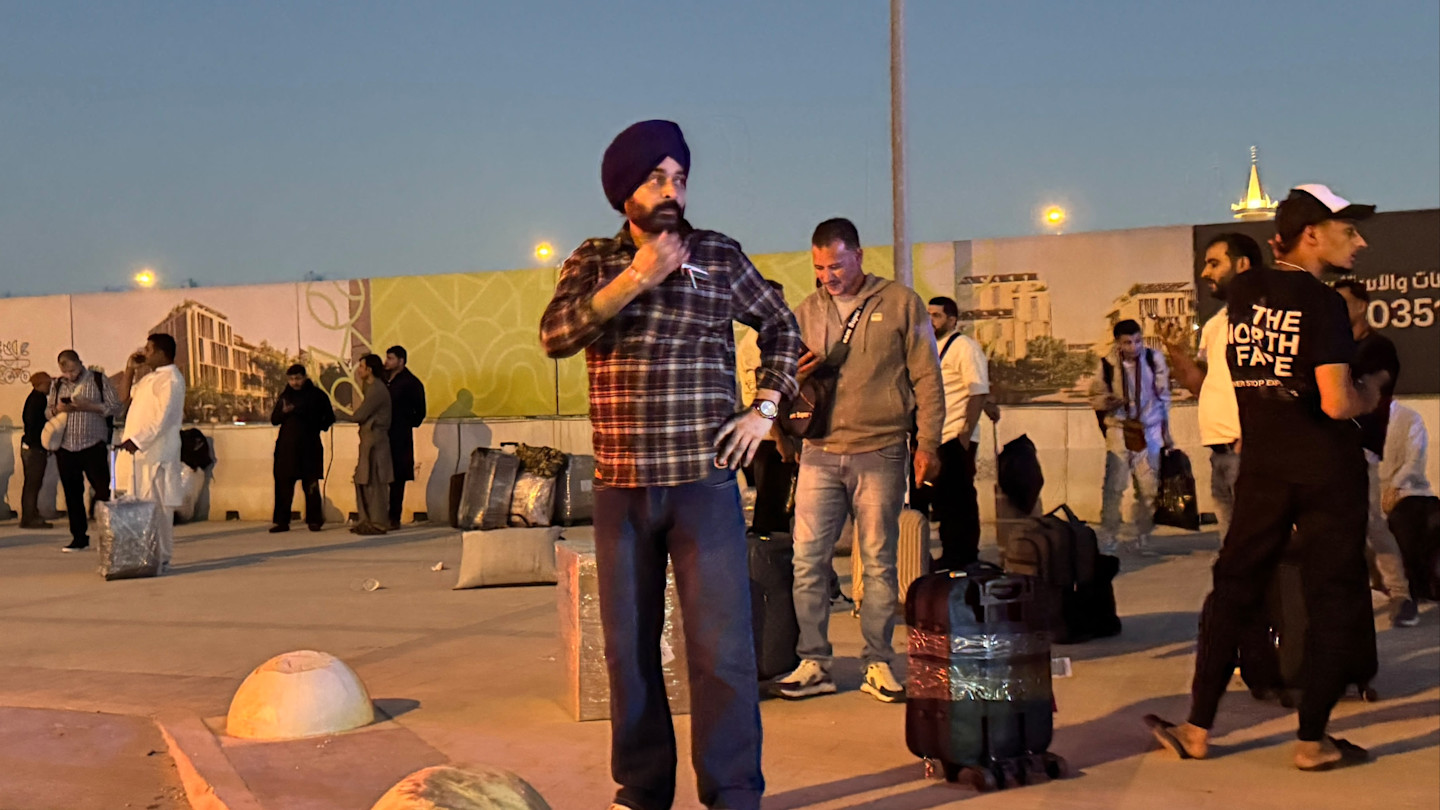
A missile strike killed 12 people and injured more than 300 at Riyadh’s airport on Saturday, local authorities said, days after several people were killed at the same airport by Iran-backed Houthi rebels.
It was the deadliest attack on Saudi Arabia in more than a decade as the confrontation between the kingdom and the Houthis continues to escalate in the midst of the war launched against Iran by the US and Israel in February. The latest attacks pose a fresh threat to Crown Prince Mohammed bin Salman’s efforts to attract investment and tourists.
Saudi Arabia’s civil aviation authority said on X that the dead included four Saudis, two Bangladeshis, one American, an Egyptian, a Palestinian, a Syrian, a Jordanian and a person from Sudan.
Operations at the capital’s King Khalid International Airport had halted while the damage was being assessed, it added. The airport remained closed on Sunday.
The attack was the third on the airport in a week, raising questions about the capabilities of Saudi air defence to intercept missiles and drones targeting the kingdom’s vital civilian infrastructure, especially given the global shortage of interceptors after seven months of war in the Gulf. Four people, including a Saudi pilot, were killed and several others injured on Thursday in a barrage for which the Houthi movement claimed responsibility.
The Saudi-led coalition against the Houthis blamed the Houthis for the attack, which it described as a “war crime” and said it would respond “firmly”.
In the oil-rich Eastern Province, a drone was intercepted and a projectile fell in the vicinity of King Fahd International Airport in Dammam, said Maj Gen Turki al-Maliki, a spokesperson for the coalition. A ballistic missile was also intercepted and destroyed over al-Kharj, south-east of Riyadh, he added.
The Houthis, who have received weapons and training from Iran, did not immediately claim responsibility for the strike, but on Sunday they renewed their warnings to airlines, workers and passengers not to use Saudi airports or airspace. “We urge everyone to take our warnings seriously, and Saudi Arabia bears responsibility for any failed interceptions,” said Houthi military spokesman Brig Gen Yahya Saree.
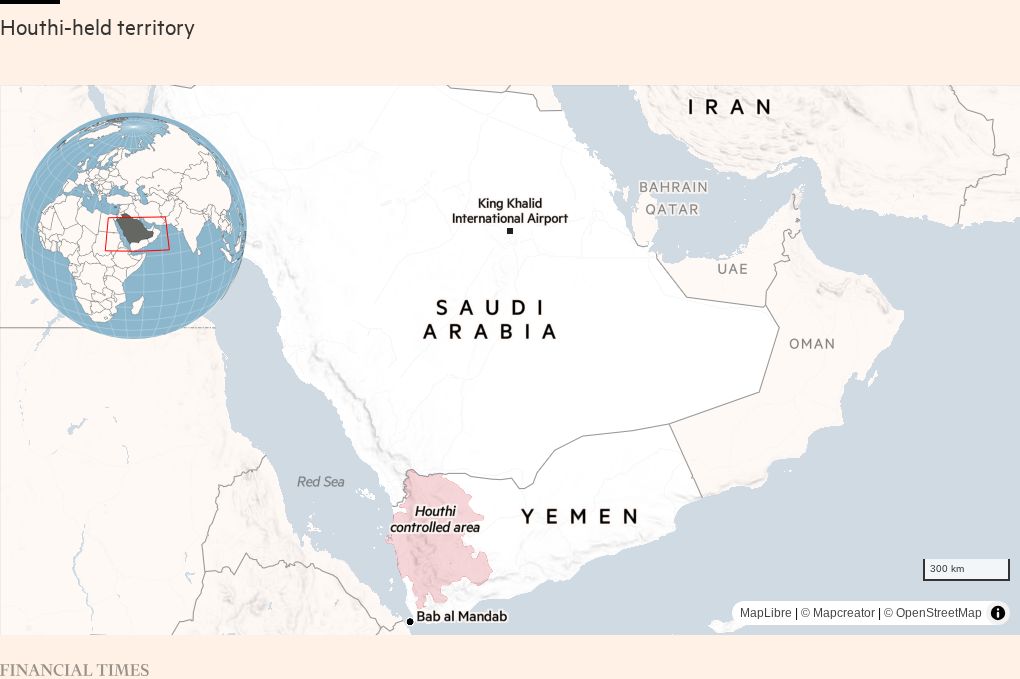
In recent days the group has targeted airports in Riyadh, Abha, Jizan and Najran in the kingdom’s south-west near the Yemeni border, after reigniting a more than decade-long civil war with Saudi Arabia in July and announcing a blockade on the kingdom’s ports.
Video description
Debris can be seen scattered on the ground and people can be glimpsed lying on the ground amidst the smoke
The repeated targeting of Riyadh is of particular concern to Saudi officials. In addition to being the political and business capital of the country, the city sits at the heart of the crown prince’s economic and social reform programmes as the home for some of its most ambitious projects, including a new entertainment district and a national park four times the size of New York’s Central Park.
The attacks come as Saudi Arabia is preparing to host significant events, including the World Petroleum Council’s Energy Congress, which began on Sunday. The chief executives of ExxonMobil, TotalEnergies, Shell and BP were expected to attend but withdrew, according to two people with knowledge of the matter.
“We made every effort to participate in WPC. Unfortunately, due to travel disruption, we are unable to be there in person. We greatly value our longstanding partnerships across the region,” BP said. Shell declined to comment while Exxon and TotalEnergies did not immediately respond to requests for comment.
The kingdom’s flagship conference, the Future Investment Initiative, is also scheduled for this month. It typically attracts top executives from around the world.
Saudi officials said both events would still take place.
Riyadh’s King Khalid airport urged passengers to contact their airlines before trying to travel, while the embassies of the US, Canada, Germany and Ireland have advised their citizens to avoid the airport. Saudi Arabia’s foreign ministry told citizens abroad who were affected by the flight cancellations or delays to contact the kingdom’s missions for assistance.
A western diplomat told the FT that Terminal 3 of the airport was hit and medical evacuations were taking place. A nearby hospital took in around 50 injured people — some of them in critical condition — a person familiar with the matter said. Riyadh’s big hospitals have activated their disaster code, the person added.
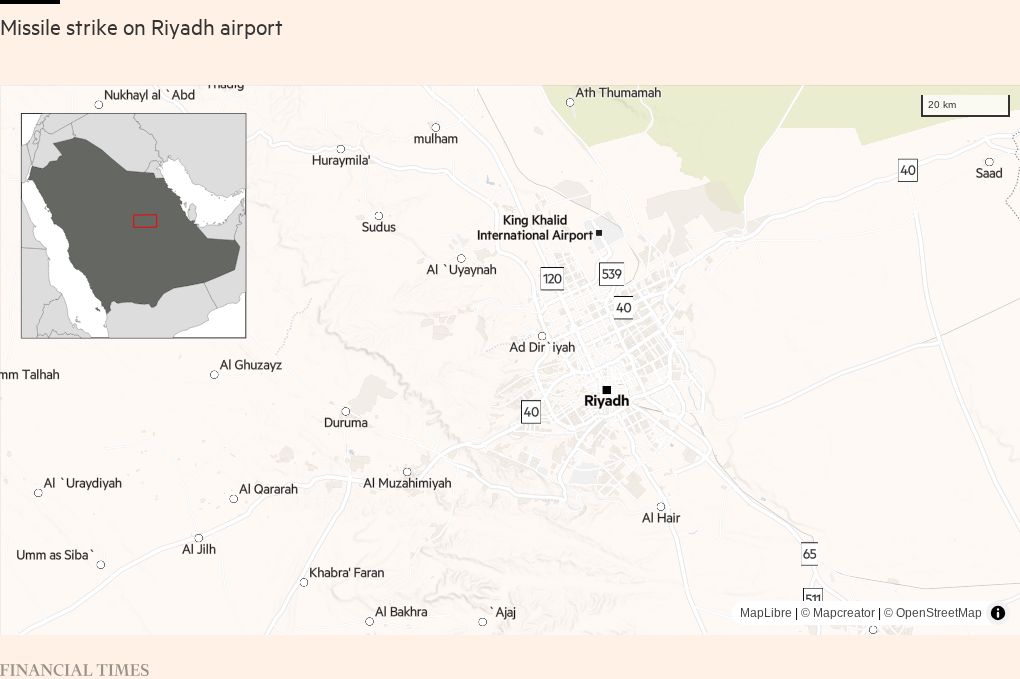
Flightradar24, a flight-tracking website, showed all flights to Riyadh had either been diverted or cancelled after the incident on Saturday. The final flight to depart was at 1.39pm local time, according to Flightradar24, while the last landing was at 2.05pm. Data group Cirium said 141 flights had been due to depart at or after that time on Saturday.
Following the attack, flights over or near Riyadh were diverted, and flights into Dammam in the east were temporarily disrupted, though the rest of the country’s airspace remained open. Kuwait Airways said its flights to Riyadh were cancelled “due to the closure of the airport resulting from the security situation”.
Separately, US Central Command said a US military fighter jet had hit and disabled the Panama-flagged M/V Ocean Molica, a commercial cargo vessel, in the Gulf of Oman on Saturday after the ship’s crew had ignored repeated warnings and attempted to run the naval blockade against Iran. Nobody was harmed in the strike, Centcom said in a post on X.
Asked whether the US would join Saudi air strikes against the Houthis in Yemen, President Donald Trump said on Saturday: “We’re going to look at it. We just found out about the recent attack, so we’ll make a decision. We move very quickly.”
He called the attack on Riyadh’s airport “a terrible thing” and said he was planning to speak with Crown Prince Mohammed bin Salman. Trump also said that “we have communication with the Houthis”.
Saudi Arabia intervened in Yemen’s civil war in 2015 in an attempt to restore the internationally recognised government. The conflict reignited after a truce between the kingdom and the Iran-backed rebels collapsed this summer.
The rebels mounted a lightning advance along Yemen’s Red Sea coast last month to tighten their grip on the Bab al-Mandeb Strait, a critical international waterway.
Mohammed Saeed Al Jaber, the Saudi ambassador to Yemen, said on Friday that government forces had pushed the Houthis out of Bab al-Mandeb. But fighting continues on multiple front lines along the Red Sea coast and Yemen’s south-western provinces.
Additional reporting by Peter Campbell and Malcolm Moore in London