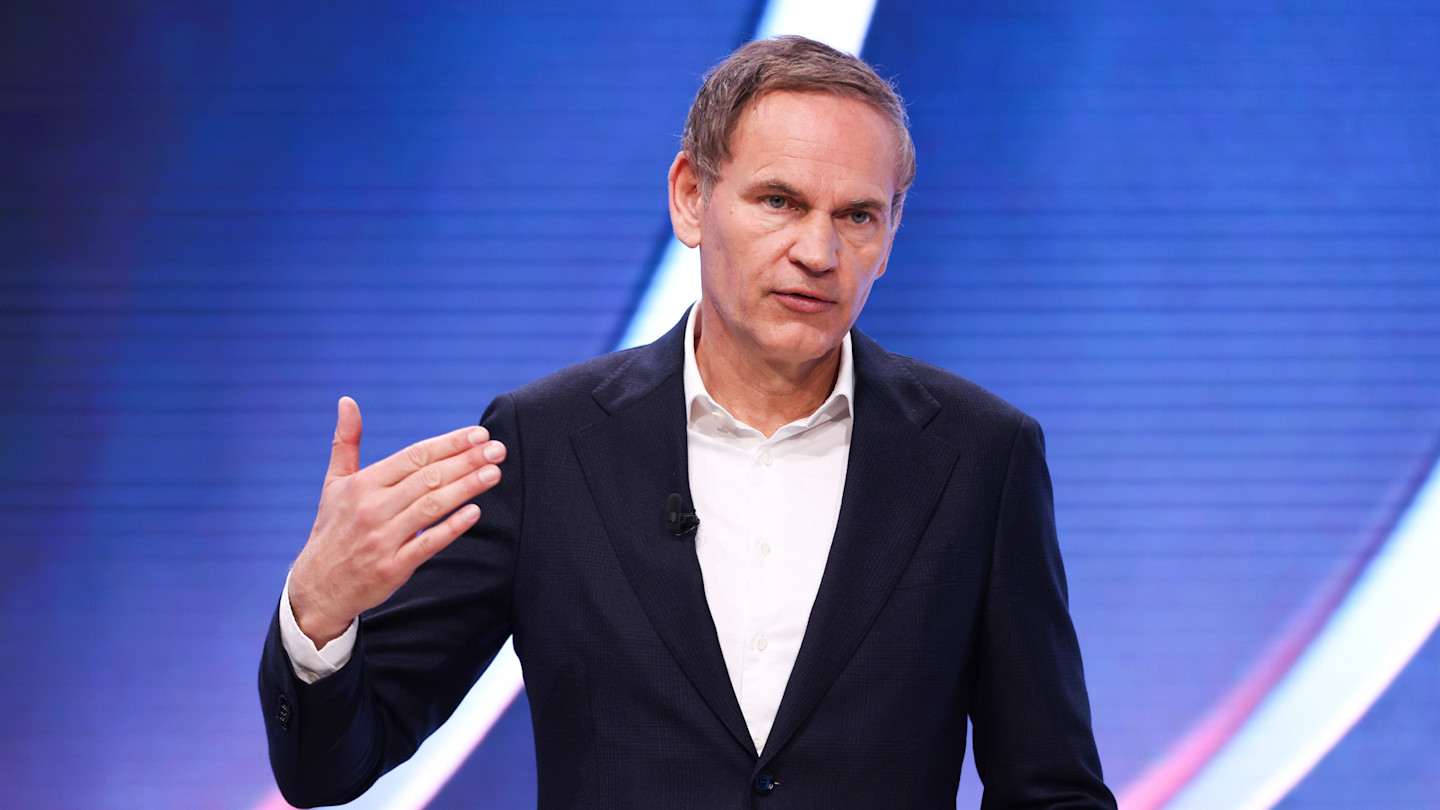
Volkswagen’s chief executive has called for greater co-operation between France and Germany to strengthen European competitiveness, saying it was not too late to respond to the threat posed by Chinese competitors.
The Élysée Palace and the Chancellery have been negotiating for months on EU proposals for phasing out combustion engines and incentivising carmakers to build vehicles within the bloc amid an influx of Chinese cars.
But progress has been slow and the two countries remain at odds over what “Made in Europe” should really mean.
“When it matters, we have found solutions together,” VW boss Oliver Blume said ahead of the Paris Motor Show, where some 40 per cent of the car brands in attendance are from China. “We need that again . . . between France and Germany.”
“Our future is not fixed,” Blume said, adding that Europe can still fight back with the Made in Europe proposals, more flexible climate policy and lower energy costs.
BYD and other Chinese manufacturers have made rapid inroads into European markets, seeking higher profits through exports during a severe downturn in their domestic market.
After the EU imposed higher tariffs on EVs made in China, Chinese carmakers rapidly expanded sales of plug-in hybrids. In the first half of 2026, Chinese carmakers seized a 25 per cent share of the EU’s market for the powertrain compared with just 2 per cent in 2024, according to the European Automobile Manufacturers’ Association.
Brussels and Beijing have since agreed that China will restrain its hybrid car exports to the EU to half or less than that currently projected by the EU over the next four years.
Blume said he welcomed the progress in the EU-Beijing trade talks, but added: “Europe must still ensure a level playing field in its own markets. Those who sell here should compete under comparable conditions and create jobs and value here in Europe too.”
Europe’s largest carmaker has embarked on a historic restructuring aimed at increasing its competitiveness. It is seeking to share more components and technology across the brands in the VW group, and will shed up to 100,000 jobs.
Speaking at the same event, French industry minister Sébastien Martin hailed joint European efforts to set up “ramparts” to help the bloc’s car industry grapple with “the Asian competition that is hitting the European market”.
But he also doubled down on France’s position that any Made in Europe proposals benefiting production in the bloc had to be strictly defined as the 27 member states rather than including trading allies or countries like the UK, Turkey, Japan and South Korea, where manufacturers also have plants.
“If it’s Europe of the 27 and several countries on the other side of the world, Europeans are not going to understand that,” Martin said.
France and Germany have been haggling over this point. One quid pro quo to agree on a deal could be if Paris agrees to soften emissions rules for cars in 2030 and 2035 to in favour of alternative fuels or plug-in hybrid cars, people familiar with the talks have said.